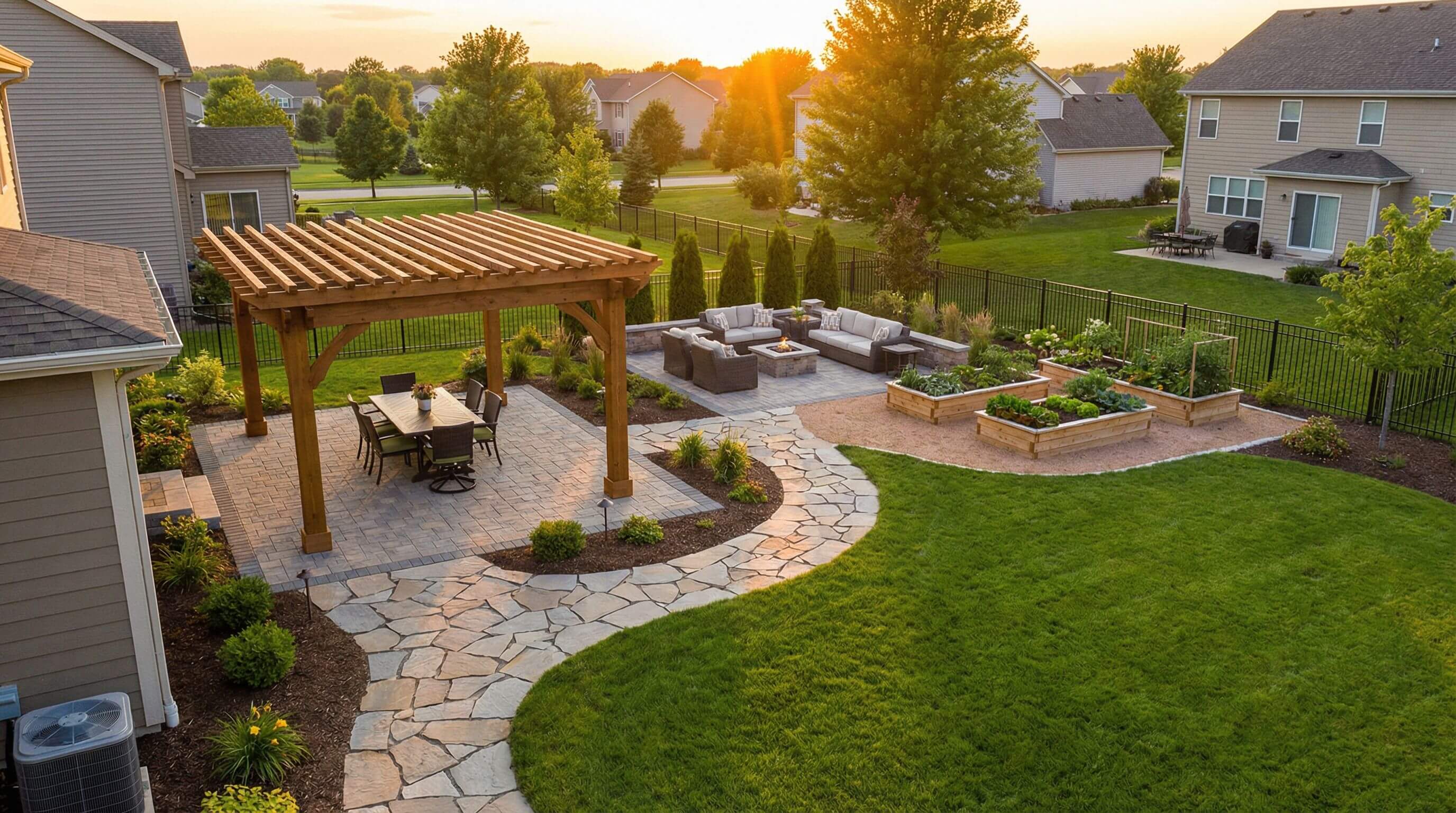
A backyard without structure is just open ground. It may look spacious, but without a clear purpose assigned to different areas, most of it goes underused. That is where backyard zoning comes in.
Zoning means dividing your outdoor space into distinct functional areas, each designed for a specific activity. Think of it the same way you think about rooms inside your home. Your kitchen serves one purpose, your bedroom another. Your backyard deserves the same intentional planning.
In this guide, you will learn how to identify the right zones for your lifestyle, plan transitions between them, and bring the whole layout together into a unified design. Whether you have a compact urban yard or a sprawling suburban lot, these principles apply.
Why zoning your backyard matters
Most homeowners treat the backyard as a single open space. The result is a yard that feels incomplete, where nothing has a dedicated place and everything competes for attention. Zoning solves this by giving every square foot a clear role.
When you divide your outdoor space into functional areas, you get several tangible benefits. First, you increase usability. A designated dining area, a defined play zone, and a quiet relaxation corner mean your family actually uses more of the yard. Second, you improve visual appeal. Separated zones create depth, rhythm, and a sense of discovery that a flat open lawn simply cannot match. Third, you raise property value. Real estate professionals consistently note that well planned outdoor living spaces are among the most attractive features for buyers.
Zoning also makes maintenance more manageable. When each area has defined materials and plantings, you know exactly what needs attention and where. There is no guessing involved.
How to assess your yard before you start
Before sketching out zones, spend time understanding your space. Walk through your yard at different times of the day and note where sunlight falls, where shade lingers, and how wind moves across the property. These observations will directly influence where you place each zone.
Take note of existing features you cannot easily change: mature trees, slopes, utility lines, drainage patterns, and the position of doors and windows that connect to the house. These elements are not obstacles. They are anchor points that inform smart zone placement.
Next, make a list of activities your household needs. Do you entertain often? Do your children need a safe play space? Do you want a vegetable garden or a quiet reading nook? Prioritize these needs because they will determine which zones make it into your final layout and how much space each one gets.
A helpful approach at this stage is to use our online landscape design tool to map your yard dimensions and test different zone arrangements in 3D before committing to anything physical. Visualizing your layout digitally saves time, money, and a lot of second guessing.
The core backyard zones every homeowner should know
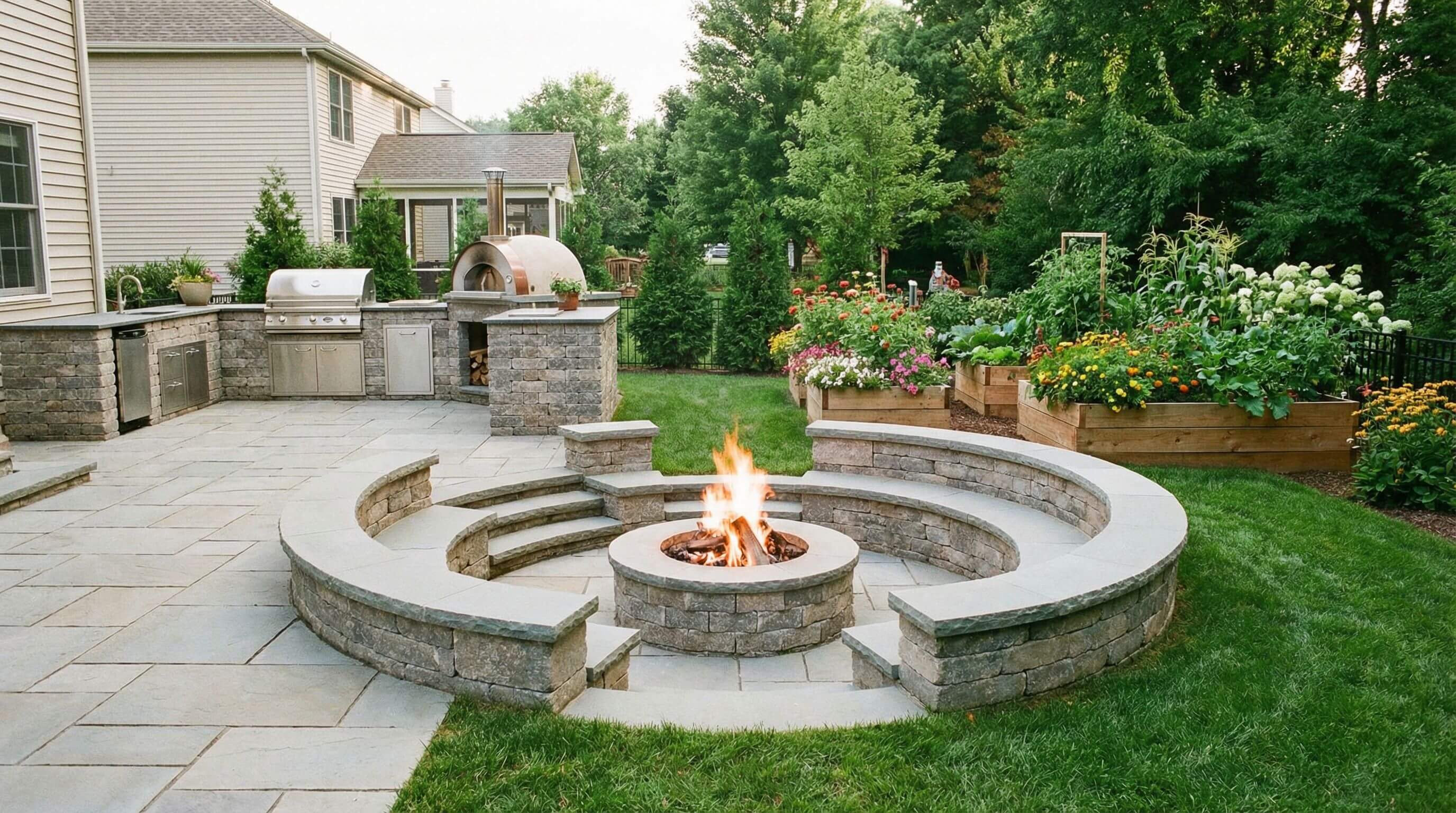
While every yard is different, most functional backyard layouts are built from a set of common zone types. You do not need all of them. Choose the ones that align with how you actually live.
Outdoor dining and cooking zone
This is the zone where meals happen. It typically includes a table and seating arrangement, and may also incorporate a grill station, outdoor kitchen counter, or pizza oven. Place this zone close to your indoor kitchen for convenient access to water, power, and food prep areas.
Choose a surface material that is level and easy to clean, such as pavers, flagstone, or a poured concrete pad. If your climate brings intense afternoon sun, plan for a pergola or shade sail above the dining area. Functional lighting is critical here, so include overhead or post mounted fixtures that allow you to cook and eat comfortably after dark.
Relaxation and lounge zone
This is your outdoor living room. Comfortable seating, soft textures, and a sense of enclosure define this zone. Think deep cushion sofas, hammocks, daybeds, or a pair of lounge chairs positioned around a low coffee table.
Place this zone where you get the best combination of shade and breeze. If privacy is limited, use tall planters, trellises with climbing vines, or freestanding screens to create a sense of seclusion. A small water feature nearby adds ambient sound that masks neighborhood noise and makes the space feel more restful.
Children’s play zone
If you have young children, a dedicated play zone keeps them safe and keeps play equipment from taking over the entire yard. This area should be visible from the house or the main seating zone, so adults can supervise easily.
Use soft ground cover under play structures. Shredded bark mulch, rubber surfacing, or artificial turf are all practical options. Keep the zone partially shaded to protect children from direct sun during peak hours. As kids grow, this zone can transition into a sports or recreation area, so design it with future flexibility in mind.
Garden and green zone
Whether you grow vegetables, herbs, cut flowers, or purely ornamental plants, a garden zone adds color, fragrance, and productivity to your yard. Raised beds are a popular choice because they improve drainage, reduce bending, and create clean visual boundaries.
Position edible gardens where they receive at least six hours of direct sunlight. Place ornamental beds along pathways or at the edges of other zones to create natural transitions. A garden zone doubles as a sensory experience: the texture of leaves, the scent of herbs, and the color of blooms all contribute to the atmosphere of the surrounding areas.
Fire pit or gathering zone
A fire pit area is one of the most used zones in any backyard, especially during cooler months. It draws people together naturally and extends the usability of your outdoor space well into the evening.
Place this zone away from structures, overhanging branches, and wooden fences. Built in seating walls around the fire pit create a defined perimeter and eliminate the need for extra chairs. If a wood burning fire pit does not suit your situation, a gas fire table offers the same ambiance with easier maintenance and no smoke.
Utility and storage zone
Every yard needs a practical area for storing tools, housing compost bins, hiding trash cans, and keeping garden supplies organized. The key is to make this zone accessible but not visually dominant.
Position utility areas along side fences or behind taller plantings. Use lattice panels, hedges, or a small shed to screen these elements from the main view. Gravel or concrete pads underneath storage items keep the area clean and prevent mud. A well planned utility zone removes clutter from the rest of your yard and makes weekly maintenance far easier.
Open lawn or flex zone
Not every square foot needs a fixed purpose. An open lawn area gives you flexible space for impromptu games, yoga, picnics, or simply letting the dog run. It also provides visual breathing room between more structured zones.
Keep this zone relatively flat and free of obstacles. Natural grass works well if you are willing to maintain it. Low maintenance alternatives like artificial turf or clover lawns offer a green surface without constant mowing and watering.
How to connect your zones for a natural flow
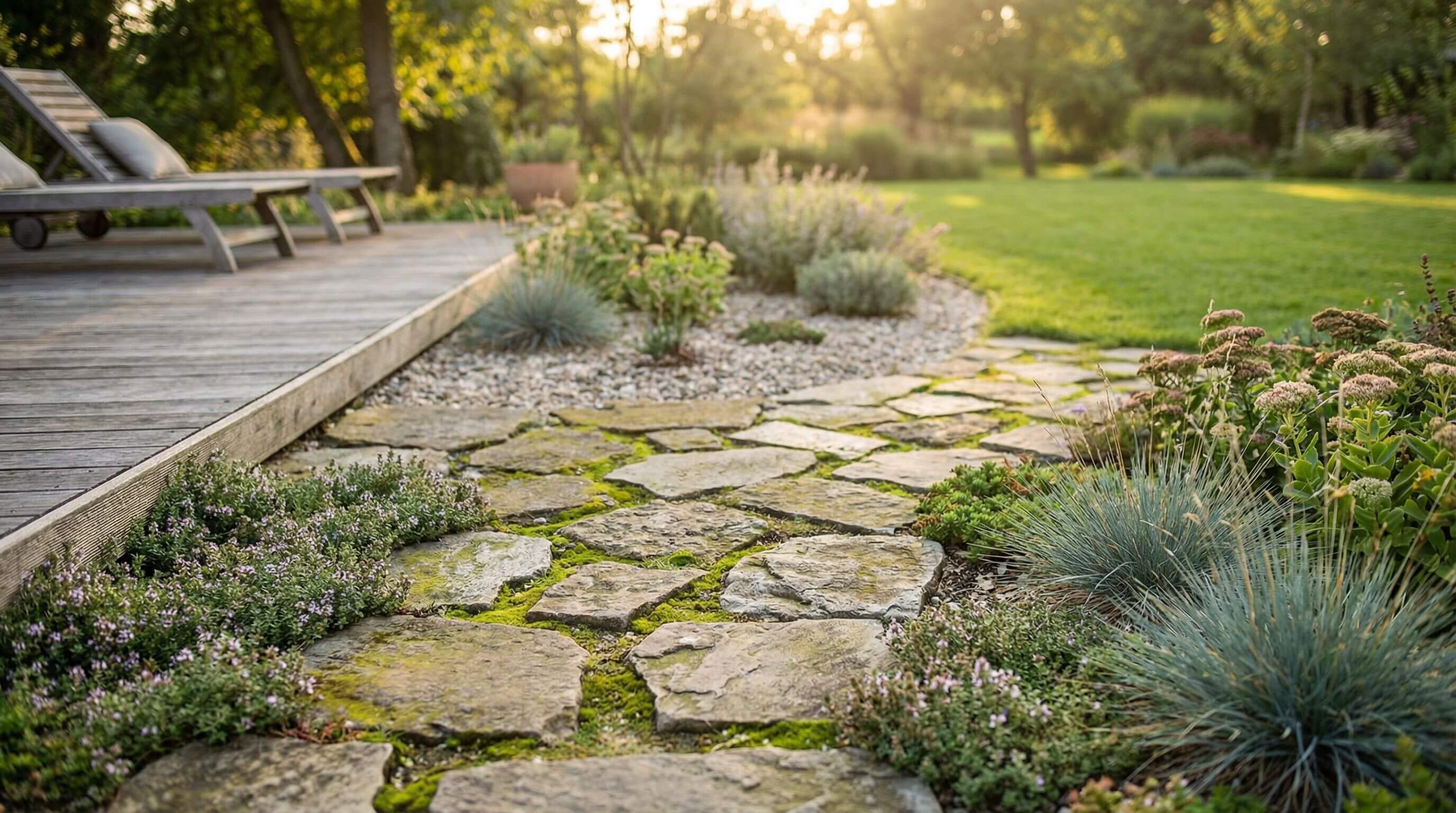
Zones should feel like parts of one unified space, not isolated islands scattered across the yard. The way you connect them matters just as much as the zones themselves.
Pathways are the simplest connection tool. Stepping stones, gravel paths, or paver walkways guide movement and signal transitions between areas. Curved paths add a sense of exploration, while straight paths create clean, modern sightlines.
Material changes also signal zone transitions. Moving from a stone patio to a wooden deck to a gravel garden path gives each area its own character while maintaining visual continuity. Use consistent planting themes or repeated accent colors across zones to tie the whole landscape together.
Elevation changes are another effective technique. A sunken fire pit lounge, a raised deck for dining, or a terraced garden bed all create natural separation without walls or fences. Even a single step up or down is enough to make two adjacent zones feel distinct.
Using 3D design tools to plan your backyard zones
Planning backyard zones on paper only gets you so far. Flat sketches cannot show you how a pergola casts afternoon shadows, how a curved pathway feels at ground level, or whether your fire pit zone is too close to the dining area.
This is where 3D design tools become essential. A browser based platform lets you build your yard layout digitally, place structures and plantings in real scale, and then walk through the design from a first person perspective. You catch spatial problems before any physical work begins, and you can experiment with different zone arrangements without cost or commitment.
Arcadium 3D is built for exactly this kind of spatial planning. You can draw your property boundaries, drop in hardscape elements like patios and pathways, add furniture and plantings, and then toggle into 3D view to see how everything relates. The first person walkthrough mode is particularly useful for checking sightlines, spacing, and how enclosed or open each zone feels.
For homeowners, this means fewer expensive mistakes during construction. For designers, it means faster client approvals and clearer communication with contractors. Either way, the ability to visualize your zones in three dimensions before breaking ground is a major advantage.
Common mistakes to avoid when zoning your backyard
Ignoring traffic flow
If guests have to walk through the garden bed to reach the fire pit, your layout has a flow problem. Map out the natural walking paths people will take between the house and each zone, and make sure pathways support that movement without forcing awkward detours.
Making every zone the same size
Not all zones need equal real estate. A utility area might only require a narrow strip along the fence, while a dining and cooking zone could demand a larger footprint. Assign space based on how frequently and intensely each zone will be used.
Forgetting about seasonal use
A backyard that only works in summer is a missed opportunity. Consider how each zone performs in cooler months. Fire features, covered structures, and wind protected seating areas extend the usability of your yard across all seasons.
Skipping the planning phase
Jumping straight into buying furniture and materials without a measured layout leads to zones that do not fit together properly. Always start with a scaled plan. Digital tools like Arcadium 3D make this step fast and visual, so there is no reason to skip it.
Frequently asked questions
How many zones should a backyard have?
It depends on your yard size and lifestyle. Most backyards work well with three to five zones. Smaller yards can function effectively with just two or three well designed areas.
What is the easiest way to separate backyard zones?
Pathways, material changes, and planting borders are the simplest methods. Even a shift from pavers to gravel signals a transition between two different areas.
Can I zone a small backyard effectively?
Yes. Small yards benefit greatly from zoning because it gives every area a clear purpose. Use vertical dividers like trellises and tall planters instead of wide borders to save floor space.
Do backyard zones increase property value?
Well planned outdoor living spaces are consistently cited as a top feature by real estate professionals. Functional zones like outdoor kitchens, fire pit areas, and defined lounge spaces can significantly boost a home’s appeal.
Should I hire a designer or plan backyard zones myself?
You can absolutely plan zones yourself, especially with 3D tools like Arcadium 3D that let you build and visualize layouts without design experience. For complex projects involving grading or structural work, consulting a professional is a wise investment.
What materials work best for defining zone boundaries?
Pavers, gravel, natural stone, wood edging, and low hedges are all effective options. The best choice depends on the style of your yard and the level of maintenance you prefer.
How do I plan backyard zones without making expensive mistakes?
Start with a measured layout of your yard and use a 3D design platform like Arcadium 3D to test different arrangements before buying materials. Digital planning lets you spot spacing issues, sightline problems, and flow conflicts early.


 Color palette generator
 3D design from AI chat
 Floor plan creator
 Kitchen design tool
 House design software
 Landscape design software
 Bedroom design
 Office floor plan creator
 Trade show booth design
 How to use Arcadium — full guide
 Community Showcase
 3D object library - free
 Articles and blog