A patio that feels disconnected from the house is just a slab of concrete in the yard. It sits there, underused, because walking out to it feels like leaving the house rather than extending it.
The best patios feel like a seamless continuation of your indoor living space, where the transition from kitchen to outdoor dining or from living room to lounge area happens so naturally that you barely notice you stepped outside. Designing that connection is not about expensive architecture or floor to ceiling glass walls. It starts with layout.
Where the patio sits relative to your back door, how its zones align with the rooms behind them, what materials carry the visual language of your interior outside, and how the elevation and floor level meet at the threshold all determine whether the patio feels integrated or isolated. This guide covers every element of that layout process step by step.
Start with the door: aligning the patio to your indoor floor plan
The connection between indoor and outdoor space begins at the doorway. The position, type, and width of the door that opens onto the patio determines how the two spaces relate to each other. A standard 36 inch back door creates a bottleneck that psychologically separates inside from outside. You walk through a narrow opening, and the outdoor space feels like a different place.
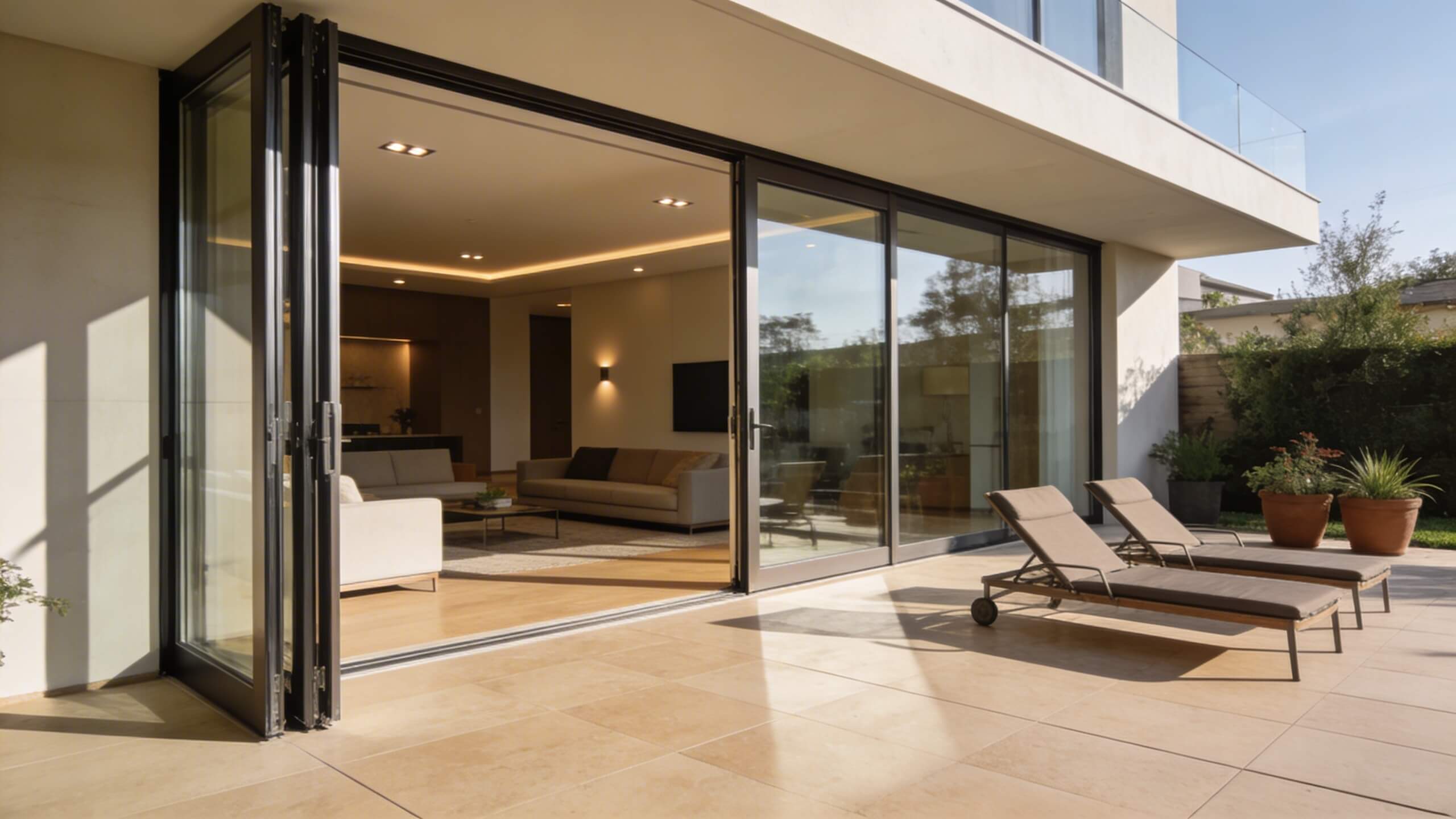
Wider openings change the dynamic entirely. Sliding glass doors, French doors, or bifold door systems that span 8 to 16 feet create an opening wide enough that the patio reads as a direct extension of the room behind it. When the doors are open, the indoor floor and the patio surface become one continuous plane. When they are closed, the glass maintains the visual connection even in cold weather.
Align the patio layout to the room it connects to. If the door opens from the kitchen, place the outdoor dining and grilling zone directly outside. If the door opens from the living room, position the lounge and conversation area right at the threshold. This alignment means that activities flow naturally from inside to outside without requiring people to cross through unrelated zones.
Pay attention to the threshold height. The patio surface should sit 1 to 1.5 inches below the bottom of the door frame to prevent water from seeping inside during rain. Beyond that minimum, keep the patio as close to the indoor floor level as possible. Every step down between the interior floor and the patio surface adds a physical and psychological separation that works against the connected feeling you are designing for.
Sizing your patio for the activities you actually do
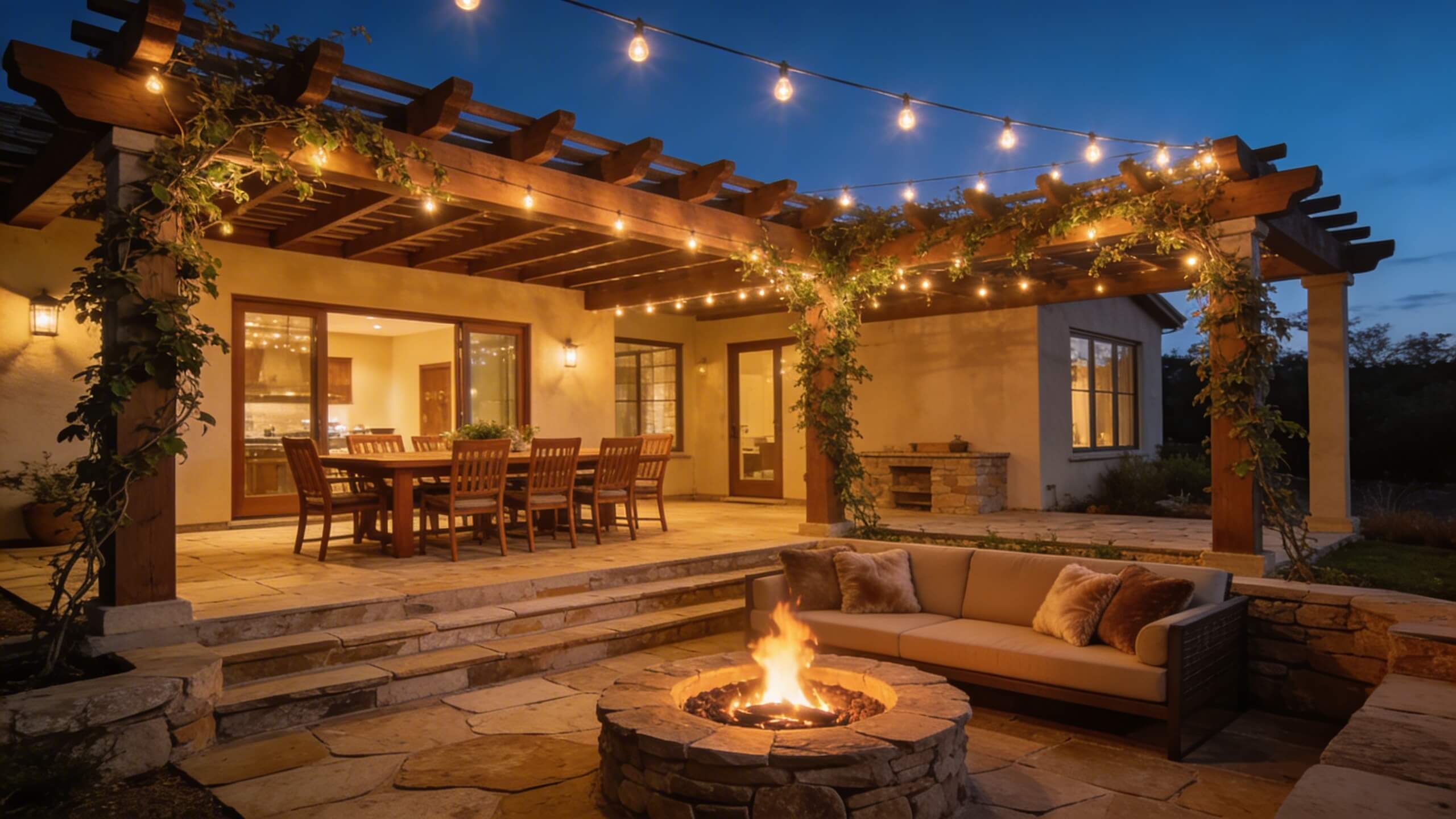
Undersized patios are the most common layout mistake in outdoor design. People estimate the size visually, build it, add furniture, and discover there is no room to walk behind chairs or pull out a dining seat without stepping off the edge.
For outdoor dining, a table that seats six requires a patio area of at least 12 by 12 feet. This accounts for the table footprint, chair pullout space, and a 3 foot circulation zone around the perimeter so people can move without disturbing seated guests. If you entertain larger groups of 8 to 10, increase the dining zone to 14 by 14 feet or larger.
A lounge area with a sofa, two armchairs, and a coffee table needs roughly 10 by 12 feet. Add space for a side table and walking paths around the furniture group. If you plan to include a fire pit within the lounge zone, add at least 4 additional feet in every direction from the pit to the nearest seating.
For an outdoor cooking station with a grill, counter space, and room for the cook to move, plan a zone of at least 6 by 10 feet. Keep this zone adjacent to the dining area but separated enough that smoke and heat do not blow directly over seated guests.
Total patio size depends on how many zones you include. A single zone patio (dining only) might be 150 square feet. A multi zone patio with dining, lounging, and cooking can easily require 400 to 600 square feet to feel comfortable and uncluttered.
Creating distinct zones that flow together
A well designed patio has the same spatial logic as a well designed open floor plan inside the house. Distinct zones for different activities share a single continuous space without walls, using material changes, elevation shifts, furniture arrangement, and planting to define where one zone ends and the next begins.
Define the dining zone with a change in paving pattern or material. If the main patio surface is poured concrete, lay the dining area in stone pavers. The material shift tells people they are entering a specific functional area without any physical barrier. Overhead elements reinforce the zone: a pergola or shade sail over the dining table creates a sense of enclosure and intimacy that makes the area feel like a room.
Separate the lounge zone with a level change. Even a single step up or down (4 to 6 inches) creates enough spatial distinction that the lounge feels like its own area. Add an outdoor area rug under the seating group to anchor the furniture and further define the boundary. The rug also softens the transition visually and makes the outdoor lounge feel more like an interior room.
Connect zones with clear pathways that allow people to move between areas without walking through furniture arrangements. A 4 foot wide pathway between the dining and lounge zones ensures comfortable flow during a party when multiple people are moving at once. Narrower paths of 3 feet work for secondary connections like the route from the grill to a storage area.
Choosing materials that carry your interior style outside
Material continuity is the single most effective way to make a patio feel connected to the house. When the eye can follow a consistent visual language from the indoor floor through the doorway and onto the patio surface, the two spaces read as one.
If your interior features warm wood tones, extend that palette to the patio with a timber deck, composite decking in a matching shade, or wood look porcelain pavers that can withstand outdoor conditions. If your interior has cool gray tile or polished concrete, carry that palette outside with gray stone pavers or smooth finished concrete that echoes the indoor floor.
The exact same material does not need to continue outside. An indoor hardwood floor does not require an outdoor hardwood deck. What matters is that the color family, texture quality, and visual weight are consistent. A warm honey toned indoor floor pairs naturally with warm honey toned composite decking, even though the materials are completely different. The eye reads the color and texture match and interprets the two surfaces as part of the same space.
Extend the color palette to vertical surfaces as well. If your interior walls are a warm white, paint or finish the exterior walls that frame the patio in the same shade. Match the outdoor furniture frames to your interior hardware finishes: matte black indoor cabinet pulls pair with matte black outdoor chair frames. These details are subtle individually, but together they build a cohesive visual bridge between inside and outside.
Planning shade and weather protection
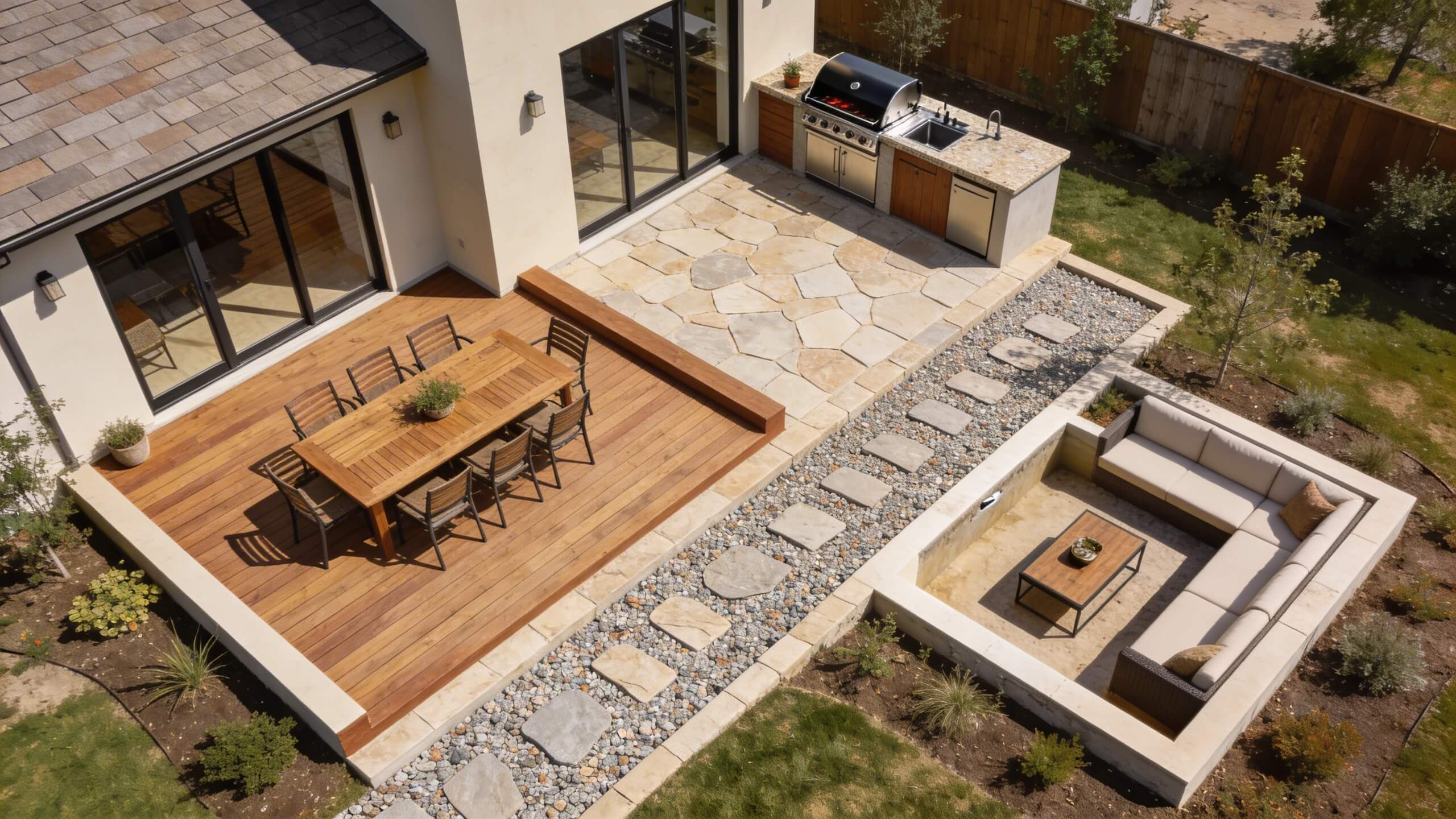
An indoor living space has a roof and climate control. A patio has neither, and without shade and weather planning, it becomes unusable during the hottest hours and most of the rainy season. Designing protection into the layout from the beginning prevents the patio from becoming a seasonal space that only works in mild weather.
Pergolas provide filtered shade that reduces direct sun while preserving airflow and views. Position a pergola over the dining or lounge zone and consider adding a retractable canopy or climbing plants for adjustable coverage. A solid roof extension from the house covers the zone closest to the door and ensures the transition area stays dry during rain, maintaining access to the patio even in bad weather.
For patios that face west or south and receive intense afternoon sun, shade sails offer a modern, adjustable solution. Mount them at varying heights and angles to create layered shade patterns that shift with the sun's position. Shade sails are less permanent than pergolas and can be removed seasonally in climates where winter sun is welcome.
Outdoor heaters or a fire feature extend patio usability into cooler months. Position a fire pit or fireplace as a focal point in the lounge zone, and arrange seating in a semicircle or full circle around it. The fire becomes both a heat source and a visual anchor that draws people outside on evenings when the temperature would otherwise push them indoors.
Designing patio lighting that extends the indoor ambiance
Indoor rooms have layered lighting: ambient, task, and accent. A patio that connects to the interior should follow the same layered approach so the quality of light feels consistent as you move from inside to outside.
Start with ambient lighting over the main gathering areas. String lights spanning the patio or recessed into a pergola provide a warm, diffused glow that mimics the feeling of a well lit living room. Keep the color temperature consistent with your interior lighting. If your indoor spaces use warm white (2700K to 3000K), use the same temperature outside. Cool white outdoor lighting next to warm indoor lighting creates a jarring visual break at the threshold.
Add task lighting where function demands it. A spotlight or pendant over the grill surface ensures safe cooking after dark. Step lights on any elevation changes prevent tripping and add a polished architectural detail. Path lights along walkways between zones guide movement and define the layout after sunset.
Accent lighting highlights the features that give the patio character. Uplight a specimen tree or architectural column. Install strip lighting under bench seating or along the base of planters for a floating effect. Place candles or lanterns on the dining table as a final layer that brings the warmth and intimacy of indoor dining to the outdoor table.
Using plants and landscaping to frame the transition
Plants soften the boundary between building and landscape and make the patio feel like a natural extension of the garden rather than a hard surface dropped into the yard. Strategic planting at the edges and entry points of the patio completes the indoor to outdoor transition.
Place container plants on both sides of the door that opens onto the patio. Use the same planters and plant types on the indoor side (a pair of potted ferns inside the glass doors) and the outdoor side (a matching pair just outside). This visual repetition bridges the threshold and signals continuity before a person even steps outside.
Use low hedges or ornamental grasses along the patio perimeter to create soft walls that define the space without blocking views. These living borders replace the hard edges of the patio surface with organic forms and add seasonal color and texture that a hardscape surface alone cannot provide.
If privacy is a concern, plant screening trees or tall shrubs along the property line behind the patio. Evergreen varieties maintain screening year round. Position them far enough from the patio that their roots do not disturb the paving and their canopy does not drop debris directly onto the dining or lounge zone.
Test your patio layout in 3D before construction begins
A flat drawing can show you where things go. It cannot show you how the patio will feel when you stand at the door and look outside, whether the pergola blocks a desirable view from the kitchen window, whether the lounge zone feels too exposed from the neighbor's second story, or whether the material transition at the threshold looks cohesive or disjointed.
Planning your patio in a browser based free landscape design software platform lets you build the layout to scale, place furniture and structures, apply materials, and walk through the space virtually from every angle. You can stand at the indoor doorway in the 3D model and see exactly what the view out to the patio looks like. You can sit at the outdoor dining table and check whether the sight line into the house creates the connected feeling you are designing for.
Arcadium 3D runs entirely in the browser with no downloads, so you can share your patio design with a contractor, a landscape designer, or your partner via a simple URL. Everyone reviews the same 3D model, sees exact dimensions and material choices, and provides feedback before any concrete is poured or any structure is built. This collaborative step prevents the costly miscommunications that happen when different people imagine different things from the same flat drawing.
Spend 15 minutes walking through the 3D model and verifying every detail: door alignment with the first outdoor zone, zone sizes with furniture in place, material transitions at the threshold, shade coverage over the dining area at peak sun hours, and pathway widths between zones. Those 15 minutes replace weeks of corrections after construction begins.


 Color palette generator
 3D design from AI chat
 Floor plan creator
 Kitchen design tool
 House design software
 Landscape design software
 Bedroom design
 Office floor plan creator
 Trade show booth design
 How to use Arcadium — full guide
 Community Showcase
 3D object library - free
 Articles and blog