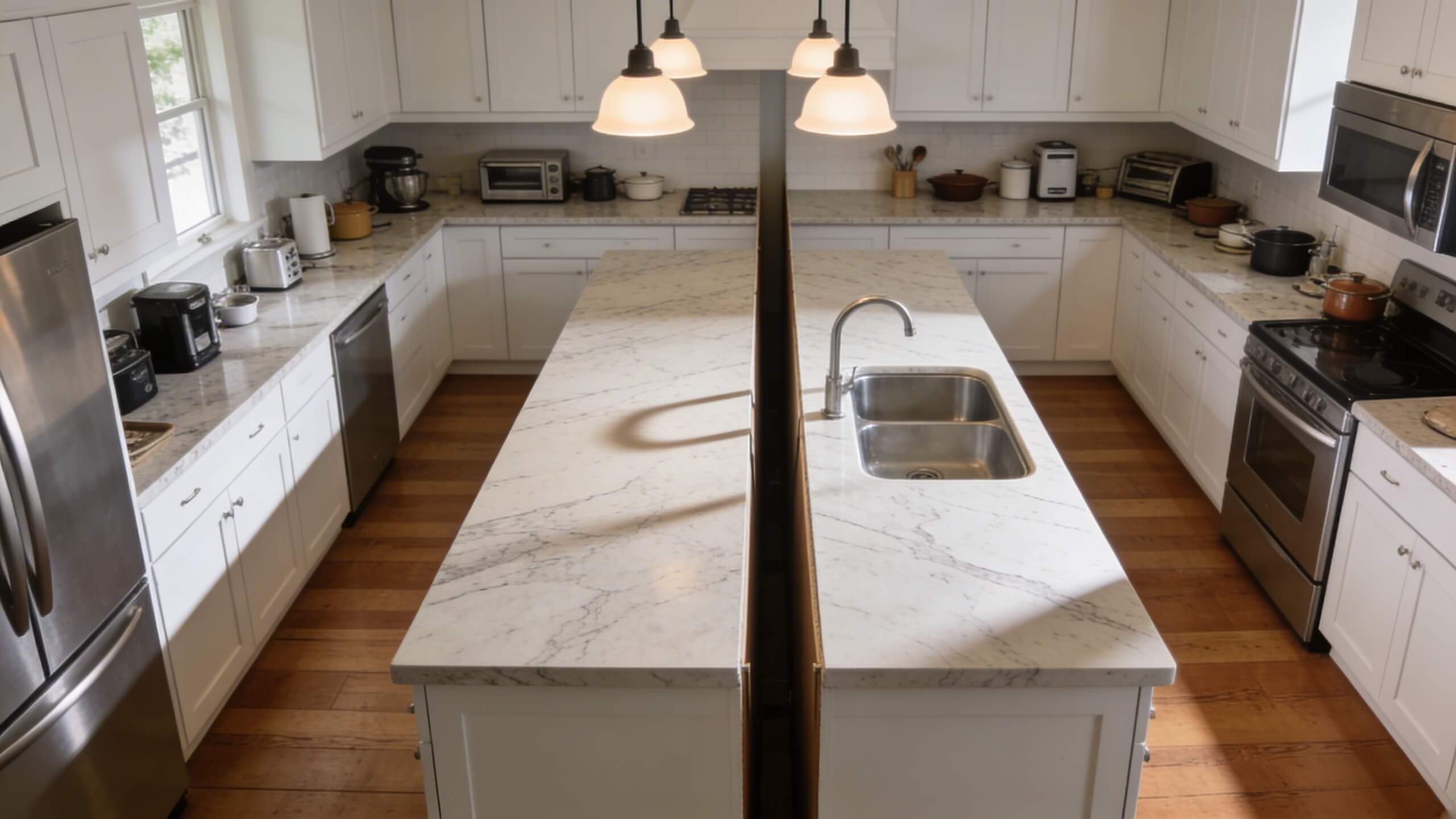
When homeowners remodel their kitchen, one of the first decisions they face is whether to add an island or a peninsula. Both options provide extra counter space, additional storage, and a spot for casual seating. Both improve how the kitchen functions. But they are not interchangeable. The right choice depends almost entirely on the size and shape of your kitchen, and picking the wrong one can create a space that feels cramped, blocks traffic flow, or wastes valuable square footage.
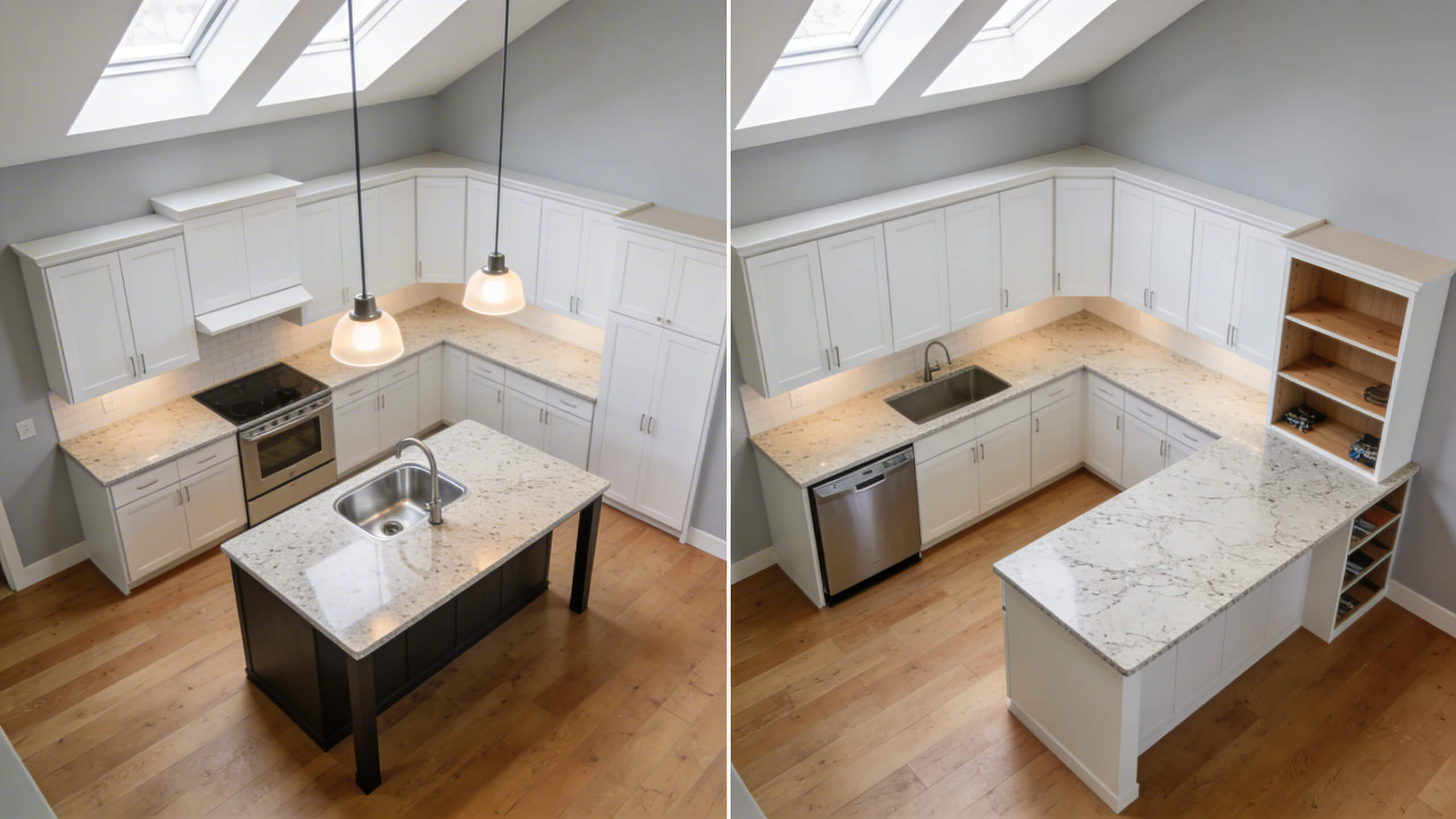
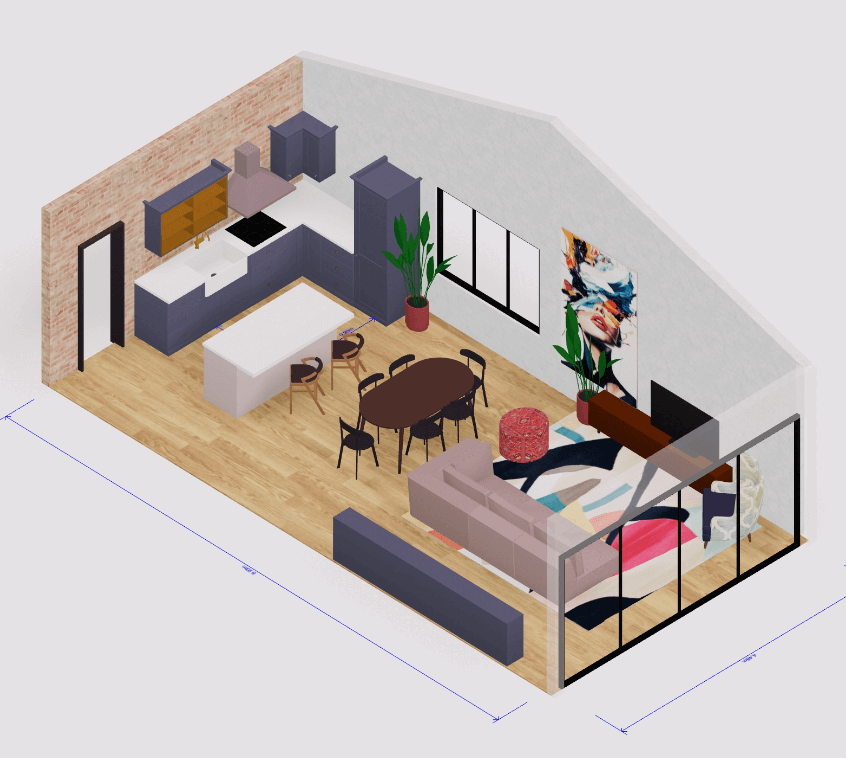
A kitchen island is a freestanding unit accessible from all four sides, positioned in the center of the kitchen. A peninsula is attached to a wall or existing cabinetry on one end, creating a three sided workspace that extends out into the room. That single structural difference has a major impact on how much floor space each option requires, how traffic moves through the kitchen, and how flexible the layout can be.
This guide breaks down the practical differences between islands and peninsulas, gives you the exact measurements to determine which option fits your kitchen, and walks you through the factors that should drive your decision. Whether you are designing a new kitchen from scratch or renovating an existing one, this comparison will help you choose the option that makes your kitchen work better for how you actually use it.
What exactly is a Kitchen Island?
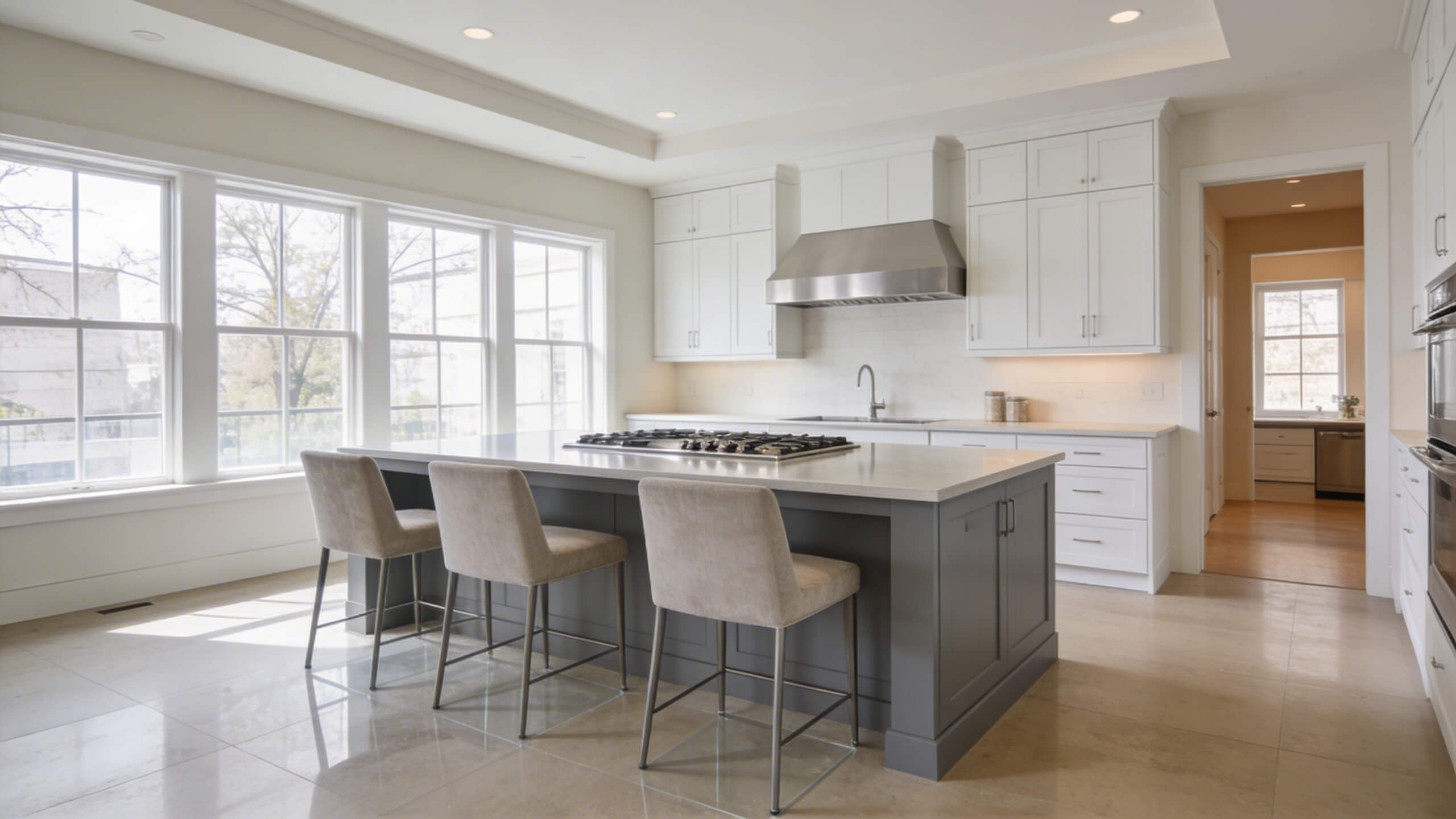
A kitchen island is a standalone cabinet structure with a countertop surface that sits in the center of the kitchen, separated from all walls and cabinetry. You can walk around it from every side. Islands typically range from 4 feet by 2 feet for compact kitchens to 8 feet by 4 feet in large kitchens, with a standard counter height of 36 inches for prep work or 42 inches for bar height seating.
Islands serve multiple roles. They provide primary prep space, house integrated appliances like sinks or cooktops, offer storage underneath with cabinets and drawers, and double as a dining or socializing spot with bar stool seating on one side. In open concept homes, the island often acts as the visual centerpiece of the kitchen and the natural gathering point for the household.
The tradeoff is space. Because an island is freestanding, it requires clearance on all four sides. The minimum recommended clearance is 36 inches, but 42 to 48 inches is ideal for comfortable movement, especially in kitchens where multiple people cook at the same time or where appliance doors need room to open without obstruction.
What exactly is a Kitchen Peninsula?
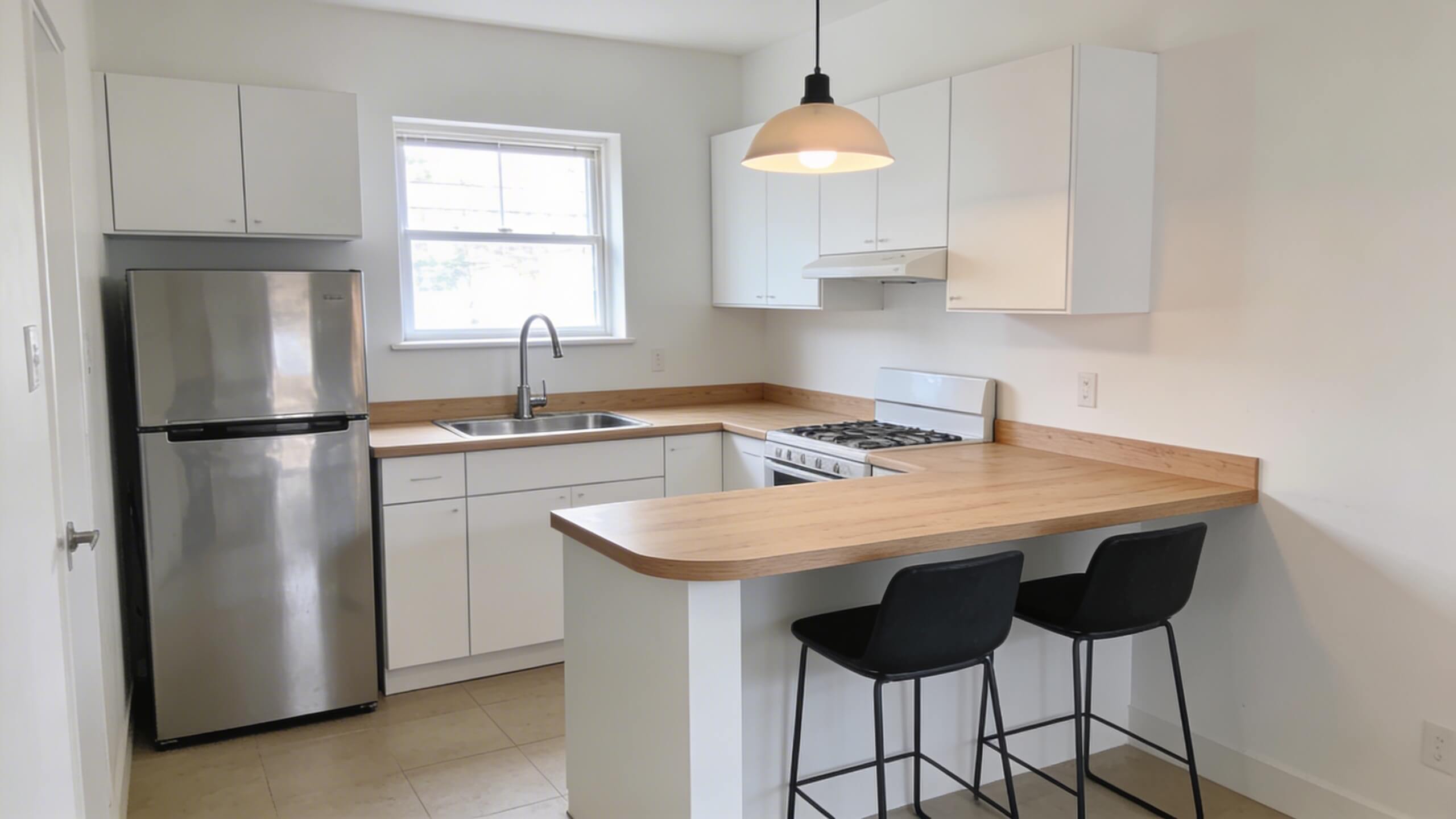
A kitchen peninsula is a countertop extension that connects to existing cabinetry or a wall on one end, leaving three sides accessible. Think of it as an island with one side attached. Peninsulas are commonly found in L shaped and U shaped kitchen layouts, where they extend outward from the end of a cabinet run to create additional counter space and define the boundary between the kitchen and an adjacent room.
Peninsulas provide many of the same benefits as islands: extra prep surface, storage underneath, and room for bar seating along the open side. They also serve as a natural room divider, separating the kitchen from a dining area or living room without blocking light or sight lines.
The key advantage of a peninsula is efficiency. Because one side is attached, it requires clearance on only three sides instead of four. This makes peninsulas significantly more space efficient, which is why designers consistently recommend them for smaller and medium sized kitchens where a freestanding island would not fit comfortably.
How kitchen size determines your best option
This is the most important factor in the island versus peninsula decision. Your kitchen's square footage and layout dictate which option is physically viable and which will create a better workflow.
Small kitchens (Under 100 square feet)
In kitchens under 100 square feet, a freestanding island is almost never a good idea. After accounting for existing cabinetry, appliances, and the required 36 inch clearance on all four sides, an island eats up floor space that the kitchen cannot afford to lose. The result is a cramped layout where you constantly bump into the island while cooking and the walking paths between the island and the countertops feel uncomfortably narrow.
A peninsula is the clear winner in small kitchens. By attaching one end to a wall or existing cabinets, a peninsula gives you the extra counter space and seating you want while requiring clearance on only three sides. In many small kitchens, a peninsula can add 4 to 6 feet of counter length without making the room feel crowded.
Medium kitchens (100 to 150 square feet)
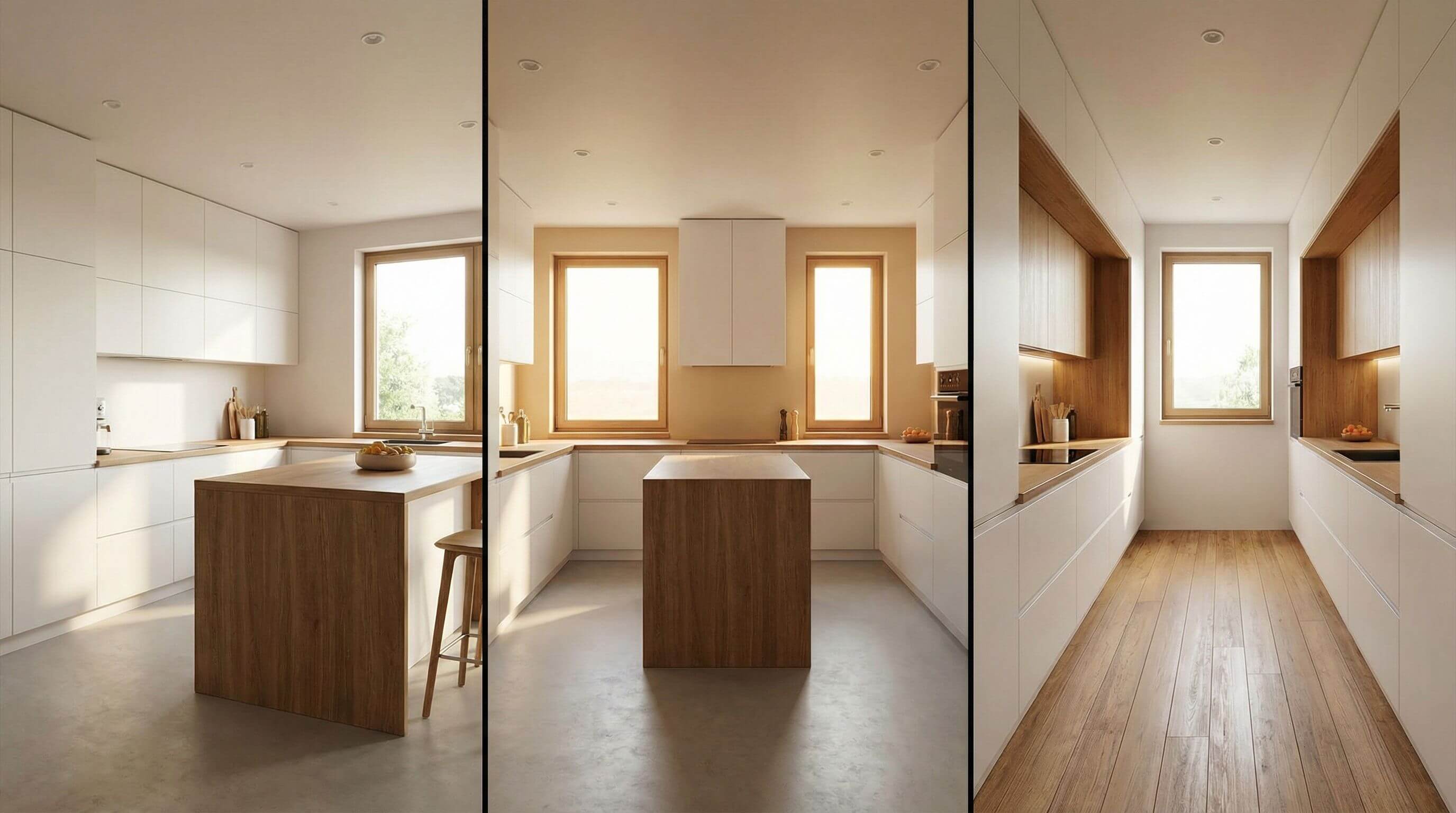
Medium sized kitchens offer more flexibility. Both an island and a peninsula can work, but the right choice depends on the kitchen's shape. In a square kitchen with at least 12 feet on each side, a compact island (4 by 2 feet or 5 by 3 feet) can fit with adequate clearance. In a narrower or more rectangular kitchen, a peninsula typically functions better because it does not split the limited width into two tight corridors on either side of the island.
Measure carefully before deciding. Place a temporary table or use painter's tape on the floor to mark the dimensions of each option. Live with it for a day or two and see whether you can move comfortably around the space. This simple test often reveals whether the clearance is adequate or whether the layout feels too tight.
Large kitchens (150 square feet and above)
Large kitchens can comfortably accommodate a full island with generous clearance. In fact, very large kitchens often need an island to anchor the center of the space and prevent the room from feeling empty or disjointed. An 8 by 4 foot island with 48 inches of clearance on all sides provides substantial prep space, room for 4 bar stools, and the option to integrate a sink or cooktop.
In large kitchens, a peninsula can still be useful as an additional feature alongside an island, especially for creating a defined boundary between the kitchen and an adjacent room. Some large kitchens incorporate both: an island in the center for prep and seating, and a peninsula on one side for a secondary workspace or a serving pass through.
Traffic flow: How each option affects movement in your kitchen
The way people move through your kitchen is just as important as the amount of counter space you gain. A poorly placed island or peninsula creates bottlenecks, blocks natural paths, and makes the kitchen feel congested during busy meal prep.
Islands create a central obstacle that traffic must flow around. This works beautifully in large, open kitchens where the island becomes a destination rather than a barrier. But in tighter kitchens, the island forces people to squeeze through narrow corridors on both sides, especially when cabinet doors or the dishwasher are open. If your kitchen has fewer than 42 inches of clearance between the island and the nearest counter, traffic flow will suffer during busy cooking hours.
Peninsulas direct traffic along one open side rather than splitting it around both sides of a freestanding unit. This creates a more predictable and efficient path through the kitchen. The attached end of the peninsula also creates a natural stopping point that prevents people from wandering through the cook's workspace, which many home cooks appreciate.
Consider the kitchen work triangle: the imaginary path between the sink, refrigerator, and cooktop. Whichever option you choose should not interrupt or obstruct this triangle. An island that blocks the line between the sink and the stove creates an inefficient kitchen. A peninsula that extends too far into the work triangle has the same problem. Map your triangle before deciding on placement and size.
Storage and functionality: What each option offers
Both islands and peninsulas add storage to your kitchen, but the type and accessibility of that storage differ.
Islands provide storage that is accessible from all sides. Drawers can face the cooking area for utensils and prep tools, while cabinets on the opposite side store entertaining items or less frequently used equipment. Because the island is freestanding, you have complete flexibility in how you configure the storage: deep drawers on one side, open shelving on another, and an integrated wine rack on the end.
Peninsulas offer storage on three sides, with the attached end limiting access from that direction. However, the attached connection creates a structural advantage: peninsulas are inherently more stable and can support heavier countertop materials without additional reinforcement. The connection also allows for seamless integration with existing cabinetry, making peninsulas look like a natural extension of the kitchen rather than a separate piece.
For functionality, islands have the edge in larger kitchens where you want a secondary sink, a cooktop, or a dishwasher built into the structure. Running plumbing and gas to a freestanding island requires more work and cost, but it transforms the island into a fully self contained workstation. Peninsulas can also house sinks and appliances, though the attachment to existing infrastructure makes plumbing connections simpler and less expensive in many layouts.
Design flexibility and visual impact
An island gives you more design freedom. Because it is a standalone piece, you can use contrasting cabinetry, a different countertop material, or a unique finish that turns the island into a visual focal point. Two tone kitchens, where the island is a different color from the perimeter cabinets, remain one of the most popular kitchen design trends. The island becomes a statement piece that defines the character of the room.
A peninsula needs to match the existing kitchen cabinetry because it is physically connected to it. A peninsula in a contrasting material or color would look disconnected and awkward. This limits design experimentation but creates a more unified, streamlined aesthetic that many homeowners prefer.
From a visual perspective, islands work best in open concept layouts where the kitchen is visible from the living or dining room. The island anchors the space and provides a visual bridge between cooking and socializing zones. Peninsulas work well as room dividers, creating a boundary between the kitchen and adjacent spaces while maintaining sight lines and light flow.
Cost comparison: What to expect for each option
Cost varies significantly based on materials, size, and features, but peninsulas are generally less expensive than islands for several reasons.
A peninsula connects to existing cabinetry and often shares structural support with the wall or adjacent cabinets. This reduces material costs and simplifies installation. A basic peninsula with standard cabinetry and a laminate countertop can cost between $1,000 and $3,000 installed.
An island requires a separate cabinet structure, independent support, and often additional electrical and plumbing work. Running outlets to a freestanding island requires floor channel wiring. Adding a sink means extending plumbing lines under the floor. A mid range island with quartz countertop, standard cabinetry, and electrical work typically costs between $3,000 and $8,000. High end islands with premium materials, integrated appliances, and custom cabinetry can exceed $10,000.
If budget is a primary concern, a peninsula delivers excellent value: substantial counter space, storage, and seating at a fraction of the cost of a comparable island.
Seating options: Island vs Peninsula for bar stools
Both options can accommodate bar stool seating, but the setup differs slightly.
Islands typically provide seating along one side with a countertop overhang of 12 to 15 inches for knee clearance. Allow 24 inches of width per seat for comfortable spacing. A 6 foot island can comfortably seat three people. An 8 foot island fits four. Seating faces the kitchen, which makes the island a social hub where family or guests can sit and interact with the cook.
Peninsulas offer seating along the open long side, facing away from the kitchen toward the dining or living area. This creates a breakfast bar that doubles as a casual dining surface. The same spacing rules apply: 12 to 15 inch overhang and 24 inches per seat. Because one end of the peninsula is attached, the total seating length may be slightly shorter than an equivalent island, but the seating still functions identically.
For families with children who do homework at the counter or adults who work from the kitchen, either option provides a useful multi purpose surface. The choice depends on whether you want seating facing into the kitchen (island) or facing outward (peninsula).
Use a 3D tool to test both options in your actual kitchen
The dimensions and clearance numbers in this guide give you the knowledge to evaluate your options. But nothing replaces actually seeing both layouts in your specific kitchen, with your specific measurements, before you commit.
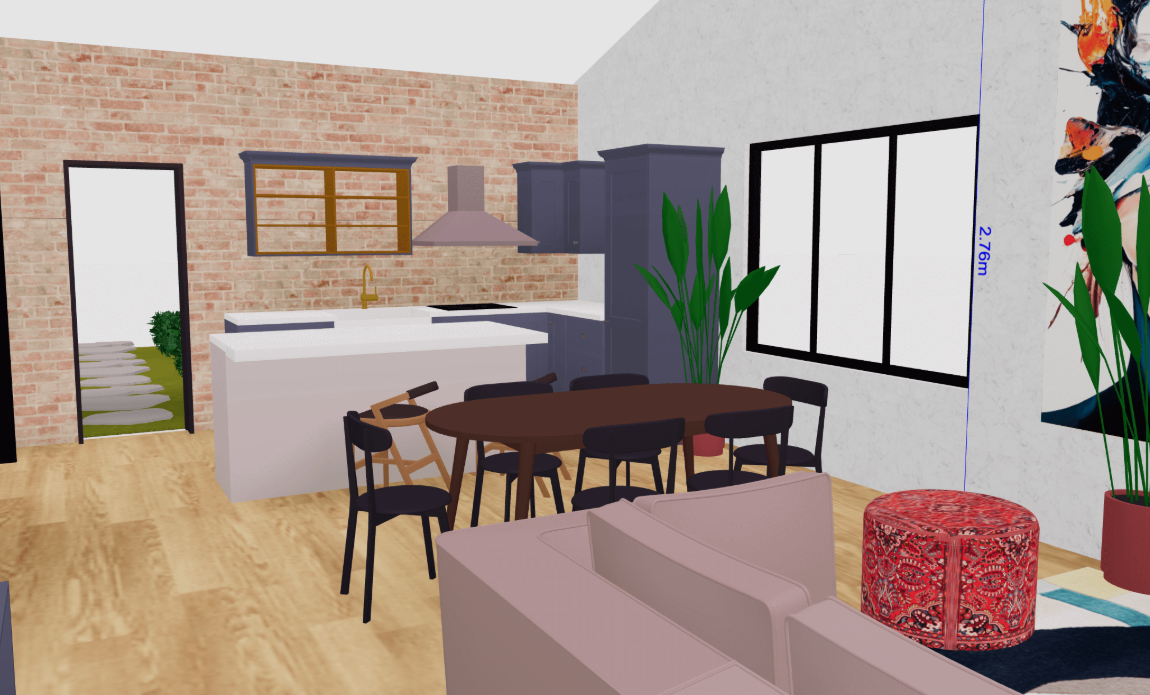
A 3d kitchen design tool lets you build your kitchen floor plan to scale, drop in an island or peninsula, and see how each option affects traffic flow, clearance, and the overall feel of the space. You can test different sizes, positions, and configurations in minutes rather than guessing from tape measurements on the floor.
With Arcadium 3D, you can create your kitchen layout in your browser without downloading any software. Build the walls, place your existing cabinets and appliances, then add an island and see how the clearance works. Swap it for a peninsula and compare the difference. Share the layout via URL with a partner or contractor so everyone sees the same plan before any money is spent on materials or labor.
Testing both options in 3D is the single most effective way to make this decision with confidence. Measurements on paper tell you whether something fits. A 3D model shows you whether it works.
Quick decision guide: Island or Peninsula?
Choose an island if:
Your kitchen is at least 12 by 12 feet (144 square feet) with enough clearance for 42 to 48 inches on all sides. You want a freestanding focal point with design flexibility. You have an open concept layout where the island can anchor the center of the space. You need a multi functional workstation with an integrated sink, cooktop, or seating on multiple sides.
Choose a peninsula if:
Your kitchen is under 150 square feet and cannot accommodate clearance on all four sides of an island. You want to maximize counter space without sacrificing floor area. You need a cost effective solution that connects to existing cabinetry. Your kitchen is L shaped or U shaped and a peninsula extension completes the layout naturally. You want a defined boundary between the kitchen and an adjacent room.
Frequently asked questions
What is the minimum kitchen size for a kitchen island?
Your kitchen should be at least 12 feet by 12 feet (144 square feet) to comfortably fit a small island with adequate clearance on all sides. Kitchens under 100 square feet are almost always better served by a peninsula.
Can a peninsula have bar stool seating like an island?
Yes. A peninsula with a 12 to 15 inch countertop overhang on the open side supports bar stool seating. Allow 24 inches of width per seat for comfortable spacing.
Is a kitchen island or peninsula better for resale value?
Kitchen islands generally have stronger resale appeal because buyers associate them with modern, open concept kitchens. However, a well designed peninsula in a smaller kitchen adds more functional value than a cramped island.
Can I have both an island and a peninsula in my kitchen?
Yes, if your kitchen is large enough. Some kitchens over 200 square feet use an island for prep and seating and a peninsula as a secondary workspace or room divider. Make sure both have adequate clearance.
How much does a kitchen island cost compared to a peninsula?
A basic peninsula typically costs $1,000 to $3,000 installed. A mid range island with electrical and standard countertops costs $3,000 to $8,000. High end custom islands can exceed $10,000.
How much clearance do I need around a kitchen island?
A minimum of 36 inches on all sides, though 42 to 48 inches is ideal. If the island includes seating, allow at least 44 to 48 inches of clearance behind the stools so people can move comfortably.
How do I know which option fits my kitchen before building?
Use a 3D kitchen design tool like Arcadium 3D to build your kitchen to scale and test both layouts virtually. This lets you see clearance, traffic flow, and proportions before spending any money on construction.



 Color palette generator
 3D design from AI chat
 Floor plan creator
 Kitchen design tool
 House design software
 Landscape design software
 Bedroom design
 Office floor plan creator
 Trade show booth design
 How to use Arcadium — full guide
 Community Showcase
 3D object library - free
 Articles and blog