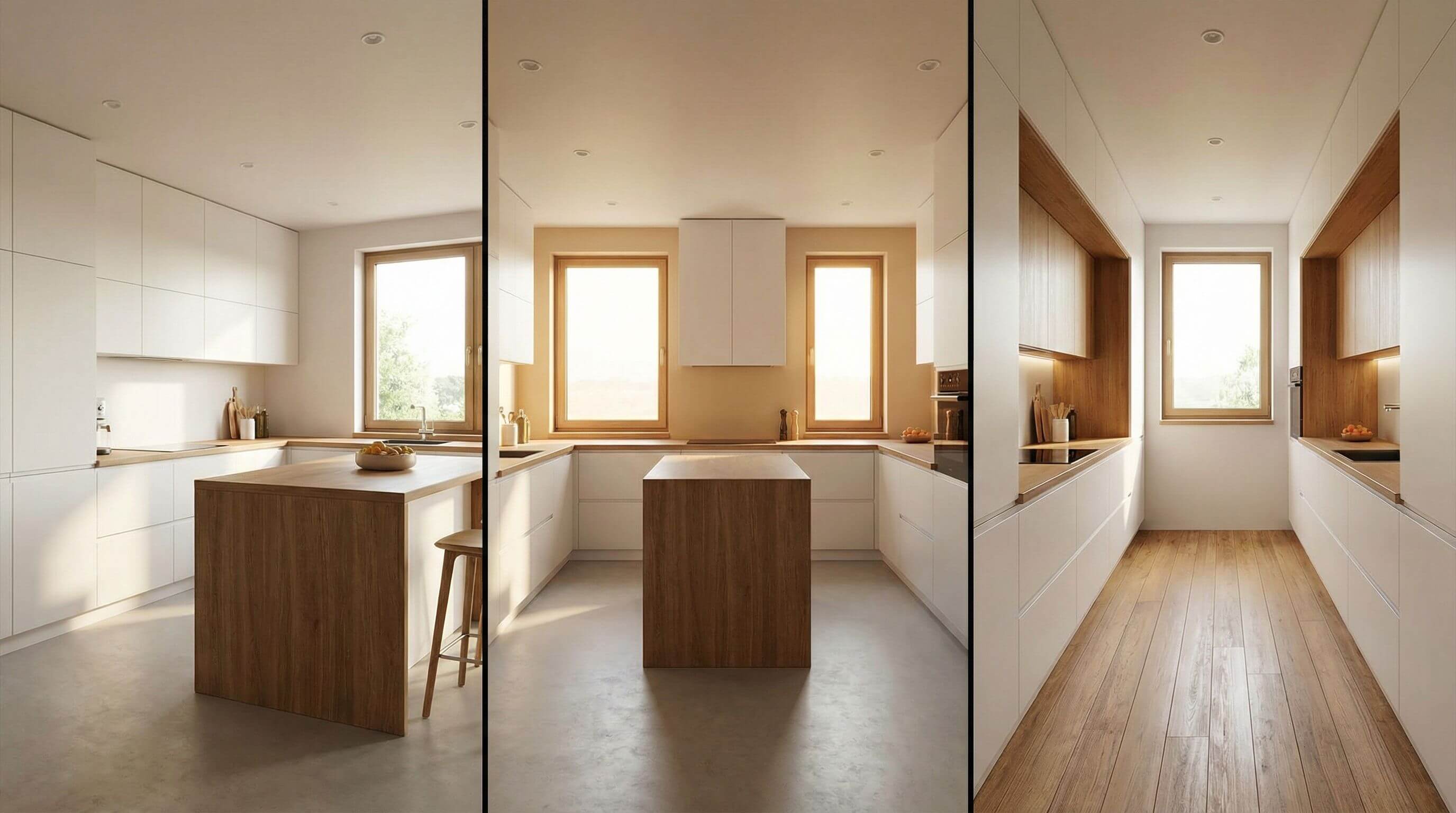
Your kitchen layout determines everything from how efficiently you cook to how the space feels when guests walk in. Choosing between an L-shaped, U-shaped, or galley kitchen is one of the most consequential decisions in any kitchen renovation or new build. Each layout serves different room sizes, cooking habits, and lifestyle needs.
As a 3D designer who has modeled hundreds of kitchen environments, I have seen firsthand how the right layout transforms usability and aesthetics. This guide breaks down the strengths, limitations, and ideal use cases for all three layouts so you can make a confident, informed choice.
What is a Kitchen Layout and why does it matter?
A kitchen layout refers to the arrangement of countertops, cabinets, appliances, and walkways within your kitchen. It directly affects how you move between key work areas: the refrigerator, the sink, and the stove.
This movement pattern is known as the kitchen work triangle, a foundational design principle that positions these three elements in a triangular formation to reduce unnecessary steps during meal preparation.
The ideal work triangle keeps each side between 4 and 9 feet, with a total perimeter under 26 feet. The layout you choose determines how naturally this triangle forms and how smoothly traffic flows through the room. A poorly chosen layout leads to wasted counter space, cramped pathways, and frustration during everyday cooking tasks.
L-shaped kitchen layout: Flexible and open
The L-shaped kitchen places countertops and cabinets along two adjacent walls, forming a 90-degree angle. It is the most popular residential layout and adapts well to both small and large rooms.
Best suited for
Open concept homes where the kitchen connects to a dining or living area benefit greatly from this layout. Households that enjoy entertaining will appreciate how it keeps the cook connected to guests. It also works well in medium sized kitchens that need room for an island or breakfast nook.
Key advantages
The L shape creates a naturally efficient work triangle with short distances between the stove, sink, and refrigerator. The open side of the layout invites foot traffic without interfering with the cooking zone. There is strong flexibility for adding an island, which provides extra prep surface, storage, and casual seating. Corner space can be maximized with pull out shelves or lazy Susans.
Potential drawbacks
Corner cabinets can be difficult to access without specialized hardware. In very large rooms, the two legs of the L may spread appliances too far apart, weakening the work triangle. Without an island, the layout can feel underutilized in spacious kitchens.
Before committing to an L-shaped configuration, it helps to visualize how everything fits. Using our kitchen layout design tool lets you test different arrangements in 3D, so you can see how counter space, cabinet placement, and traffic flow come together before any physical work begins.
U-shaped kitchen layout: Maximum counter space and storage
The U-shaped kitchen uses three walls of cabinetry and countertops, wrapping around the cook on three sides. It is one of the most storage rich configurations available.
Best suited for
This layout works best in medium to large kitchens with dedicated kitchen rooms. Households where two people regularly cook together will appreciate the generous counter area. Serious home cooks who need extensive prep space, multiple appliances, and organized storage zones will find this layout especially practical.
Key advantages
Three walls of cabinetry offer significant storage capacity. The enclosed design keeps everything within arm's reach, creating one of the tightest and most efficient work triangles possible. Two cooks can work simultaneously without constantly bumping into each other. There is ample room for upper and lower cabinets, tall pantry units, and built in appliance housing.
Potential drawbacks
In smaller rooms, a U-shaped layout can feel enclosed or cramped. The three walled structure may cut the kitchen off from adjacent living spaces, which is not ideal for open concept floor plans. Corner cabinet access requires careful planning, and the layout demands a wider room to maintain comfortable walkway clearance of at least 42 inches between opposing counters.
When designing a U-shaped kitchen, precision matters. Modeling the layout in 3D helps you verify clearances, test appliance placement, and ensure that the enclosed feel works with your room's proportions rather than against them.
Galley kitchen layout: Compact efficiency at its best
A galley kitchen features two parallel countertops separated by a central walkway. Named after the narrow kitchens found on ships, this layout is engineered for maximum efficiency in minimal space.
Best suited for
Apartments, condos, and smaller homes where square footage is limited are ideal candidates. Single cook households or those who prioritize workflow efficiency over social cooking will thrive with this layout. It is also a popular choice for secondary kitchens or butler's pantries in larger homes.
Key advantages
Everything is within a step or two. The parallel design naturally supports a tight work triangle with minimal wasted movement. Galley kitchens are often the most budget friendly option because they require fewer cabinets and less countertop material than L or U-shaped designs. Every inch of wall space can be used for storage.
Potential drawbacks
The corridor feel can make the space seem narrow and closed off, especially with dark cabinetry or poor lighting. It is not ideal for multiple cooks or heavy foot traffic. Galley kitchens typically cannot accommodate an island, which limits extra seating and prep surface.
To counteract the narrow feel, designers often recommend lighter finishes, under cabinet lighting, open shelving on one side, and reflective backsplash materials. Modeling these choices in 3D before installation helps confirm that the visual balance works.
Side by Side comparison: L-shaped vs U-shaped vs Galley
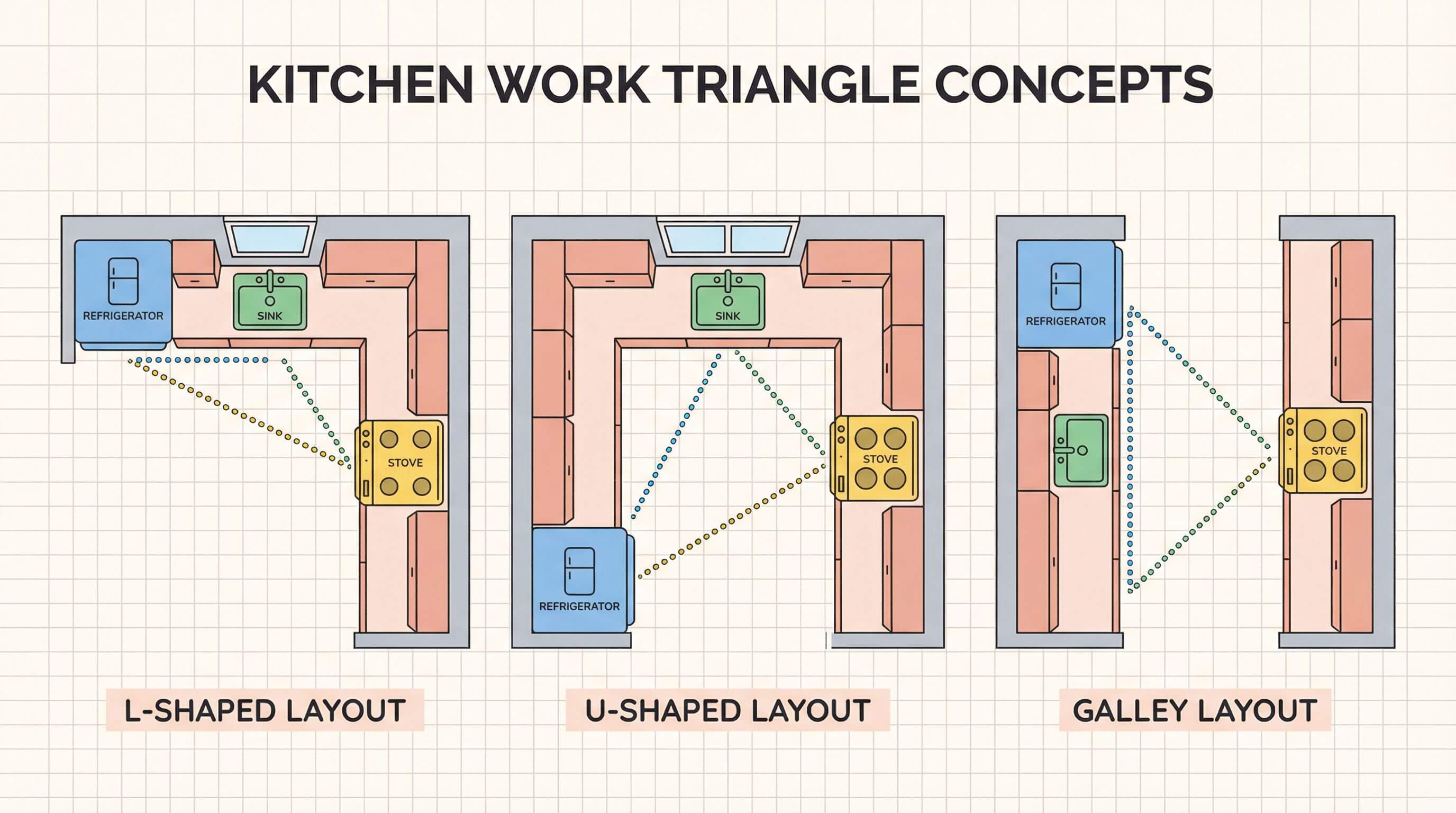
Here is how these three layouts compare across the factors that matter most when planning a kitchen:
Space Requirements: Galley kitchens work in the tightest footprints, starting from as narrow as 7 feet between walls. L-shaped kitchens need moderate space and at least two adjacent walls. U-shaped layouts demand the most room and ideally a width of 10 feet or more between opposing counters.
Storage Capacity: U-shaped kitchens lead with three full walls of cabinetry. Galley kitchens maximize storage along their parallel walls. L-shaped kitchens provide solid storage but may need an island to match the other two.
Work Triangle Efficiency: All three support the work triangle, but galley and U-shaped layouts tend to keep distances shorter. L-shaped kitchens rely on proper appliance placement along the two legs to maintain an efficient triangle.
Social Cooking and Entertaining: L-shaped kitchens win here because the open side invites interaction. U-shaped kitchens can feel isolating unless one wall is a peninsula. Galley kitchens are best suited for solo cooking.
Budget Considerations: Galley layouts generally cost the least due to fewer cabinets and countertop runs. L-shaped kitchens fall in the mid range. U-shaped kitchens typically cost the most because of the three wall installation.
Island Compatibility: L-shaped layouts pair naturally with an island. Larger U-shaped kitchens can incorporate one if the room allows. Galley kitchens rarely have space for an island.
How to choose the right layout for your kitchen
Selecting the right layout depends on your room dimensions, cooking habits, household size, and how your kitchen connects to the rest of your home. Consider these practical steps:
Start by measuring your kitchen space accurately. Note the positions of windows, doors, plumbing lines, and electrical outlets. These fixed elements influence which layouts are feasible without major structural changes.
Think about how many people use the kitchen at once. If two or more people regularly cook together, an L-shaped or U-shaped layout offers room to coexist. If you cook solo most of the time, a galley layout could be the most efficient option.
Consider how connected you want the kitchen to be with the rest of your living space. Open concept homes pair well with L-shaped kitchens. Dedicated kitchen rooms naturally support U-shaped or galley configurations.
Finally, think about your long term needs. A layout that works today should still serve you well as your family grows or your cooking habits evolve.
Visualize your kitchen layout before you build
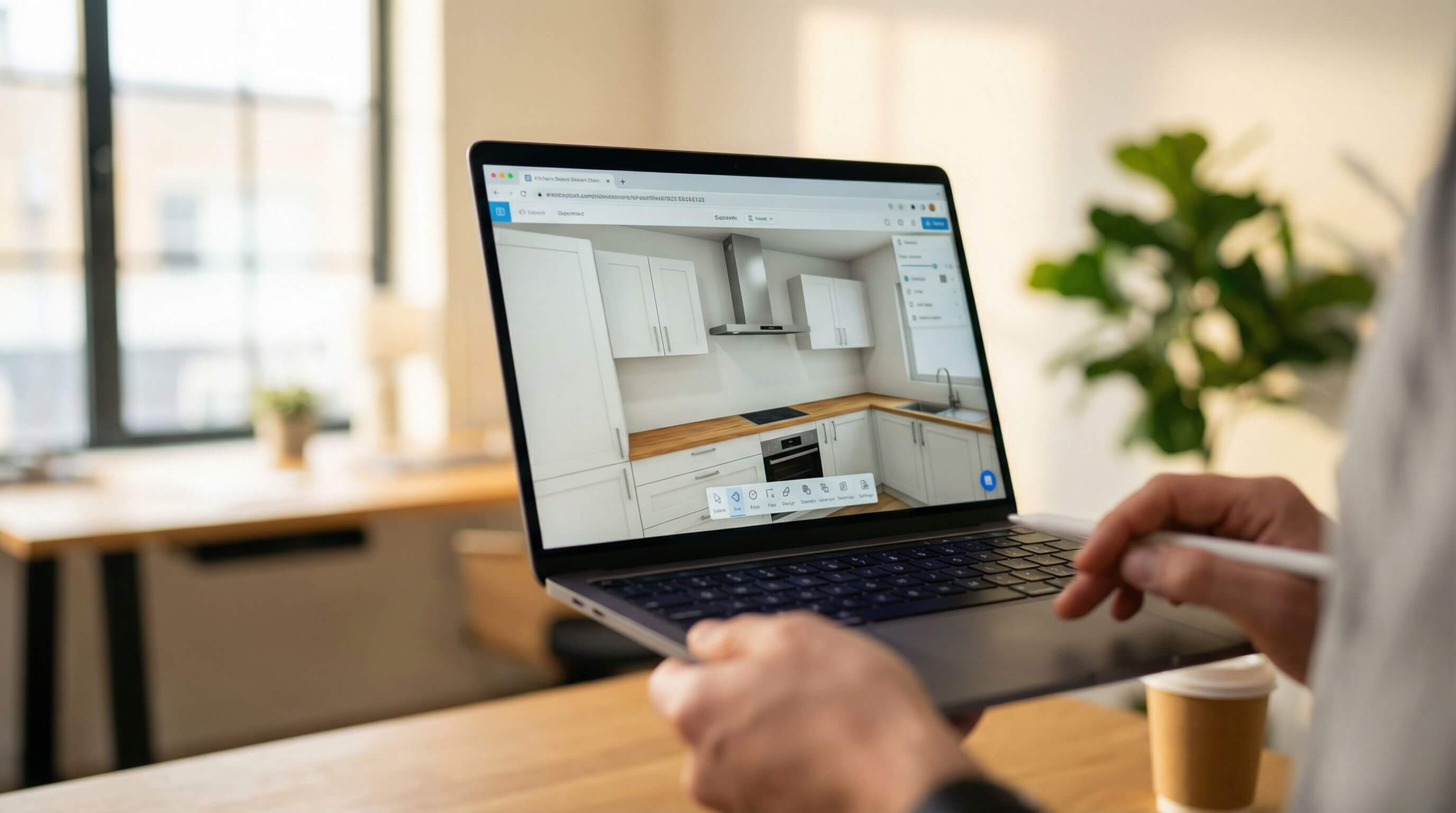
One of the biggest mistakes homeowners make is committing to a layout based on floor plans alone. Two dimensional drawings cannot show you how a space will actually feel. This is where 3D visualization becomes essential. Arcadium 3D is a browser based 3D design platform that lets you model your kitchen in a realistic environment. You can test different layouts, swap cabinet styles, adjust counter depths, and walk through the space virtually before spending a single dollar on construction.
As someone who works in 3D design daily, I recommend modeling at least two layout options before making a final decision. Seeing an L-shaped kitchen next to a U-shaped alternative in 3D reveals spatial differences that flat drawings simply cannot communicate. You can check clearances, evaluate traffic patterns, and confirm that your chosen layout supports a functional work triangle.
Practical design tips for each layout
L-shaped kitchen tips
Place upper cabinets along the longer leg to maximize storage. Position the sink at the corner or near the junction of the two legs to keep it central to the work triangle. If adding an island, maintain at least 42 inches of clearance on all sides for comfortable movement.
U-shaped kitchen tips
Avoid placing tall cabinets on all three walls, as this can make the room feel boxed in. Mix in open shelving or glass front cabinets on one wall to add visual breathing room. Keep the main walkway at least 48 inches wide. If space allows, consider making one of the three walls a peninsula to open the kitchen to adjacent rooms.
Galley kitchen tips
Use one side primarily for cooking and prep, and the other for storage and cleaning. This reduces congestion when someone else enters the kitchen. Choose light colored cabinetry and add under cabinet lighting to combat the narrow corridor effect. If possible, replace upper cabinets on one side with open shelving or windows to expand the visual depth.


 Color palette generator
 3D design from AI chat
 Floor plan creator
 Kitchen design tool
 House design software
 Landscape design software
 Bedroom design
 Office floor plan creator
 Trade show booth design
 How to use Arcadium — full guide
 Community Showcase
 3D object library - free
 Articles and blog