A kitchen under 100 square feet sounds limiting until you realize that most professional ship galleys, food truck kitchens, and award winning studio apartments run on the same footprint. The difference between a cramped cooking space and one that feels open and functional comes down to one thing: layout.
This guide breaks down the layouts, storage strategies, and visual techniques that actually work in compact kitchens. As a 3D designer who has modeled hundreds of small kitchen configurations in Arcadium 3D, I can tell you that every inch matters, and the right plan makes all the difference.
Why layout selection matters more in a small kitchen
In a large kitchen, a poor layout is just an inconvenience. In a kitchen under 100 sq ft, it can make the space almost unusable. When your total floor area is limited, the position of every appliance, cabinet, and countertop directly affects how you move, cook, and store items.
The concept of the kitchen work triangle (connecting the sink, stove, and refrigerator) becomes even more critical in tight spaces. In a standard kitchen, each leg of this triangle is roughly 4 to 9 feet. In a sub 100 sq ft kitchen, you are working closer to the short end of that range, which means your layout needs to be deliberate and efficient from the start.
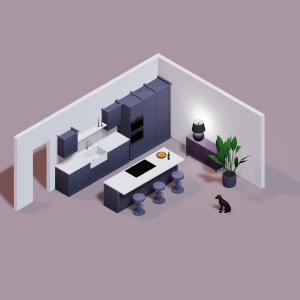
Before committing to any design, I recommend testing your layout digitally. You can use our online kitchen design tool to place cabinets, appliances, and counters in a 3D space and see exactly how they fit before making any physical changes.
Best kitchen layouts for under 100 Sq Ft
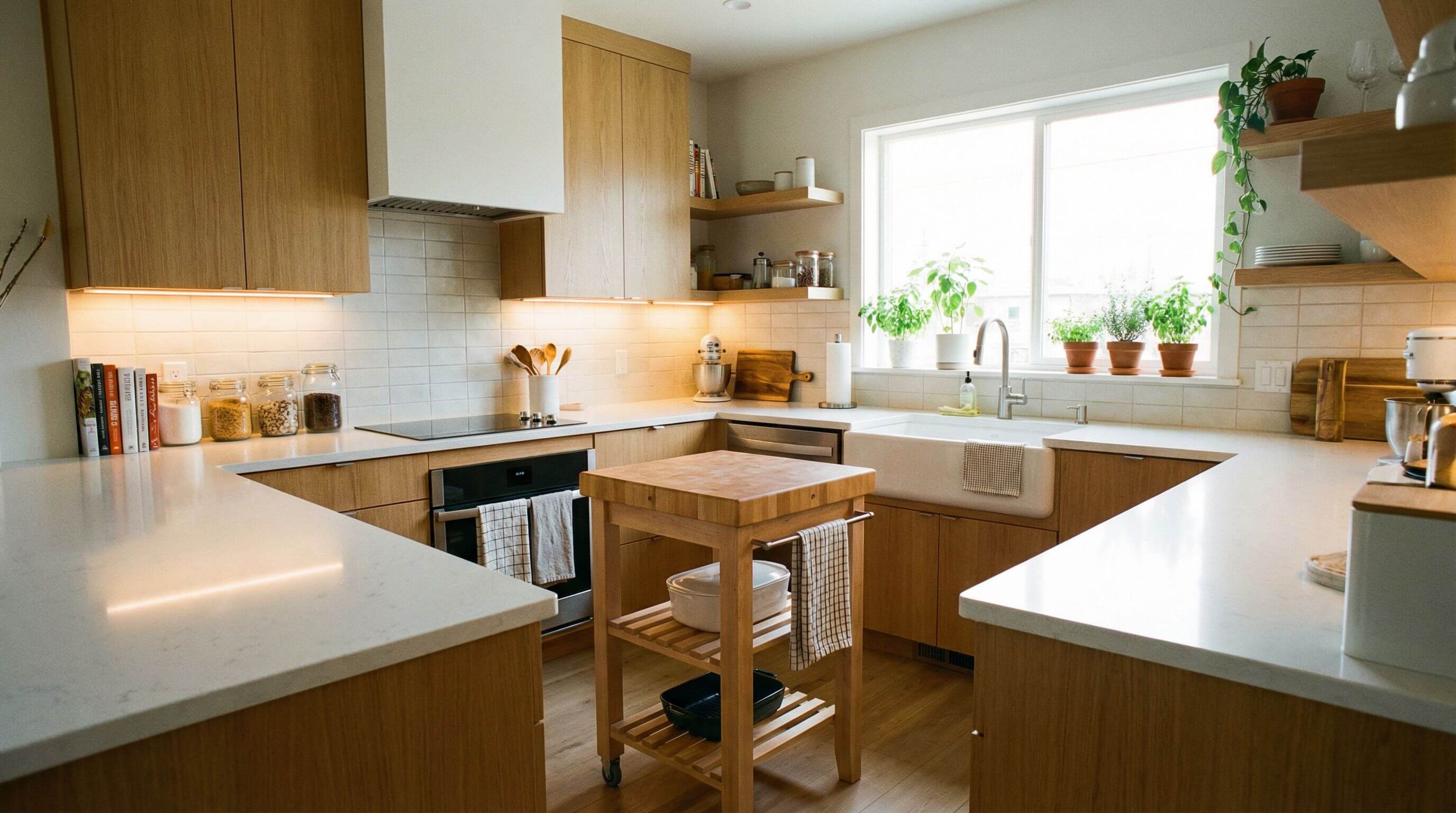
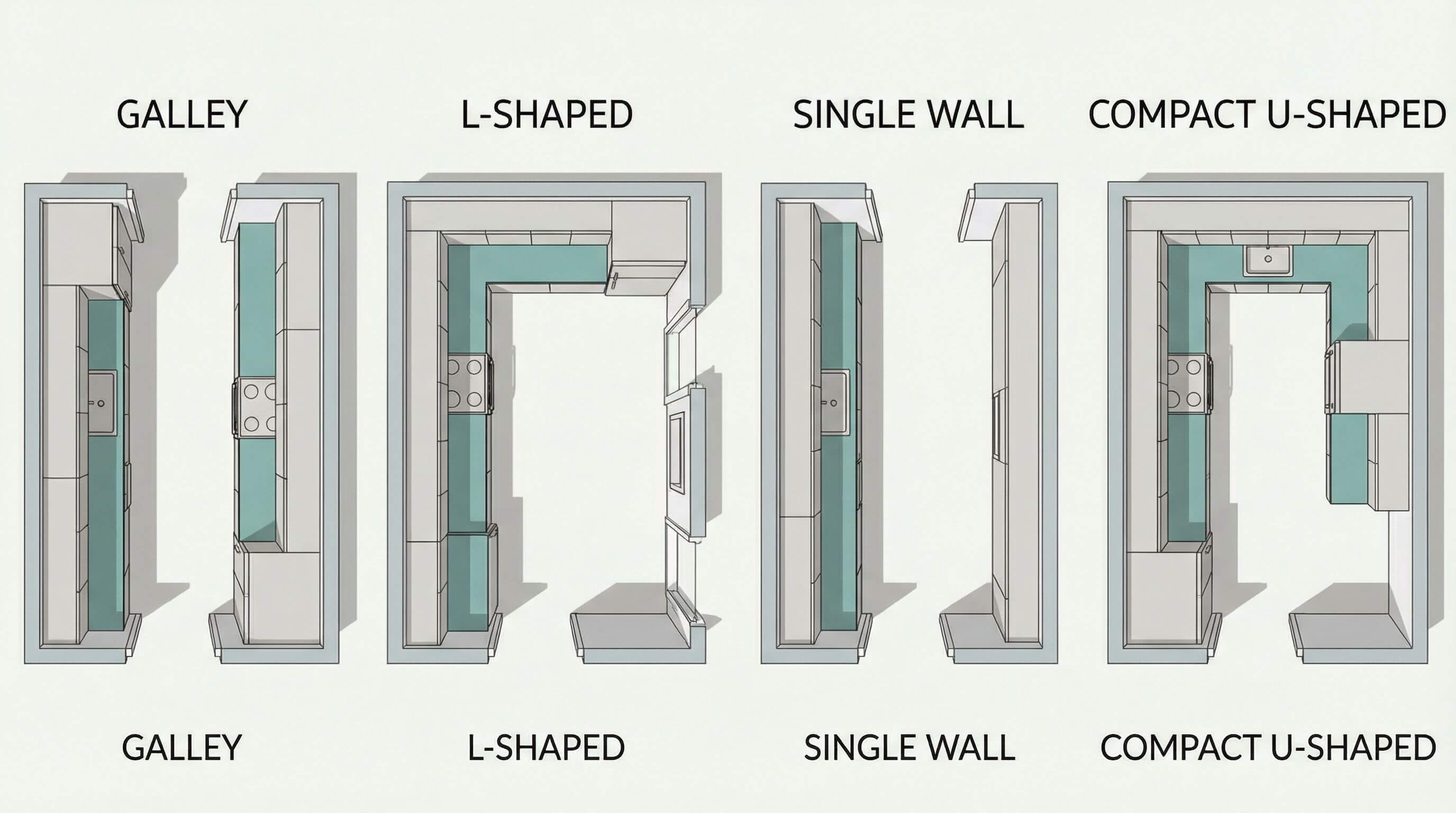
Not all layouts work well in compact kitchens. Here are the four that consistently perform best when square footage is limited.
Galley (corridor) layout
The galley layout features two parallel counters with a walkway in between. Originally designed for ship kitchens, this configuration is one of the most space efficient options available for homes with narrow kitchen footprints.
Why it works: Everything stays within arm's reach. The sink, cooktop, prep zone, and refrigerator sit along two facing walls, forming a natural work triangle that minimizes unnecessary steps. Galley kitchens also tend to cost less during renovation because they require less cabinetry and fewer finishing materials.
Best suited for: Narrow rooms, apartments, single cook households, and spaces where the kitchen is its own enclosed room rather than part of an open plan.
Watch out for: If the corridor between the two counters is less than 36 inches, it will feel too tight. Aim for at least 42 inches of walkway. Also, galley kitchens can feel enclosed, so lighter cabinet finishes and under cabinet lighting help open the space visually.
L Shaped layout
The L shaped layout runs counters and cabinets along two adjoining walls, forming an open corner. This is one of the most versatile configurations and adapts well to both open plan and closed room kitchens.
Why it works: The L shape creates an efficient work triangle while leaving one or two walls completely open. This gives you room for a small dining table, a movable cart, or even a slim island if the footprint allows. It also makes the kitchen feel more spacious compared to layouts that surround you on three or four sides.
Best suited for: Open concept apartments, kitchens that connect to dining or living areas, and spaces where multiple people need to move through the kitchen.
Watch out for: The inside corner where the two arms meet can become dead space. Use corner solutions like swing out shelves, lazy Susans, or deep angled drawers to reclaim that area.
Single (one wall) layout
This layout places all appliances, cabinets, and counters along a single wall. It is the most compact option and works well in studio apartments, loft spaces, and micro kitchens where the cooking area shares space with living areas.
Why it works: It maximizes open floor space. With everything on one wall, the rest of the room remains completely unobstructed, which is ideal for small homes where the kitchen needs to coexist with other functions.
Best suited for: Studios, tiny homes, vacation rentals, and secondary kitchens like wet bars or guest suites.
Watch out for: Counter space is extremely limited. Compensate with a fold down table, a rolling cart, or wall mounted shelves. Vertical storage becomes essential in this layout.
Compact U-shaped layout
The U shaped layout wraps cabinets and counters around three walls, creating a horseshoe configuration. In kitchens under 100 sq ft, this layout works only when the room dimensions support it (typically at least 8 feet between opposing walls).
Why it works: It offers the most storage and counter space of any layout. Every wall is utilized, and the cook is surrounded by workstations, making it extremely efficient for serious meal preparation.
Best suited for: Dedicated kitchen rooms (not open plan), households that need maximum storage, and cooks who prepare multi course meals regularly.
Watch out for: A U shape can feel closed in if the room is too narrow. Avoid upper cabinets on all three walls; instead, replace one wall of uppers with open shelving or leave it bare to maintain visual breathing room.
Smart storage solutions that save real space
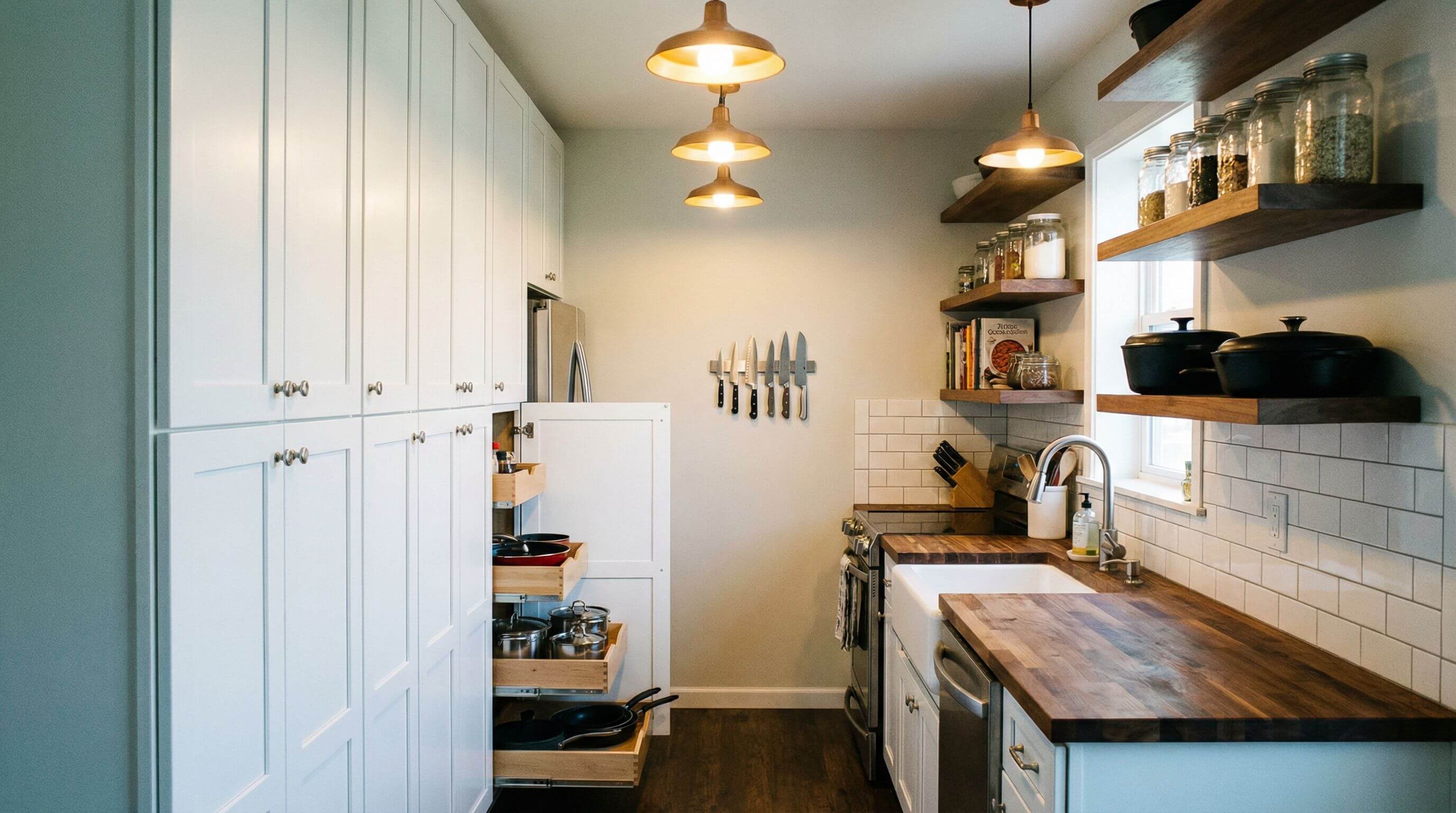
Layout gets your appliances in the right place. Storage determines whether the kitchen actually stays functional day to day. In a sub 100 sq ft kitchen, every cabinet, drawer, and shelf needs to earn its place.
Go vertical
Floor to ceiling cabinets are the single biggest storage upgrade in a small kitchen. Standard upper cabinets stop about 12 inches below the ceiling, which wastes valuable space. Tall pantry style cabinets or extended uppers that reach the ceiling can increase your storage volume by 20 to 30 percent without using any additional floor area.
Use pull out and internal organizers
Pull out drawers, tray dividers, under shelf hanging baskets, lid organizers, and lazy Susans transform dead cabinet space into usable storage. Corner cabinets especially benefit from swing out shelving systems that bring items to you rather than forcing you to reach into deep, dark corners.
Recessed and wall mounted storage
Recessing a cabinet or pantry into a wall creates storage without taking away floor space. If your walls allow it, even a shallow recess of 4 to 6 inches can house spice racks, canned goods, or cleaning supplies. Magnetic knife strips, ceiling mounted pot racks, and pegboard walls are other ways to move storage off the counter and onto vertical surfaces.
Multi functional furniture
A rolling kitchen cart with a cutting board top gives you extra prep space when cooking and tucks away when you need floor space. Drop leaf tables mounted to the wall serve as dining areas that fold flat after meals. These flexible elements are essential in kitchens where permanent fixtures would crowd the room.
Visual tricks that make a small kitchen feel bigger
Beyond layout and storage, the right visual choices can dramatically change how a small kitchen feels. These techniques create the perception of more space without moving a single wall.
Light color palettes: White, soft gray, and pale wood tones on cabinets and countertops reflect more light and create an airy, open atmosphere. This does not mean everything has to be white. A light base palette with one or two accent elements (a bold backsplash, colored hardware) keeps the space interesting without making it feel smaller.
Reflective surfaces: Glossy cabinet fronts, glass tile backsplashes, mirror accents, and metallic fixtures bounce light around the room and add visual depth. In a galley kitchen especially, a reflective backsplash can make the corridor feel noticeably wider.
Open shelving: Replacing a section of upper cabinets with open shelves reduces visual bulk and makes the walls feel less heavy. The trade off is that open shelves require tidier organization, but the visual payoff in a small space is significant.
Layered lighting: Under cabinet task lights eliminate shadows on your work surface. A pendant or two above a breakfast bar adds warmth and draws the eye upward. Ambient lighting creates depth. Together, multiple light sources make a small kitchen feel larger and more inviting than a single overhead fixture ever could.
Continuous flooring: Extending the same flooring material from the kitchen into the adjacent room removes visual boundaries and makes both spaces read as one larger area.
Appliance selection for compact kitchens
Standard size appliances can eat up half the usable space in a small kitchen. Choosing compact or multi functional appliances frees up room for storage and counter space where you actually need it.
Counter depth refrigerators sit flush with your cabinets instead of protruding into the walkway. Slim dishwashers (18 inches instead of 24) fit into narrower gaps. Combination microwave convection ovens eliminate the need for a separate microwave on the counter. Two burner cooktops or induction units take less space than a full range while still handling most daily cooking needs.
How to plan your small kitchen layout step by step
Planning a kitchen under 100 sq ft requires more precision than a larger space because there is no margin for error. Follow this process to get your layout right before any construction begins.
Measure everything accurately. Record the room dimensions, window positions, door swings, and the location of plumbing and electrical connections. These fixed elements dictate where your sink, stove, and refrigerator can realistically go.
Establish your work triangle. Position the sink, stove, and fridge so you can move between them in a few steps without obstructions. In compact kitchens, a tighter triangle (each side between 3 and 6 feet) generally works better than spreading things out.
Choose your layout type. Based on your room shape and lifestyle, select a galley, L shaped, single wall, or compact U shaped layout. If you are unsure which fits best, try each option in a 3D design tool and compare them side by side.
Plan storage zones. Group items by function. Cooking tools near the stove, prep tools near the counter, cleaning supplies near the sink. This reduces movement and keeps daily routines efficient.
Test before you commit. Use Arcadium 3D to build a full 3D model of your kitchen with exact measurements, cabinet placements, and appliance positions. Walk through the layout virtually to catch issues that are hard to spot on a flat floor plan.
Final Thoughts
A kitchen under 100 square feet is not a limitation. It is a design challenge with clear, proven solutions. The right layout eliminates wasted steps. Smart storage makes every inch productive. And thoughtful visual choices create a space that feels far larger than its dimensions suggest.
Whether you are renovating an older home, outfitting a new apartment, or planning a tiny home build, start by getting your layout right. Sketch it, model it in 3D, and test it before a single cabinet gets installed. That one step saves more time, money, and frustration than any other part of the kitchen design process.
Frequently asked questions
What is the best layout for a kitchen under 100 sq ft?
A galley or L shaped layout works best in most cases. Galley layouts maximize efficiency in narrow rooms, while L shaped layouts suit open plan spaces where you need a more connected flow between the kitchen and living area.
How much does it cost to remodel a kitchen under 100 sq ft?
Costs vary widely based on materials and scope, but most small kitchen remodels fall between $15,000 and $55,000. Refacing cabinets, choosing laminate counters, and keeping plumbing in its existing location are effective ways to stay on the lower end.
Can I fit an island in a kitchen under 100 sq ft?
A permanent island usually requires at least 42 to 48 inches of clearance on all sides, which is tough in this footprint. A slim rolling cart or a drop leaf table is a better alternative for most compact kitchens.
How do I make my small kitchen look bigger without renovating?
Use light colored finishes, add under cabinet lighting, replace some upper cabinets with open shelving, and keep countertops clear. Reflective backsplash materials and continuous flooring also create the illusion of more space.
What appliances work best in a small kitchen?
Counter depth fridges, 18 inch dishwashers, two burner cooktops, and combination microwave ovens are all designed for compact spaces. Always verify their exact dimensions against your layout before purchasing.
Is a U shaped kitchen too cramped for a small room?
It depends on the room's dimensions. If the opposing walls are at least 8 feet apart, a compact U shape can work well and actually provides the most storage. Below that width, a galley or L shape is usually more comfortable.
How can I plan my small kitchen layout without hiring a designer?
Digital tools have made DIY kitchen planning much more accessible. Platforms like Arcadium 3D let you draw your floor plan, place cabinets and appliances, and preview the design in 3D, all from your browser with no software to install.


 Color palette generator
 3D design from AI chat
 Floor plan creator
 Kitchen design tool
 House design software
 Landscape design software
 Bedroom design
 Office floor plan creator
 Trade show booth design
 How to use Arcadium — full guide
 Community Showcase
 3D object library - free
 Articles and blog