A small backyard does not have to feel limiting. With the right design approach, even the most compact outdoor area can become a functional, inviting retreat that looks far bigger than its actual footprint. The key is working smarter with every square foot, choosing elements that serve multiple purposes, and layering design features that add depth without clutter.
This guide covers proven landscaping strategies that professional designers use to transform tight outdoor spaces. Whether you are starting from scratch or reimagining an existing yard, you will find practical ideas you can plan, visualize, and execute with confidence.
Why small backyard landscaping needs a different approach
Designing a large yard is forgiving. You can spread features out, leave open space between zones, and experiment freely. A small backyard offers none of that flexibility. Every plant, path, and piece of furniture competes for the same limited area.
That is exactly why small yard landscaping demands intentional planning. Without a clear layout, compact spaces become cluttered fast. But with a thoughtful design, they become cozy, efficient, and visually appealing.
The most effective approach starts with identifying your priorities. Do you want a space for outdoor dining? A garden for growing herbs and vegetables? A quiet reading corner? Listing your goals before placing a single element will save time, money, and frustration.
Once your priorities are clear, the next step is to visualize them. This is where Arcadium 3D becomes incredibly useful. Instead of guessing how a raised bed, pathway, or seating arrangement will fit, you can model the entire yard digitally and adjust the layout until everything works perfectly.
Start with zones: Divide your yard into functional areas
Zoning is the single most effective strategy for making a small backyard feel organized and spacious. Instead of treating the entire space as one open area, divide it into distinct zones based on how you want to use them.
Common zones for a compact yard include a dining or entertaining area, a planting section for flowers or edibles, a relaxation corner with comfortable seating, and a transitional pathway connecting these areas. You do not need physical walls between zones. A change in ground material, a low planter border, or a shift in elevation is enough to define each space visually.
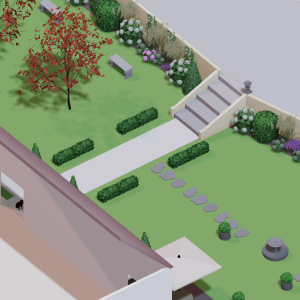
Retaining walls can double as zone dividers while also managing sloped terrain. Raised beds placed strategically can separate a food garden from a lounging area without blocking sightlines. The goal is to create the illusion of multiple rooms within one compact footprint.
Sketching zones on paper works, but it rarely captures how the finished layout will feel. Using our ai landscape design tool lets you place zones in 3D, test different arrangements, and see how each area flows into the next before committing to any physical work.
Go vertical: Use walls, fences, and trellises for greenery
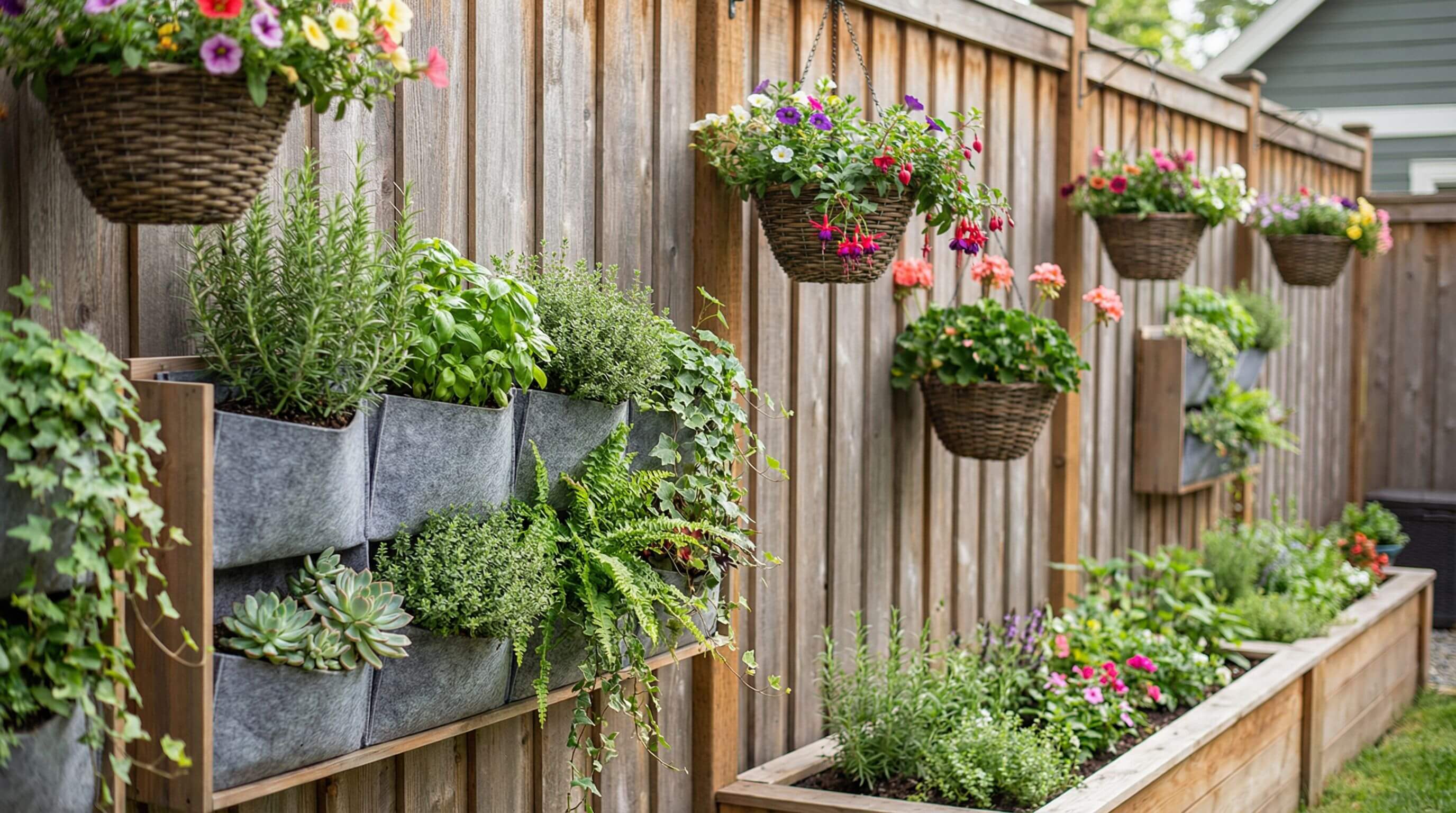
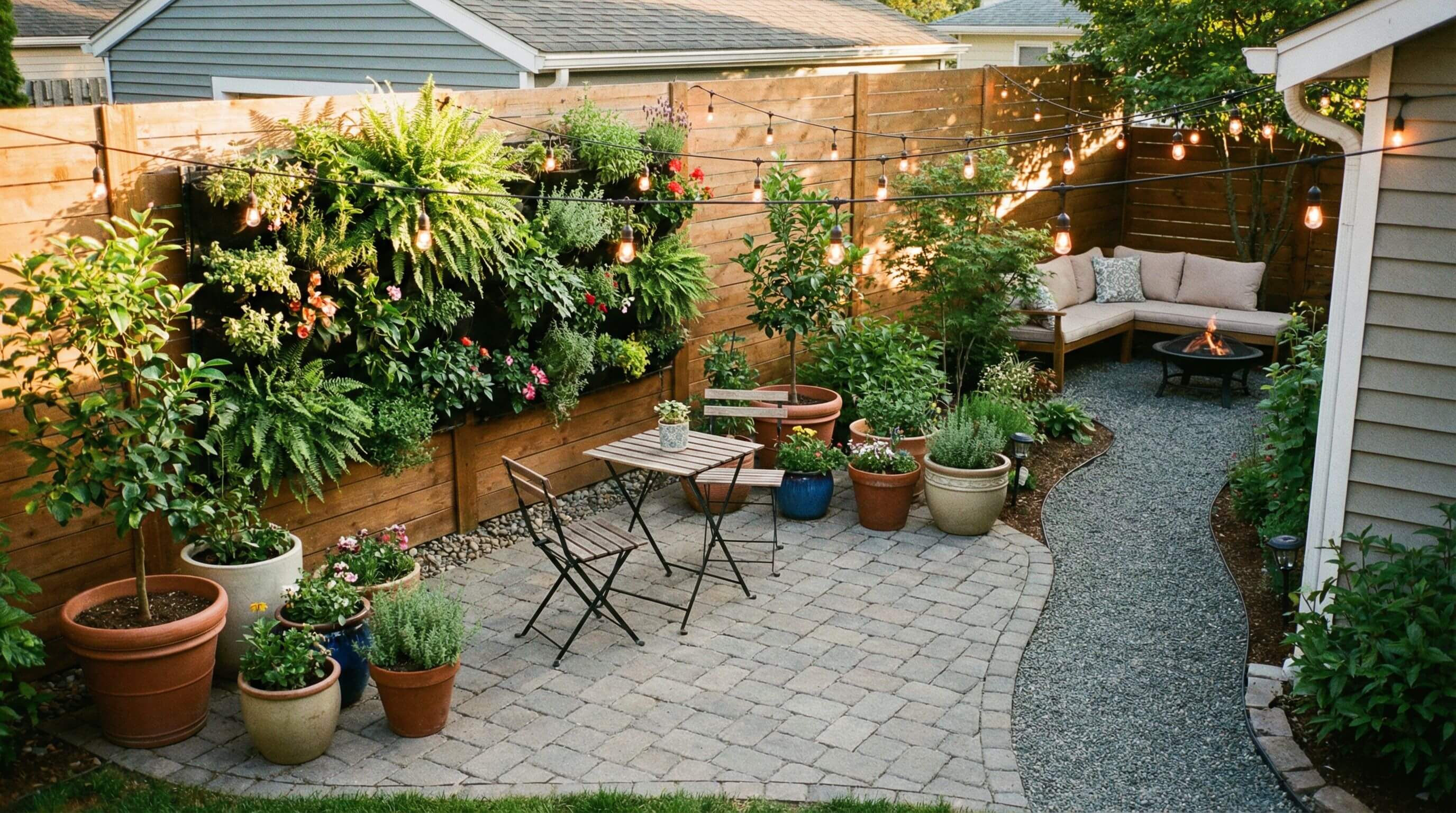
When ground space is scarce, your walls and fences become prime planting territory. Vertical gardening is one of the most impactful strategies for small backyards because it adds lush greenery without consuming any floor area.
Wall mounted planters, hanging baskets, and trellises covered in climbing plants like jasmine, ivy, or clematis can turn a bare fence into a living feature wall. This not only softens hardscape surfaces but also creates a sense of depth that makes the yard feel more expansive.
Pocket planters attached to fence panels work well for herbs like basil, mint, and rosemary, giving you a kitchen garden that takes up zero ground space. For a bolder statement, consider a full green wall system with modular planting panels that hold everything from succulents to ferns.
Vertical elements also draw the eye upward, which is a classic designer technique for making tight spaces feel taller and more open. Pair vertical plantings with overhead string lights or a pergola, and the backyard gains a layered quality that feels much larger than it actually is.
Container gardening: Flexible greenery for any space
Containers are the most versatile tool in a small yard designer’s toolkit. Pots, planters, window boxes, and raised planter beds let you grow flowers, herbs, vegetables, and even small trees without committing to permanent garden beds.
The real advantage of container gardening is flexibility. You can rearrange pots seasonally, move them to follow sunlight, cluster them for visual impact, or spread them out to define walkways. This adaptability is especially valuable in rental properties where permanent landscaping changes are not an option.
For the best visual effect, use containers of varying heights and sizes. A tall ceramic pot with ornamental grass next to a low, wide planter filled with trailing petunias creates layered interest. Grouping containers in odd numbers (three or five) tends to look more natural than even arrangements.
Material matters too. Terracotta suits Mediterranean or rustic themes. Concrete planters work well in modern or minimalist yards. Lightweight resin or fiberglass options are practical for balconies and small decks where weight is a concern.
Smart hardscaping: Paths, patios, and ground materials
Hardscaping plays a critical role in small backyard design. The right ground materials can make a compact space feel structured and polished, while poor choices can make it feel cramped.
Pavers, gravel, flagstone, and concrete slabs each create a different visual effect. Large format pavers with narrow grout lines create a seamless look that visually expands the space. Gravel or crushed stone is budget friendly and works well for defining pathways or seating zones without the permanence of poured concrete.
Curved pathways are a powerful trick for small yards. A straight path reveals the entire space at once, while a gently curving walkway creates a sense of discovery and makes the yard feel deeper than it is. Line the path edges with low growing plants like creeping thyme or dwarf mondo grass for a softer, integrated appearance.
Mixing materials also adds visual interest. Combining a concrete patio with a gravel border, or pavers transitioning to a wooden deck, creates distinct zones and texture variation that keeps the eye moving rather than settling on the yard’s boundaries.
Add a water feature without losing space
Water features bring a sensory dimension to a backyard that few other elements can match. The sound of moving water masks traffic noise, creates a calming atmosphere, and makes the space feel like a private retreat.
For small backyards, scale is everything. A wall mounted fountain saves floor space entirely while still delivering that soothing water sound. Tabletop fountains or small urn style bubblers filled with river rocks are compact options that fit on a patio table or in a corner.
If you have slightly more room, a small recirculating pond with aquatic plants or a standalone water bowl can serve as a focal point. Position the feature near your main seating area so you benefit from the sound where you spend the most time.
Before installing, check how the water feature fits with your other elements. Placing a water feature in 3D space using a design visualization tool helps you see if it overwhelms the area or integrates naturally with your planting and hardscape layout.
Fire pits and cozy gathering spots in compact yards
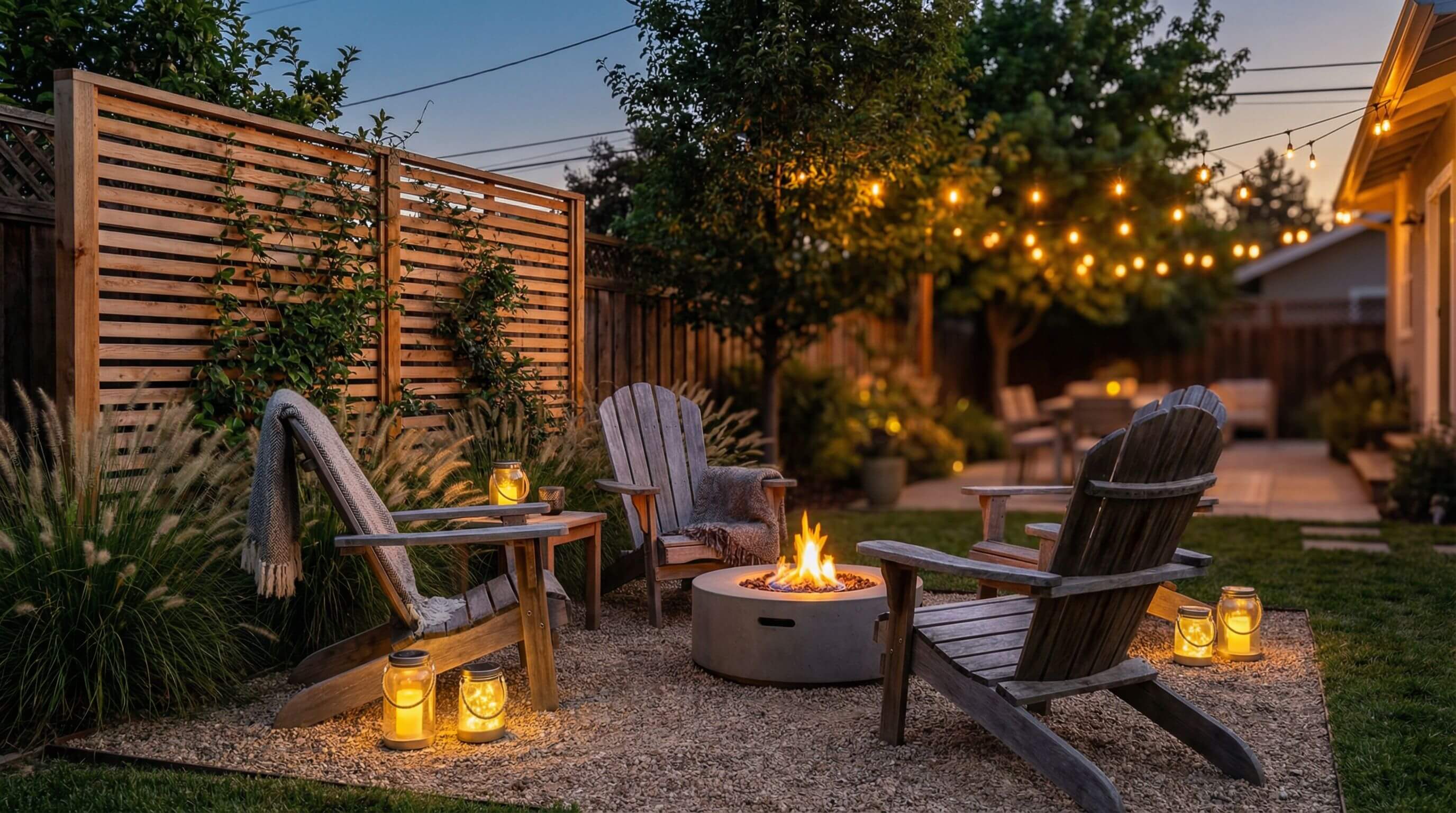
A fire pit can turn even a modest backyard into a social hub. The warmth extends outdoor usability into cooler months, and the natural gathering effect of an open flame makes any space feel welcoming.
For small yards, placement matters more than size. Corner positioning keeps the center open for foot traffic while creating a defined cozy zone. A round fire pit measuring 24 to 30 inches in diameter is enough for a compact setting without dominating the space.
Built in fire pits look polished and integrate well with surrounding hardscaping, but portable fire bowls offer flexibility if you want to reclaim that space for other activities. Gas fire pits are cleaner and easier to manage in tight spaces compared to wood burning options.
Surround the fire pit with Adirondack chairs, a curved bench, or floor cushions. Keep seating three to four feet from the edge for comfort and safety. Add a few lanterns or low solar lights nearby to complete the atmosphere.
Outdoor lighting: Extend your yard’s usability into the evening
Lighting transforms a small backyard from a daytime only space into an evening retreat. It highlights your landscaping, creates ambiance, and increases the total hours you can enjoy the space.
String lights draped across the yard or wrapped around a pergola create a warm, inviting canopy effect. Solar powered path lights along walkways add safety and define the layout without any wiring. LED spotlights aimed at a feature wall, a water fountain, or a specimen tree draw attention to your best design elements after dark.
Layered lighting works best. Combine overhead ambient lighting (string lights or lanterns) with mid level task lighting (sconces near seating or a grill area) and ground level accent lighting (path markers or uplights). This three layer approach adds depth and prevents the flat, washed out look that a single light source creates.
For small spaces, warm white tones (2700K to 3000K) feel the most inviting. Avoid harsh spotlights or overly bright fixtures that can make a compact area feel exposed rather than cozy.
Choosing the right furniture for a small outdoor space
Furniture selection can make or break a small backyard layout. Oversized pieces overwhelm the space, while too many small items create visual clutter.
Multifunctional furniture is the smartest investment. Benches with built in storage compartments, foldable bistro sets, and ottomans that double as side tables or extra seating all serve dual purposes without consuming extra space.
Scale your furniture to the yard. A compact two person dining set often works better than a full four seat table. Corner benches or L shaped seating maximize seating capacity while using less floor area than individual chairs arranged around a table.
Material also affects perception. Lighter colored furniture and slim metal or wicker frames feel less bulky than heavy wooden sets. Transparent or semi transparent materials like acrylic or mesh visually disappear, keeping the space open.
Privacy solutions that do not shrink your yard
Small backyards often sit close to neighboring properties, making privacy a common concern. The challenge is blocking unwanted views without making the space feel boxed in.
Columnar trees like North Pole arborvitae or Italian cypress grow tall and narrow, providing screening without spreading into your usable space. Bamboo planted in containers creates a dense privacy barrier that can be repositioned as needed.
Decorative privacy screens and panels are another effective option. Slatted wood, laser cut metal, or bamboo panels let light and air pass through while obscuring the view. They also add an architectural element that enhances the overall design.
For overhead privacy from second story windows or apartment buildings, a shade sail or pergola with climbing vines provides coverage without solid walls. This also creates a pleasant sense of enclosure that makes the yard feel like an outdoor room.
Plant selection tips for small backyards
Choosing the right plants is essential when space is limited. The goal is to maximize visual impact and seasonal interest without overcrowding the yard.
Layered planting creates depth. Place taller plants or ornamental grasses along the back boundary, medium sized shrubs in the middle, and low ground covers or flowering perennials at the front. This tiered arrangement makes a flat yard feel more dynamic and draws the eye through the space.
Opt for plants that earn their place by offering multiple benefits. Lavender provides fragrance, color, and pollinator support. Dwarf fruit trees deliver spring blossoms and a fall harvest. Evergreen shrubs maintain structure and greenery through winter months.
Avoid fast spreading species that will quickly outgrow a small yard. Instead, choose compact or dwarf varieties bred for tighter spaces. Dwarf hydrangeas, miniature roses, and columnar fruit trees are all excellent options that deliver big visual payoff in a small footprint.
Visualize your design before you build
One of the biggest mistakes in small backyard landscaping is committing to a layout without seeing how it actually looks. A raised bed that seemed perfectly sized on a sketch can feel overwhelming in person. A pathway that looked wide enough on paper can feel cramped once furniture is in place.
3D visualization solves this problem entirely. When you model your backyard in a digital environment, you can experiment with plant placement, test different hardscape materials, try multiple furniture arrangements, and see how everything works together from different angles.
Arcadium 3D offers a browser based platform that makes this process accessible to anyone. You do not need design experience or software downloads. Simply input your yard dimensions, drag and drop landscape elements, and view a realistic 3D preview of your finished design. It is the same approach professional landscape architects use, made available in an intuitive, free format.
Visualizing before building helps you avoid costly errors, communicate your vision clearly to contractors, and feel confident that every element fits your space.
Budget friendly tips for small backyard makeovers
A beautiful small backyard does not require a massive budget. Some of the most impactful changes are surprisingly affordable.
Start with what you have. Repainting an existing fence, power washing a patio, or adding a fresh layer of mulch to garden beds can dramatically refresh the space for very little cost. String lights and solar lanterns provide instant atmosphere at a fraction of the price of permanent landscape lighting.
DIY raised beds built from cedar planks cost far less than professionally installed garden walls and can be completed in a weekend. Gravel is one of the least expensive ground cover options and creates a clean, modern look when edged properly.
Propagate plants from cuttings or divide existing perennials to fill new beds without buying additional stock. Shop end of season plant sales for deep discounts on quality specimens.
The best budget strategy is planning thoroughly before spending. When you visualize your entire layout in a 3D design tool first, you buy only what you need, avoid impulse purchases, and reduce waste from elements that do not fit the final design.


 Color palette generator
 3D design from AI chat
 Floor plan creator
 Kitchen design tool
 House design software
 Landscape design software
 Bedroom design
 Office floor plan creator
 Trade show booth design
 How to use Arcadium — full guide
 Community Showcase
 3D object library - free
 Articles and blog