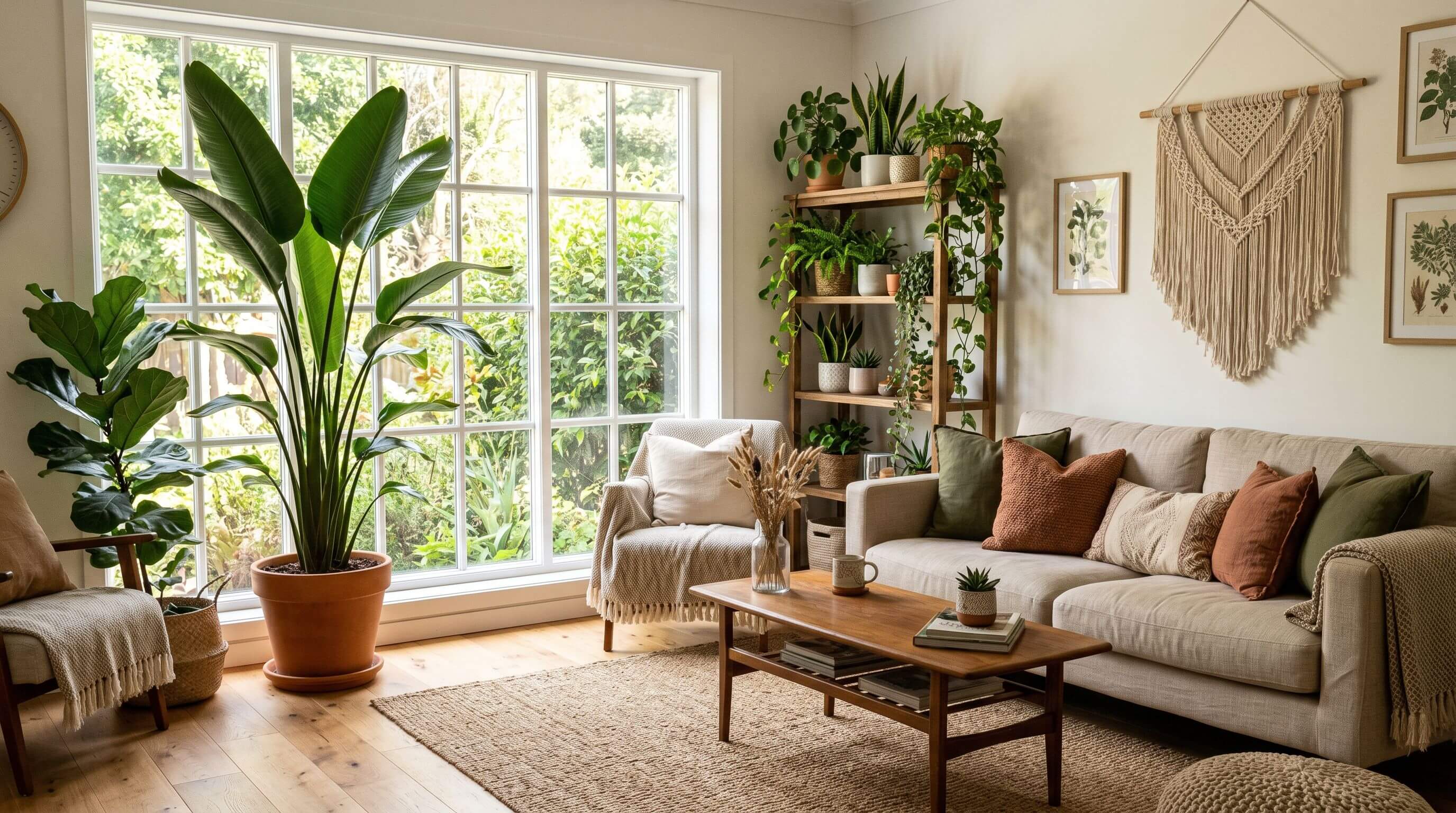
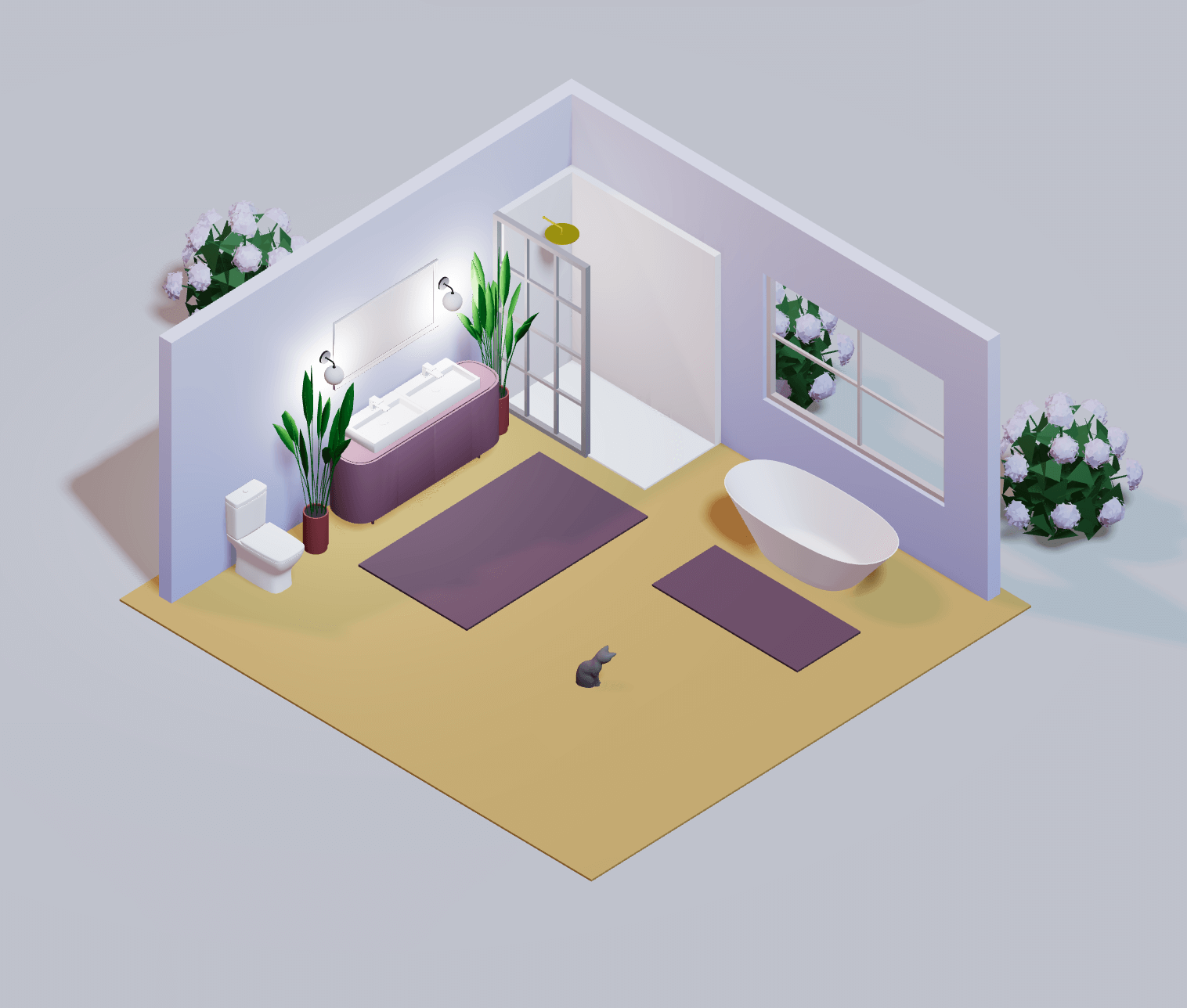
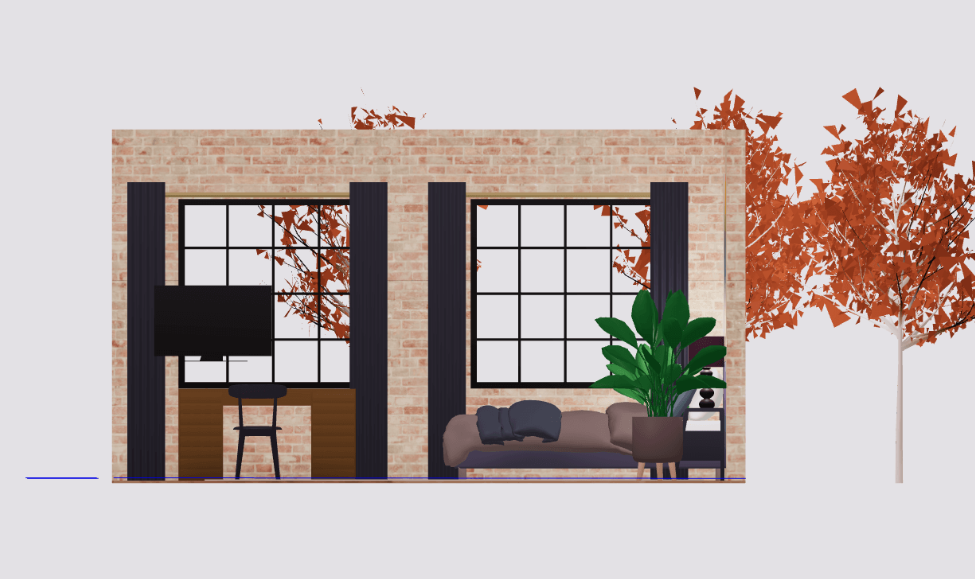
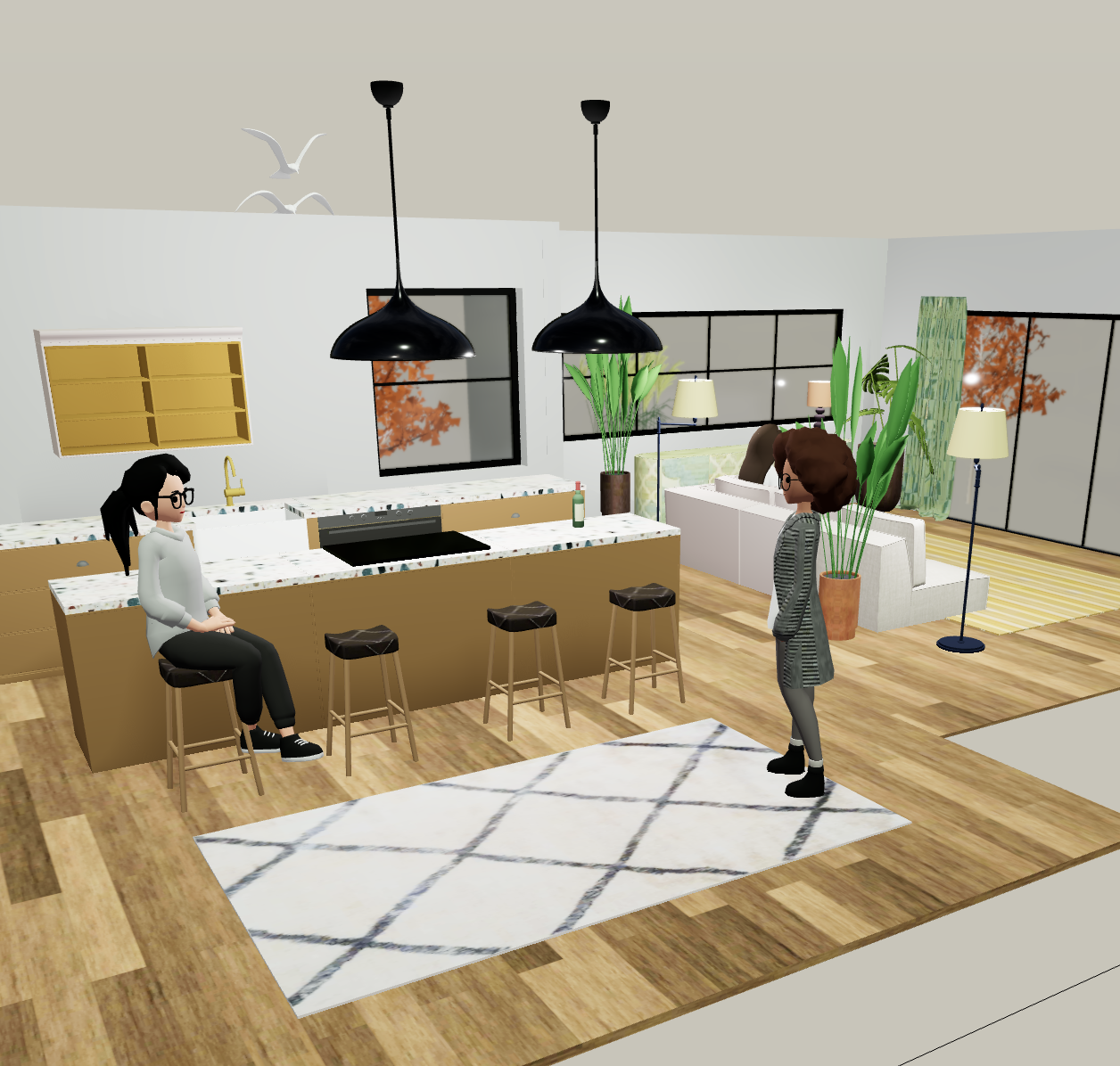
Biophilic design brings nature into your room through plants, natural light, organic materials, and nature-inspired colors. The goal is a layout that connects you to the natural world and calms the nervous system. You apply it by placing greenery, daylight, wood, and earthy tones across the room with intent.
The idea is not new. Biologist E.O. Wilson popularized "biophilia," the human pull toward living things, decades ago. What matters for your home is placement, not just purchase. A pothos shoved in a dark corner does little, while the same plant beside a south-facing window changes how the whole room reads.
At Arcadium 3D, we plan these layouts before anyone buys a single plant. This guide shows you how to do the same.
What is biophilic design?
Biophilic design is an approach that weaves natural elements into built spaces to support well-being. It works through direct nature, such as plants and daylight, and indirect nature, such as wood grain, stone, and organic shapes.
Biophilia is the underlying theory. The concept holds that humans carry an innate attraction to nature because we evolved alongside it. Biophilic design turns that attraction into practical room choices.
Most people now spend close to 90% of their time indoors, according to a 2025 Frontiers study on residential spaces. That figure matters because it means your room is your main daily contact with nature. A well-planned layout gives back some of what an indoor life takes away.
Why biophilic design improves how a room feels
A nature-rich layout lowers stress and lifts focus by giving your senses cues they are wired to read as safe. Plants, daylight, and natural texture trigger a restorative response that bare walls and synthetic surfaces do not.
The research is consistent. A 2024 Frontiers systematic review found that biophilic hospital design reduced patient stress, anxiety, and recovery time. Workplaces tell a similar story.
Plant-rich offices show productivity gains of 15–20% on certain tasks, per a 2025 Espace Waverly report. Daylight plays its own role. Workplaces with strong daylight access reported 18% fewer sick days, according to UK Green Building Council research.
Your room benefits from the same mechanisms. Better light, living plants, and natural materials create a restorative space you actually want to sit in.
How to plan plants into your room layout
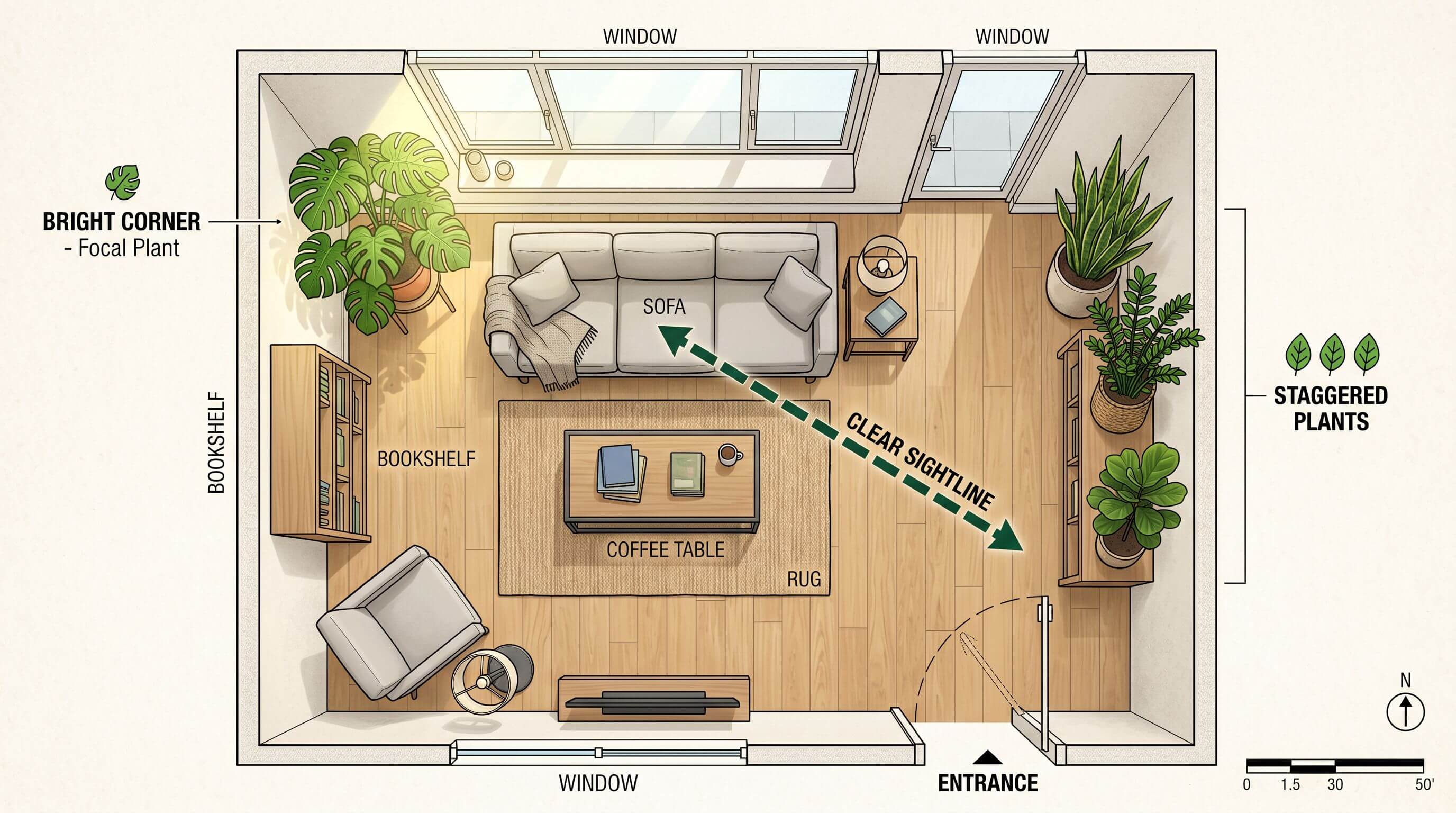
Start with light, then sightlines, then traffic flow. Plants belong where they get the light they need and where you can see them from where you sit, without blocking how you move.
Follow these five steps:
1. Map your light: Note which windows face which direction. South and west give bright light, east gives gentle morning light, and north stays low and cool.
2. Anchor a focal plant: Place one large statement plant, such as a fiddle leaf fig or bird of paradise, in your brightest corner within view of the main seat.
3. Frame the sightline: Position medium plants along the line between your sofa and a window so your eye travels toward daylight and greenery together.
4. Layer heights: Combine floor plants, tabletop pots, and a hanging or shelf plant so green appears at three levels, not one.
5. Keep paths clear: Leave at least 30 inches of walking width. A plant you bump into daily becomes a chore, not a calm cue.
This order keeps the room functional. A pretty placement that blocks a doorway fails fast.
Five natural elements to layer into any room
Plants alone do not make a room biophilic. Five elements working together do, and a layout feels flat when any one is missing.
Use the table as a checklist. A room with four elements and no natural light still feels closed, so daylight is the one you protect first.
Best plants for each room and light level
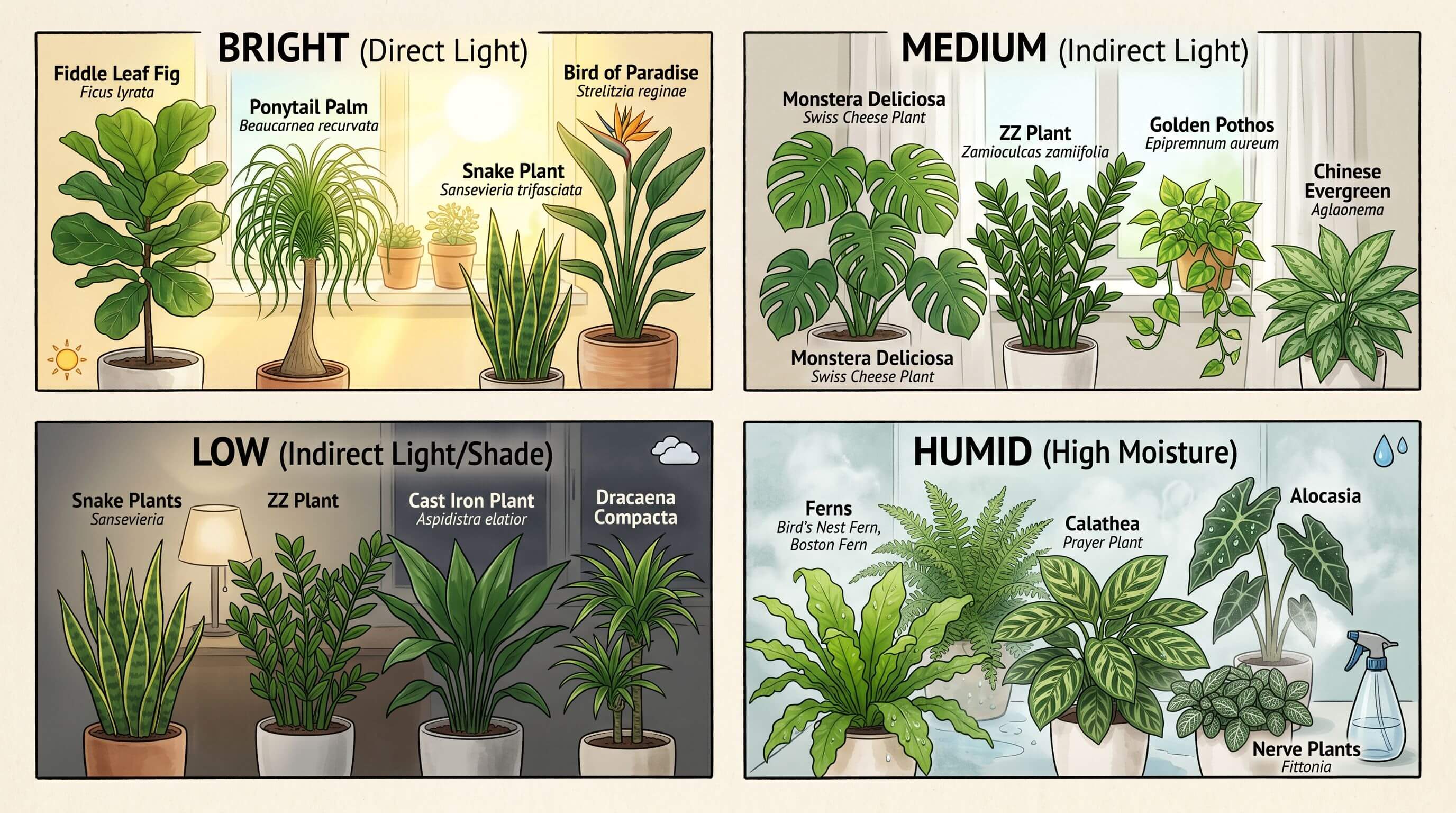
Match the plant to the room's light, not to a trend photo. A plant that thrives in your friend's bright loft may struggle in your north-facing bedroom.
Bright, direct light (south/west window): fiddle leaf fig, bird of paradise, succulents, rubber plant.
Medium, indirect light (living rooms, offices): monstera, peace lily, philodendron, parlor palm.
Low light (bathrooms, hallways, north rooms): snake plant, pothos, ZZ plant, cast iron plant.
Humid rooms (bathroom, kitchen): ferns, peace lily, orchids.
Pothos and snake plants forgive beginners. Both survive irregular watering and low light, which makes them safe first picks while you learn your room's rhythm.
A real room layout example with numbers
Here is how the plan works in a typical 12 x 14 ft living room with one large west-facing window.
The window sits on the 12 ft wall, so afternoon light floods that side. We placed a 6 ft bird of paradise in the bright corner beside it as the focal plant. The sofa faces the window from the opposite wall, which puts the plant and daylight in one clean sightline.
Three medium plants run along that sightline at staggered heights: a monstera on the floor, a peace lily on a side table, and a pothos trailing from a 5 ft shelf. Two snake plants handle the darker entry corner where light barely reaches.
That totals six plants across three heights, plus an oak coffee table, a jute rug, and olive and terracotta cushions for color and material. Walking paths stayed above 30 inches throughout. The room read as a restorative space with one focal plant, a framed view, and layered green, not a cluttered jungle.
You can model this exact arrangement before you buy. Test plant placement, sightlines, and traffic flow inside Arcadium 3D's room designer so the layout works on screen first.
Common biophilic design mistakes to avoid
The biggest mistake is treating plants as decoration scattered after the fact. Biophilic design works when greenery, light, and layout are planned together from the start.
Watch for these errors:
Blocking light to add plants. Heavy curtains and crowded sills cut the daylight that makes the room work.
Ignoring plant light needs. A sun-loving fig dies slowly in a dark corner and reads as neglect, not nature.
One height only. Plants all at floor level feel sparse. Layer floor, table, and shelf instead.
Fake everything. A few quality faux plants help in dark spots. An all-artificial room loses the air-quality and care benefits real plants bring.
Fix these and the room rewards you daily. Skip them and the look fades within a month.
Frequently asked questions
What is biophilic design in simple terms?
Biophilic design means bringing nature into your indoor space on purpose. You add plants, natural light, wood, stone, and earthy colors so the room connects you to the natural world. The aim is a calmer, healthier space, since humans feel better around natural elements than around bare synthetic surfaces.
How do I add biophilic design to a small room?
Start with light and vertical space. Hang one trailing plant, add a shelf plant, and place a single floor plant in your brightest corner. Use a mirror to bounce daylight deeper into the room. Pick compact, low-light plants like pothos or snake plant so greenery never crowds your walking path.
What are the easiest ways to start with biophilic design?
Begin with three things: one or two real plants, more natural light, and one natural material. Add a pothos, pull back heavy curtains, and swap a synthetic rug for jute or wool. These three changes shift a room's feel quickly without a full renovation or a large budget.
Which plants are best for biophilic design?
Choose plants that match your room's light. Pothos, snake plant, and ZZ plant handle low light and forgive beginners. Monstera, peace lily, and philodendron suit medium indirect light. Fiddle leaf fig and bird of paradise make strong focal plants in bright, direct light near a window.
Does biophilic design actually reduce stress?
Yes, and research supports it. A 2024 Frontiers systematic review found that biophilic design lowered stress and anxiety in hospital settings. Plant-rich and daylit spaces are also linked to higher productivity and fewer sick days. Real plants, natural light, and nature-inspired materials together produce the strongest restorative effect.
Conclusion
Biophilic design is less about how many plants you own and more about where they sit. Plan light first, frame your sightlines, layer heights, and keep paths clear, and the room calms you every time you walk in.
Map your layout before you spend a dollar on plants or furniture. Plan plant placement, daylight, and traffic flow in Arcadium 3D's room designer, then bring nature into a room that actually works.


 Color palette generator
 3D design from AI chat
 Floor plan creator
 Kitchen design tool
 House design software
 Landscape design software
 Bedroom design
 Office floor plan creator
 Trade show booth design
 How to use Arcadium — full guide
 Community Showcase
 3D object library - free
 Articles and blog