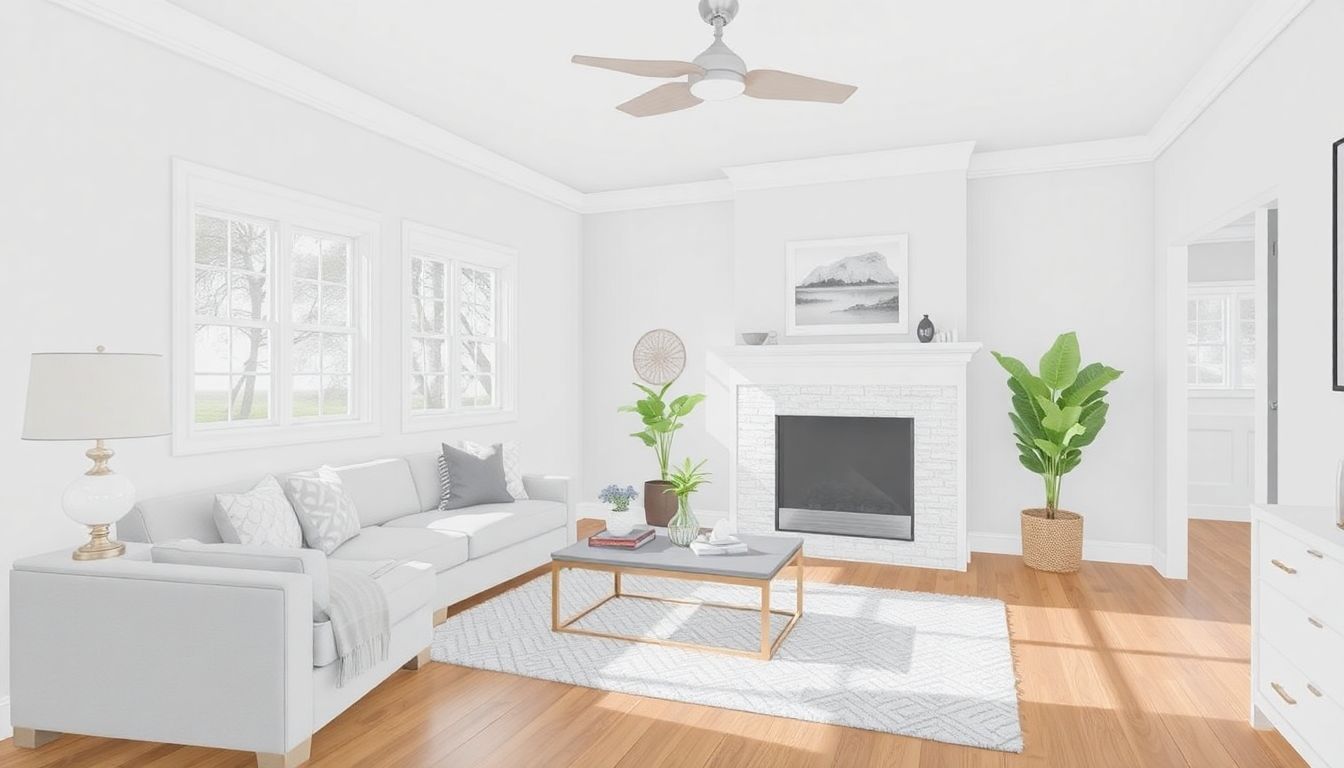
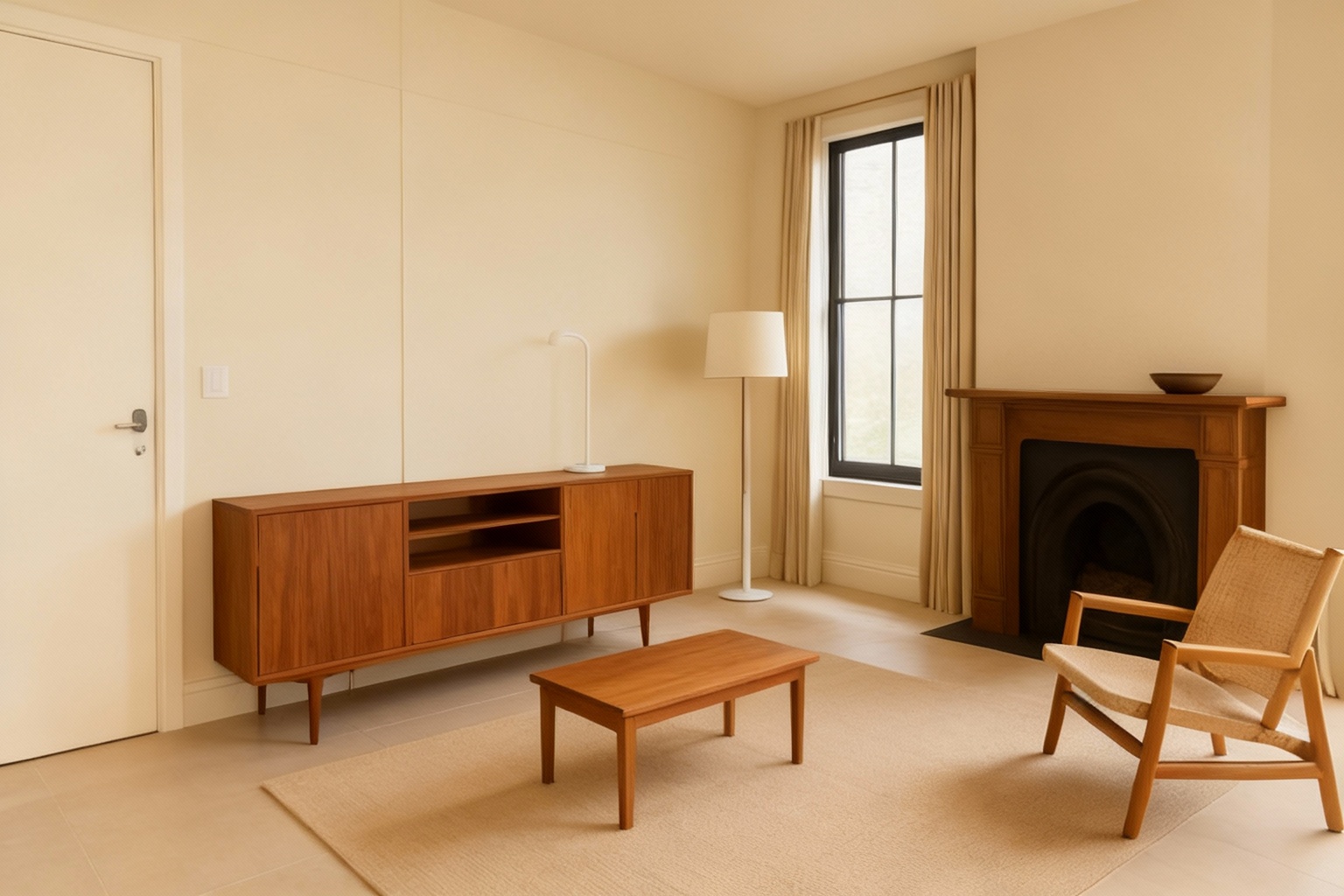
The five elements of feng shui are Wood, Fire, Earth, Metal, and Water. Each one carries a type of energy, and feng shui arranges them so a room feels settled rather than off. When a single element takes over or goes missing, a space can feel cold, cluttered, or restless, and shifting a few colors, shapes, or materials brings it back.
Knowing these elements matters because they shape how a room feels to live in, not just how it looks in a photo. At Arcadium 3D, our design team maps the five elements inside a 3D layout before anyone buys furniture, so clients see the result first. This guide covers what each element means, how they interact, and how to use them in a real space.
What are the five elements of feng shui?
The five elements of feng shui are Wood, Fire, Earth, Metal, and Water, a system known in Chinese as Wu Xing. Feng shui, the Chinese practice of arranging space to support the flow of energy called qi, treats these elements as its core building blocks.
The framework took shape in China more than two thousand years ago and still guides designers worldwide (origin and history). Builders, healers, and astrologers all drew on the same five categories.
Each element stands for a mood and a phase of nature. Wood means growth, Fire means energy, Earth means stability, Metal means clarity, and Water means calm. Designers express each one through color, shape, and material.
How the five elements work together
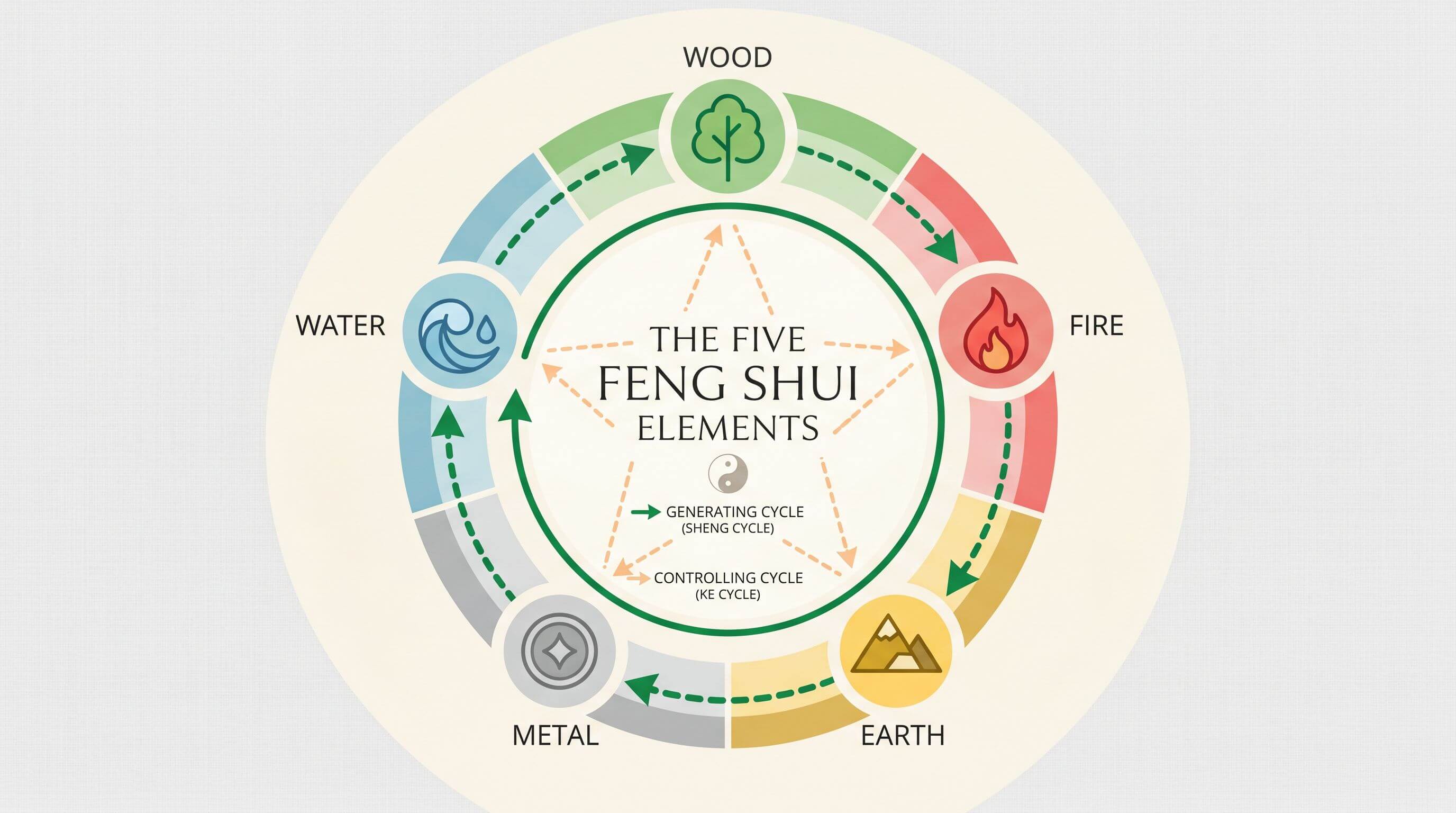
The five elements work together through two cycles: a productive cycle that builds energy and a controlling cycle that keeps it in check. Knowing both tells you which elements support each other and which ones clash.
In the productive cycle, Wood feeds Fire, Fire creates Earth as ash, Earth holds Metal as ore, Metal carries Water as condensation, and Water grows Wood. Place friendly neighbors near each other and a room feels like it flows.
The controlling cycle runs the opposite way. Wood roots break Earth, Earth banks block Water, Water puts out Fire, Fire melts Metal, and Metal cuts Wood. Pair two controlling elements in one spot and the space can feel tense.
A closer look at each Element
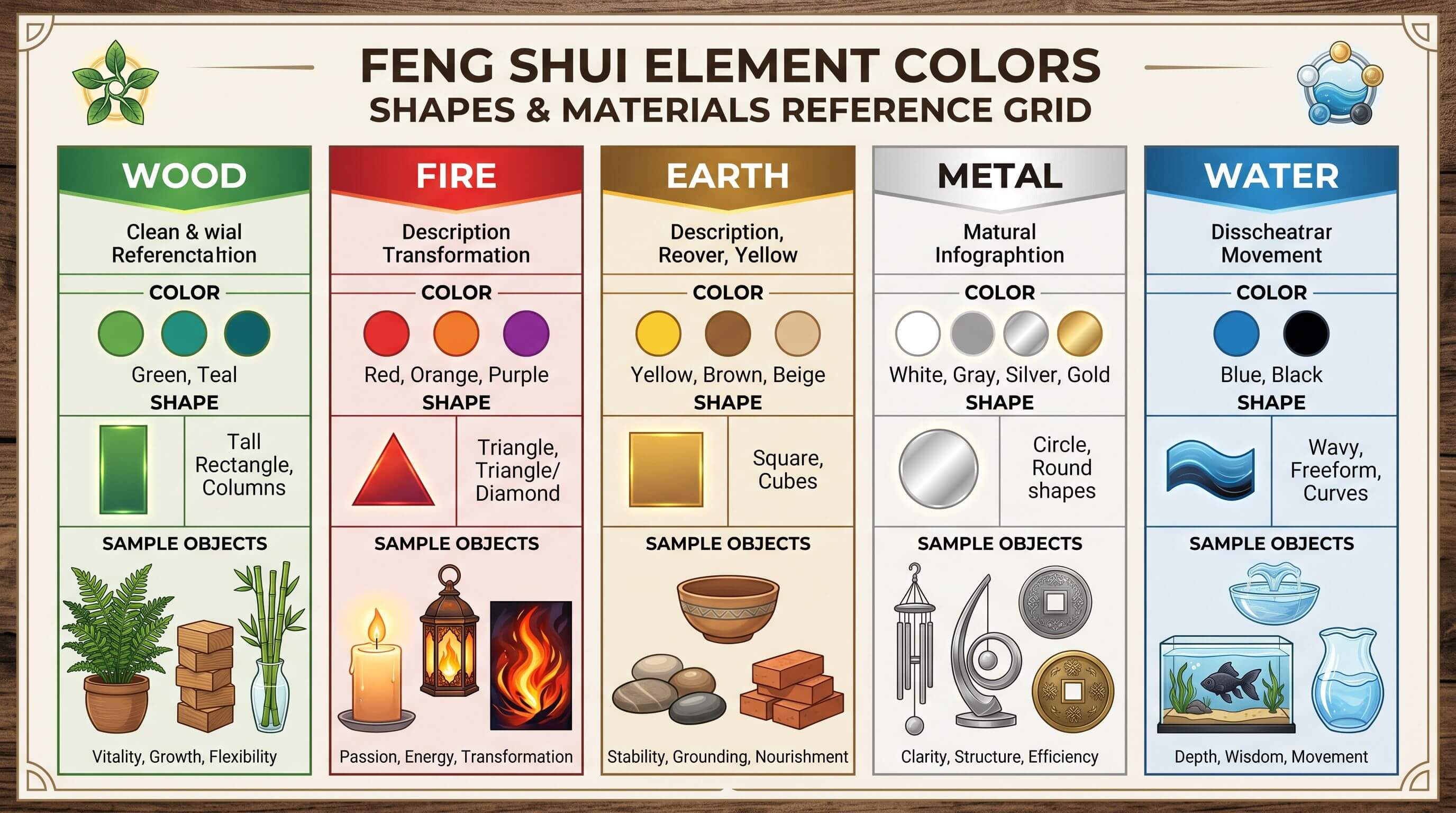
Each element has its own colors, shapes, and materials, so you can add it with a small object instead of a full renovation. The table below gives a quick reference, and the sections under it explain how each one behaves in a room.
Wood
Wood brings growth, creativity, and a sense of life into a room. Green and teal colors, tall columnar shapes, and real plants all carry Wood energy. A few leafy plants near a desk can lift a stale corner and clean the air at the same time. Too much Wood can feel chaotic, while too little leaves a space flat.
Fire
Fire adds warmth, passion, and visible energy. Red and orange tones, triangular shapes, candles, and strong lighting all signal Fire. A single red chair or a cluster of candles can wake up a quiet living room. Excess Fire can feel aggressive, so one bold accent usually beats many.
Earth
Earth grounds a space and makes it feel stable and safe. Earthy browns, yellows, and beiges, plus square shapes, stone, and ceramic, all hold Earth energy. A heavy stone bowl or a clay pot anchors a room that feels scattered. An overload of Earth can feel slow, so pair it with lighter elements.
Metal
Metal sharpens focus, logic, and a sense of order. White, gray, and metallic tones, round shapes, and metal objects all carry Metal energy. A round mirror in a metal frame brings crisp clarity to an entryway. Too much Metal can feel cold, so warm it with Wood or Earth.
Water
Water invites calm, reflection, and easy movement. Black and deep blue tones, wavy shapes, glass, and actual water all express Water energy. A small fountain or a glass vase near the door softens a tense space. An excess of Water can feel unsettled, so keep it gentle.
How to balance the five elements in a room
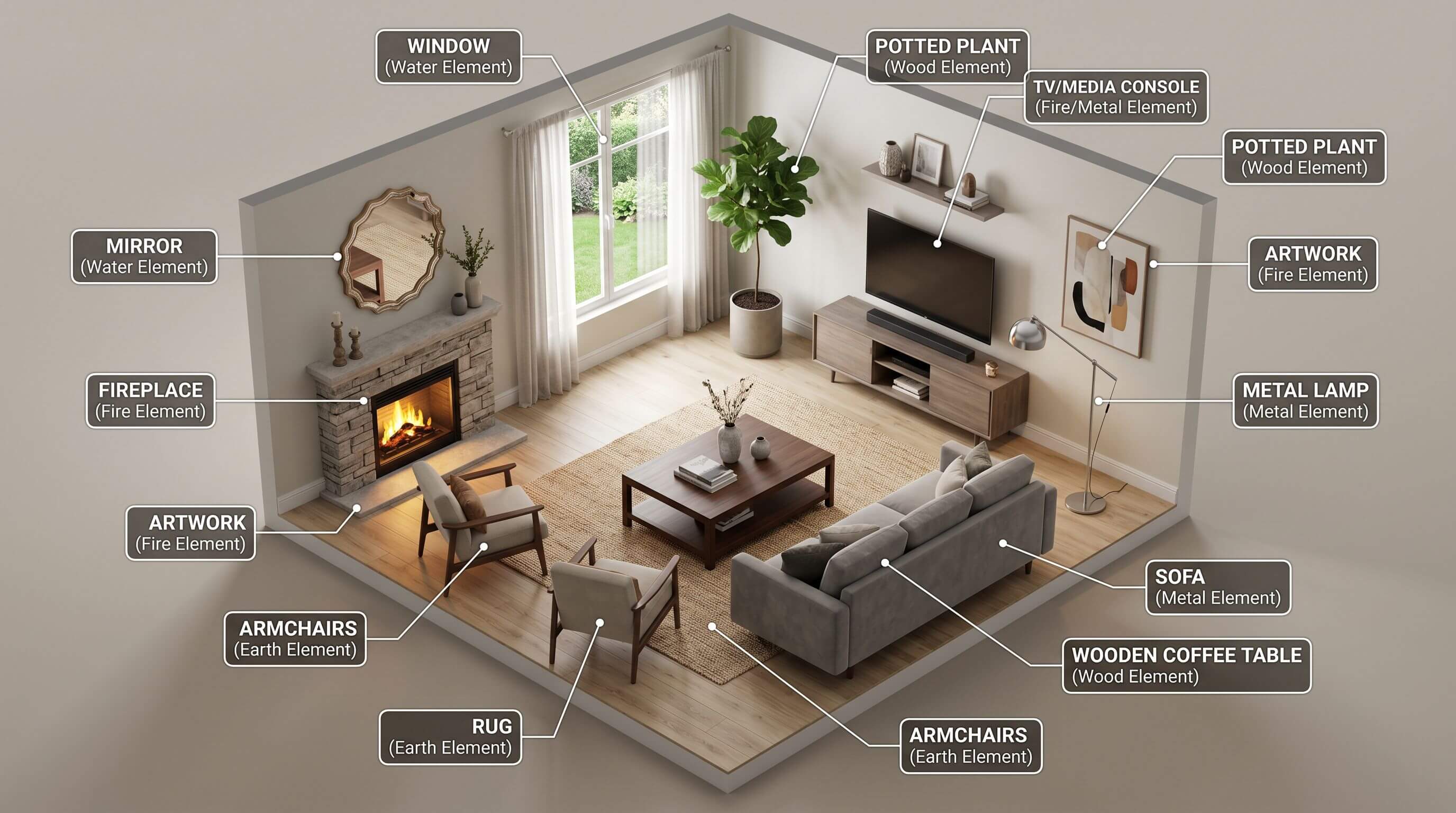
To balance the five elements, walk through a room, label what each object represents, then add what is missing and reduce what dominates. Follow these five steps:
- List every major object and note its element by color, shape, and material.
- Spot the gaps. Most rooms lean heavily on one or two elements and skip the rest.
- Add the missing elements with small objects, not full renovations.
- Pair friendly elements from the productive cycle next to each other.
- Step back and check how the room feels, then adjust one item at a time.
A simple example makes this clear. A red flowerpot holding white tulips on a wooden table covers four elements at once: the red pot is Fire, the clay is Earth, the green stems are Wood, and the white petals are Metal. Add a small mirror or a glass dish for Water, and one corner now holds all five elements in a single arrangement.
Why designers map the elements in 3D first
Designers map the five elements in a 3D layout before they decorate because changes on screen cost nothing, while changes in a finished room cost time and money. Seeing the result first removes the guesswork.
Feng shui is far from a niche habit. The global feng shui interior market is projected to grow near 6% a year through 2030, which points to steady demand for element-based design.
Digital tools have caught up with that demand. Among interior designers, AI adoption climbed from 9% in 2023 to 29% by 2025, and immersive 3D walkthroughs cut late-stage design changes by about 25% for firms that use them.
You can get both benefits at once. With the Arcadium 3D feng shui design tool, you place colors, shapes, and materials in a virtual room, then test the productive and controlling cycles in minutes before buying anything.
Frequently asked questions
What are the five elements of feng shui?
The five elements of feng shui are Wood, Fire, Earth, Metal, and Water, known in Chinese as Wu Xing. Each one represents a type of energy and a phase of nature. Designers express them through color, shape, and material to make a room feel balanced and to support the flow of qi.
What is the strongest element in feng shui?
No single element is the strongest in feng shui. Strength depends on placement, quantity, and how the elements interact through the productive and controlling cycles. A room with only one element often feels off, so the goal is the right mix for the space rather than dominance by any one element.
How do I know my feng shui element?
Your personal feng shui element comes from your Chinese zodiac sign and birth year. Each year in the twelve-year cycle links to one of the five elements, so your birth year points to a lucky element. Many people use that element's colors and direction at home to support their goals.
What happens if a room has too much of one element?
A room with too much of one element feels unbalanced in a specific way. Too much Wood feels chaotic, too much Fire feels aggressive, too much Earth feels heavy, too much Metal feels cold, and too much Water feels unsettled. Adding a small amount of a balancing element usually corrects the feeling.
How do you balance the five elements at home?
Start by labeling the elements already present in a room, then notice which ones are missing. Add the missing elements with small objects like a plant, a candle, a stone bowl, a metal frame, or a glass vase. Keep friendly elements from the productive cycle near each other, and adjust one item at a time.
Final thoughts
The five elements of feng shui give you a simple language for how a room feels. Learn the colors, shapes, and cycles, and you can fix a space that feels off without a costly overhaul.
Ready to see the elements in your own room before you spend a thing? Plan it in 3D with Arcadium and test the balance first.


 Color palette generator
 3D design from AI chat
 Floor plan creator
 Kitchen design tool
 House design software
 Landscape design software
 Bedroom design
 Office floor plan creator
 Trade show booth design
 How to use Arcadium — full guide
 Community Showcase
 3D object library - free
 Articles and blog
.png)