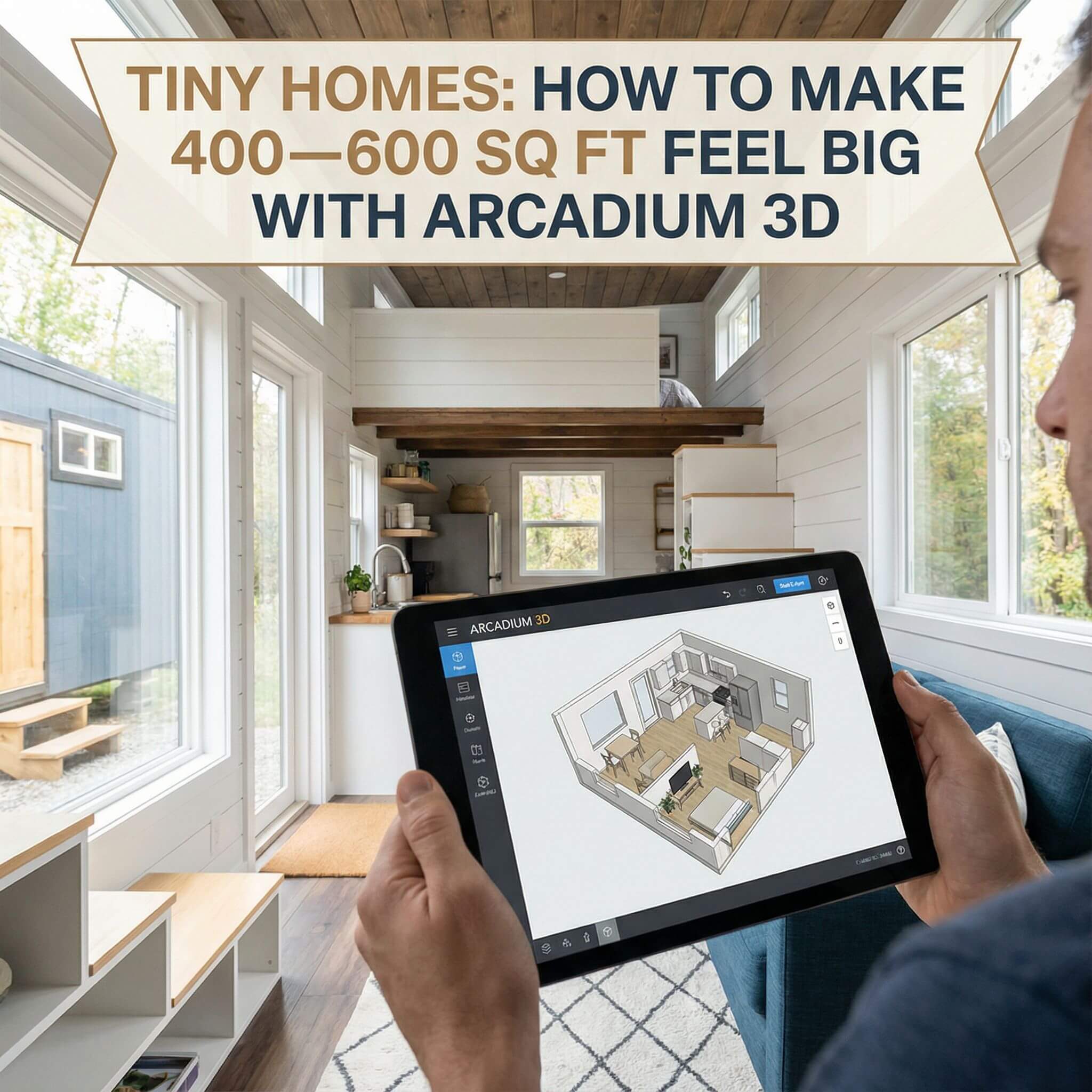
Tiny homes are growing in popularity, but the challenge is making a small space feel comfortable rather than cramped. In fact, 73% of Americans say they would like to live in a tiny home, according to a recent survey.
The good news is that with smart design, 400 square feet can feel like 800 square feet. It's all about maximizing every inch. From using vertical storage to choosing multi-purpose furniture, thoughtful planning can transform a compact house into a spacious-feeling home.
For planning and visualizing these ideas, tools like Arcadium 3D –
a free online 3D house design AI platform
can be invaluable in experimenting with layouts and decor. Let's explore the best strategies to make a 400–600 sq ft tiny home feel big.
Use Vertical Space for Storage
One common mistake in tiny home design is thinking only horizontally. Remember that your walls are valuable real estate. You can nearly double your usable storage area by thinking vertically. Install floor-to-ceiling shelving and cabinets to store books, kitchenware, clothes, and more.
Make use of high spaces: mount cabinets or shelves above doorways and windows for items you rarely need. Hang organizers on the backs of doors and use pegboards or hooks on walls to hang pots, utensils, coats, or jewelry. By building upward, you free up floor space and reduce clutter.
Opt for Multi-Functional Furniture
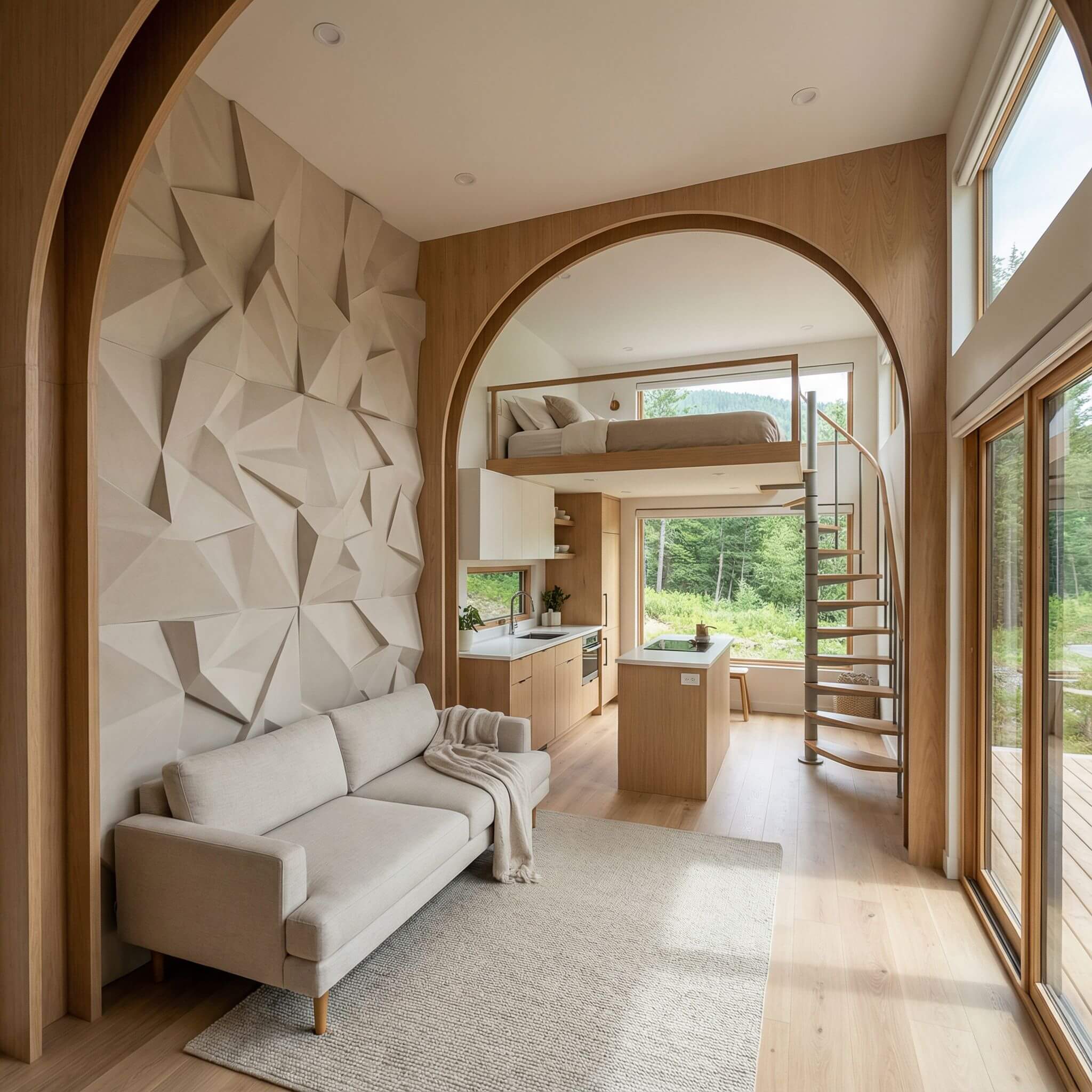
In a tiny home, every item must earn its footprint. Single-use furniture is a luxury you can’t afford in 400–600 sq ft. Multi-functional pieces are essential for the constant transformation of the space. For example:
Murphy beds
that fold into the wall, opening up floor space by day.
Sleeper sofas
or futons that turn your living area into a guest bedroom at night.
Ottomans or benches with storage
inside, providing seating while hiding belongings.
Extendable dining tables
that can expand to seat guests or collapse to save space.
Stairs with built-in drawers or shelves
that double as storage units.
Each piece of furniture should serve multiple purposes. It’s wise to invest in quality, durable furniture with smooth mechanisms, since these items will be moved and converted frequently. Multi-functional furniture ensures you have everything you need without cluttering your tiny home.
Maximize Natural Light
Natural light is the easiest way to make any small space feel open and airy. A dark, dim room will feel more cramped, while a sunlit room feels larger. Large windows and skylights can flood a tiny home with light, instantly making it feel more expansive.
If possible, add a skylight or increase window sizes, especially on the south side to get sunlight throughout the day. Keep window treatments light and minimal; heavy curtains will block precious light. Instead, use sheer curtains or blinds that provide privacy without cutting off brightness.
Don’t forget the power of mirrors as well. Placing a mirror opposite a window reflects light and views, creating the illusion of more space and doubling the brightness. A well-positioned mirror can make a tiny room feel almost twice as big by bouncing light around. The combination of ample natural light and reflective surfaces will visually expand your small home.
Choose Light Colors (But Add Depth with Accents)
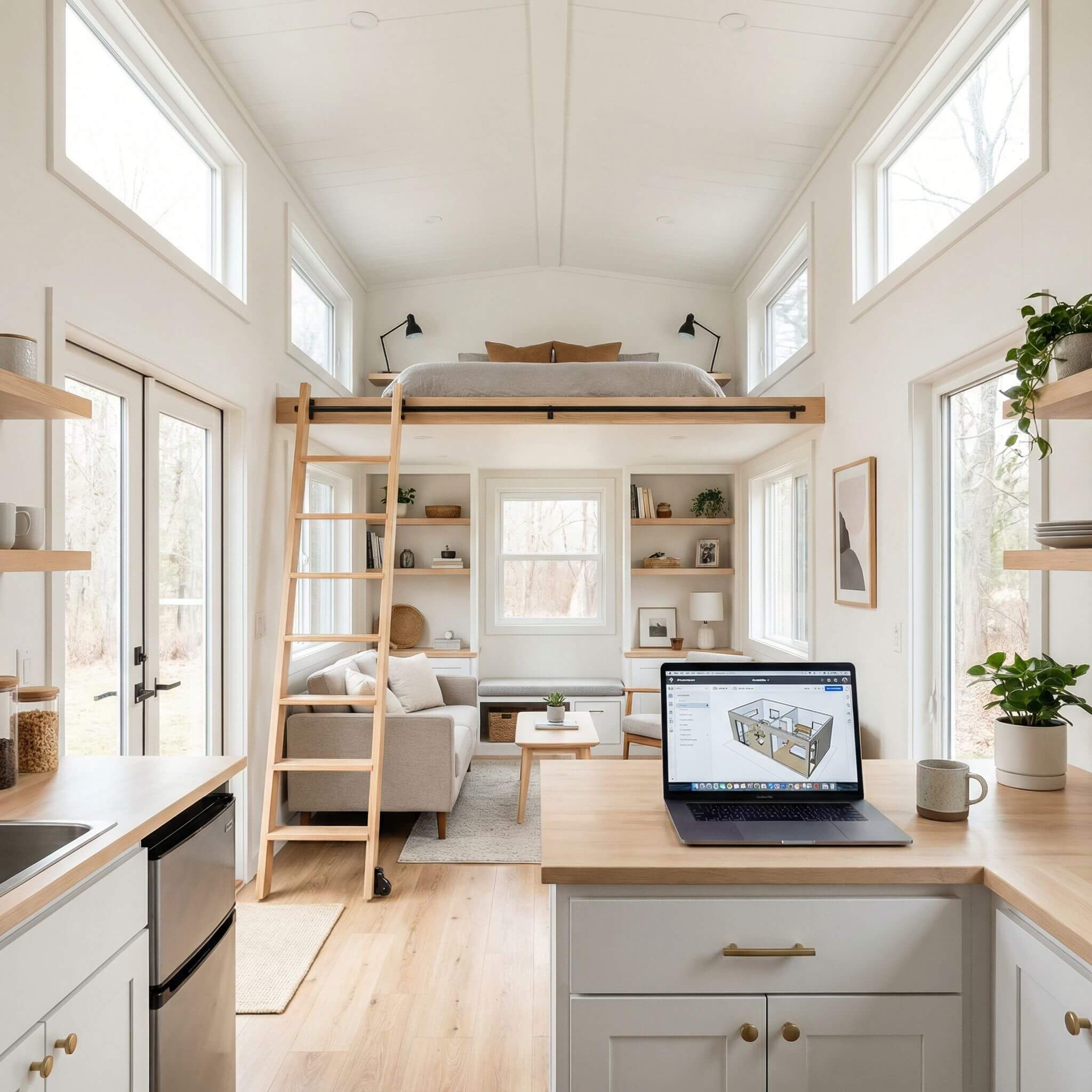
Color plays a big role in how spacious a room feels. Light, neutral colors on walls and ceilings reflect light, helping the space feel larger. Whites, creams, light grays, or soft blues are excellent choices to give an open, airy impression. However, this doesn’t mean everything must be stark white. You can absolutely incorporate darker colors in a smart way without making the room feel claustrophobic.
Many designers recommend the 60-30-10 rule for color in small spaces: 60% light dominant color, 30% a mid-tone secondary color, and 10% as an accent (which could be a bold or dark shade). For instance, you might paint most walls a pale neutral, have furniture or cabinets in a medium tone, and then use a deep color for a single accent wall or a few decor pieces.
In fact, a single dark accent wall at the far end of a room can create an illusion of depth and make the space feel longer. The key is to avoid having too many dark surfaces; one feature wall or a pop of dark color is enough to add character without shrinking the room.
Create Open Zones Instead of Rooms
Tiny homes often have very few internal walls, and that’s a good thing. An open-concept layout prevents the space from feeling chopped up into tiny boxes. However, you still want to define functional areas for cooking, dining, living, and sleeping. The solution is to create zones without full walls. Use visual cues and furniture placement to distinguish areas:
Place area rugs to delineate different zones (e.g. a rug under the coffee table defines the living area, another under a table defines dining).
Use your furniture as partitioners. For example, a sofa backed to the kitchen helps separate the living room from the kitchen space. A bookshelf or a tall shelving unit can act as a slim room divider that also provides storage.
Vary the
lighting by zone: pendant lights over a kitchen counter or dining table, a floor lamp or sconce in the living area, and softer ambient lights near the sleeping area. Different lighting helps signal distinct areas without any walls.
By thoughtfully arranging your layout, you maintain an open flow while still giving each activity its own spot. This makes the home feel organized and functional, not just one random multipurpose room.
Plan Your Space Digitally for a Perfect Fit
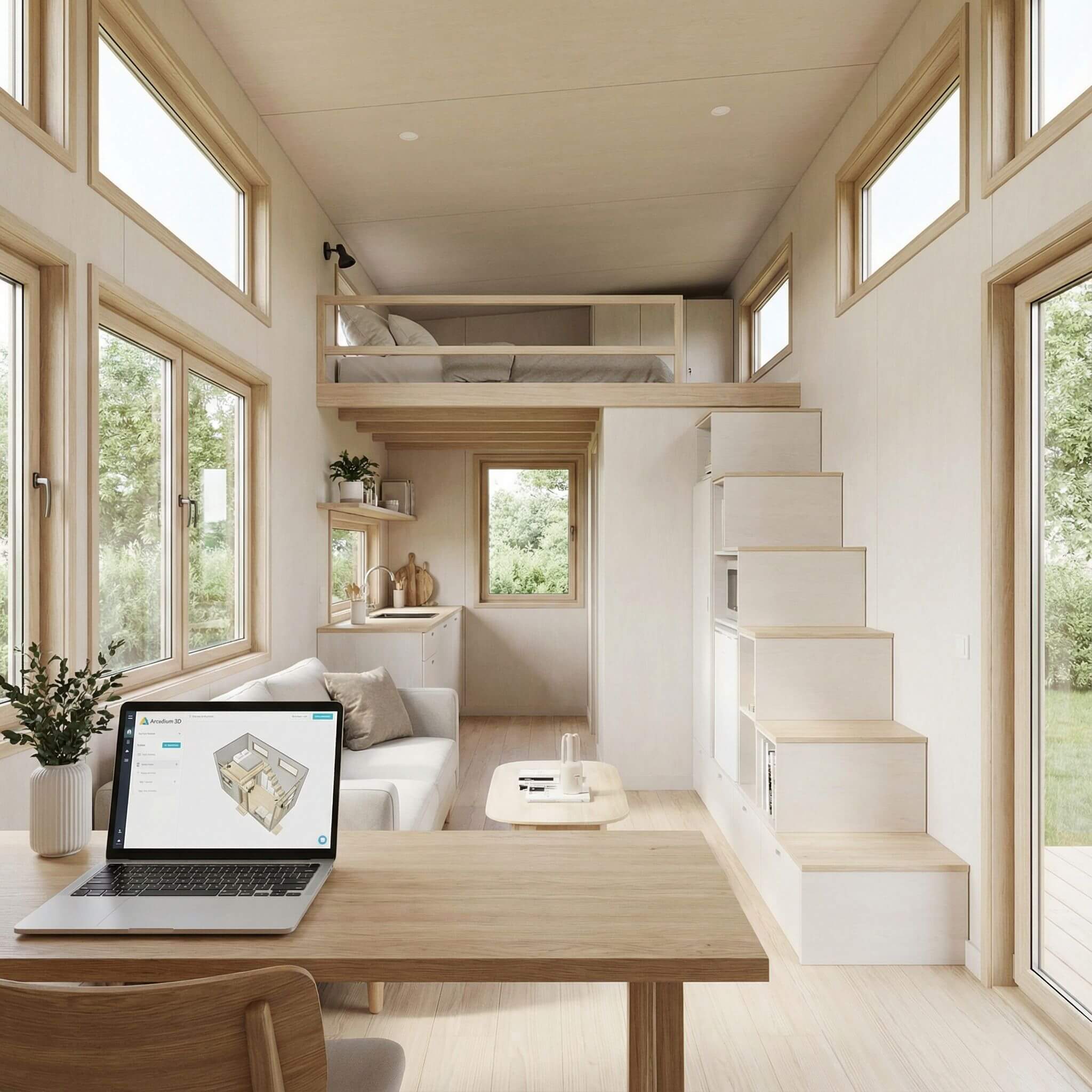
Before buying furniture or swinging a hammer, take time to plan your layout virtually. A 3D house design AI-free tool like Arcadium 3D lets you experiment with your tiny home design easily. You can drag and drop furniture from a built-in library and adjust your floor plan to scale.
Try out different layouts to see which arrangement makes the space feel most open. You can even take a virtual walkthrough of the 3D design to experience the space from a first-person perspective and ensure it isn’t cramped.
These tools also make it simple to visualize the final look of your small home. Arcadium 3D, for instance, can generate AI-powered interior renderings from your plan, giving you photorealistic images of how your tiny home could appear in various styles.
This means you can experiment with colors, lighting, and décor in the virtual model before committing in real life. By planning with technology, there’s no guesswork – every inch can be optimized on-screen, so you know the design will feel as spacious and functional as possible.
Conclusion: Big Style in a Small Space
Living in a 400–600 sq ft home is all about smart use of space and design. By combining strategies – vertical storage, multi-functional furniture, abundant light, clever use of color, open-layout zoning, and diligent organization (keeping clutter in check) – you can create a tiny home that feels comfortable and even surprisingly roomy.
Modern technology also empowers anyone to achieve this transformation. With easy-to-use design tools like Arcadium 3D, you can plan and visualize your dream tiny home layout before you build, ensuring no space is wasted.
Ultimately, tiny home living isn’t about sacrificing comfort; it’s about designing smarter. When you do it right, a tiny home can feel just as inviting and “big” as a much larger house, proving that it’s not the square footage that counts, but how you use it.
Check our details article on- Universal Design: Inclusive Homes from Day One
Frequently Asked Questions
How do you make a tiny house feel bigger?
Use design tricks that create an open, airy feel. Light, bright colors on walls (white or soft neutrals) will reflect light and make the space feel open. Add mirrors to reflect light and views, effectively doubling the perceived space. Keep the floor plan as open as possible – avoid unnecessary walls or bulky furniture. Instead, use space-saving, multi-functional furniture and keep clutter to a minimum so the home feels uncluttered and spacious.
What are some must-have features for a tiny home interior?
Multi-functional furniture is number one – e.g. a sofa that turns into a bed or a table with storage inside. This ensures each piece serves more than one purpose. Also, maximize hidden storage (under-bed drawers, built-in shelves, stairs with storage) so everything has its place out of sight. Features like pocket doors (instead of swing doors) and wall-mounted fold-out tables are also great, since they save precious floor space.
Can a tiny house have a full kitchen?
Yes, you can absolutely have a functional kitchen in a tiny house – it just needs to be designed smartly. Use compact appliances (smaller fridge, two-burner stove, combo microwave/oven) to save space. Optimize storage with vertical cabinets and magnetic racks for utensils. You can also incorporate a fold-down countertop or a pull-out cutting board to provide extra prep area when needed. With these tricks, a tiny house kitchen can include all the essentials of a full kitchen, just scaled down.
What are the best storage hacks for a tiny house?
Think vertical and hidden. Floor-to-ceiling shelves and cabinets will use every inch of wall space for storage. Use the dead space under furniture: beds with built-in drawers, benches or ottomans with storage inside, etc. Stairs can double as storage drawers or cabinets too. Also, use hooks or pegboards on walls and doors to hang items (from pots to coats) so they don’t take up shelf or floor space. The goal is to utilize every nook while keeping everyday items organized and out of the way.
What colors make a small space look larger?
Light colors are best for making a small room look bigger because they bounce more light. Shades of white, cream, soft gray or similar neutrals on walls create an airy, open feel. It’s also helpful to keep the color scheme consistent throughout adjacent spaces, so the interior isn’t visually chopped up. You can add a darker color as an accent wall for depth, but limit it to one wall – too many dark surfaces will absorb light and make the space feel smaller.


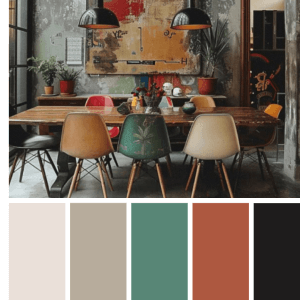 Color palette generator
 3D design from AI chat
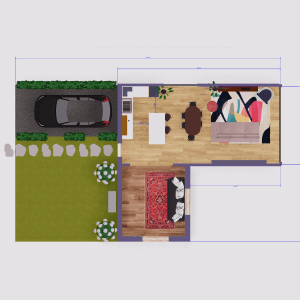 Floor plan creator
 Kitchen design tool
 House design software
 Landscape design software
 Bedroom design
 Office floor plan creator
 Trade show booth design
 How to use Arcadium — full guide
 Community Showcase
 3D object library - free
 Articles and blog