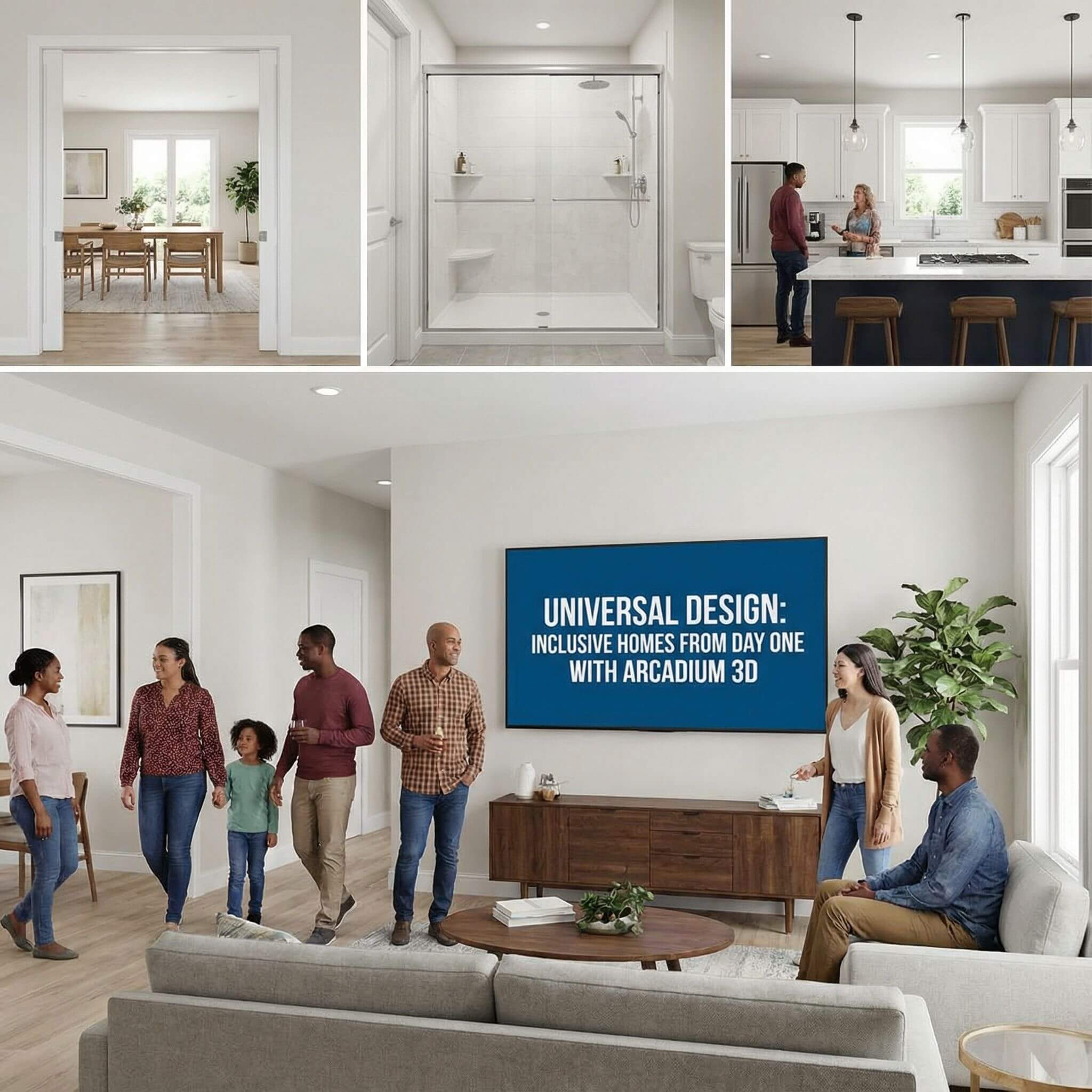
Imagine a home where a grandmother with a walker, a parent pushing a stroller, and a child with a cast can all move freely and comfortably. This vision is the promise of universal design – creating homes that everyone can use, regardless of age or ability.
Instead of adding ramps or widening doors later as adaptations, the goal is to build inclusivity from day one. Modern planning tools like Arcadium 3D make it easier than ever to visualize and implement these features right in the initial design.
In this post, we’ll explore what universal design means for home building, why it’s so important to plan inclusive features early, and how you can achieve a beautiful, welcoming home for all.
Why Plan Inclusive Homes from the Start
Designing with universal design principles at the outset benefits everyone. First, it addresses a huge accessibility gap in current housing. For example, over a quarter of U.S. adults have some disability, yet only about 4% of homes can accommodate moderate mobility issues, and less than 1% are fully wheelchair-accessible.
Other countries face similar gaps. By building homes to be accessible now, we avoid forcing people to renovate or move later when needs change. Retrofitting a home for accessibility after it’s built can be costly and complex, whereas integrating those features upfront is far cheaper and easier. In fact, one builder found adding features like wider doors and a curbless shower during construction only cost around $1,000 extra, versus tens of thousands if done later. The message is clear: build it once, build it right.
Inclusive design is also future-proofing. Populations in many first-world countries are aging, meaning more people want to age in place (remain in their homes as they grow older). We’re already seeing a surge in demand for age-friendly design – in recent years, 76% of home remodelers reported an increase in aging-in-place requests. Even younger homeowners appreciate knowing their “forever home” will accommodate them long-term (and welcome visitors of all abilities). In one survey of 55+ communities, nearly 75% of buyers opted for universal design upgrades when offered, showing how desirable these features are.
Moreover, universal design benefits everyone, not just people with disabilities. Many features, like open layouts and good lighting, are simply good design that makes life more convenient and safe for all ages. For instance, a no-step entry helps a person in a wheelchair but also a parent pushing a pram or someone moving heavy furniture. As one builder put it, these features “easily adapt to you” at any stage of life.
There’s also a growing policy push for inclusive design. Some cities and regions now require or incentivize basic accessibility (often called “visitability”) in new homes. For example, San Antonio, Texas passed an ordinance requiring all city-supported new homes to follow universal design principles, including features like no-step entrances, wide halls and doors, lever-style door handles, reachable electrical controls, and reinforced bathroom walls for future grab bars.
Forward-thinking architects and builders who design inclusive homes from the start not only meet these emerging standards but also gain a competitive edge in the marketplace. In short, planning an inclusive home from day one is smart, cost-effective, and socially responsible.
Key Features of an Inclusive Home Design
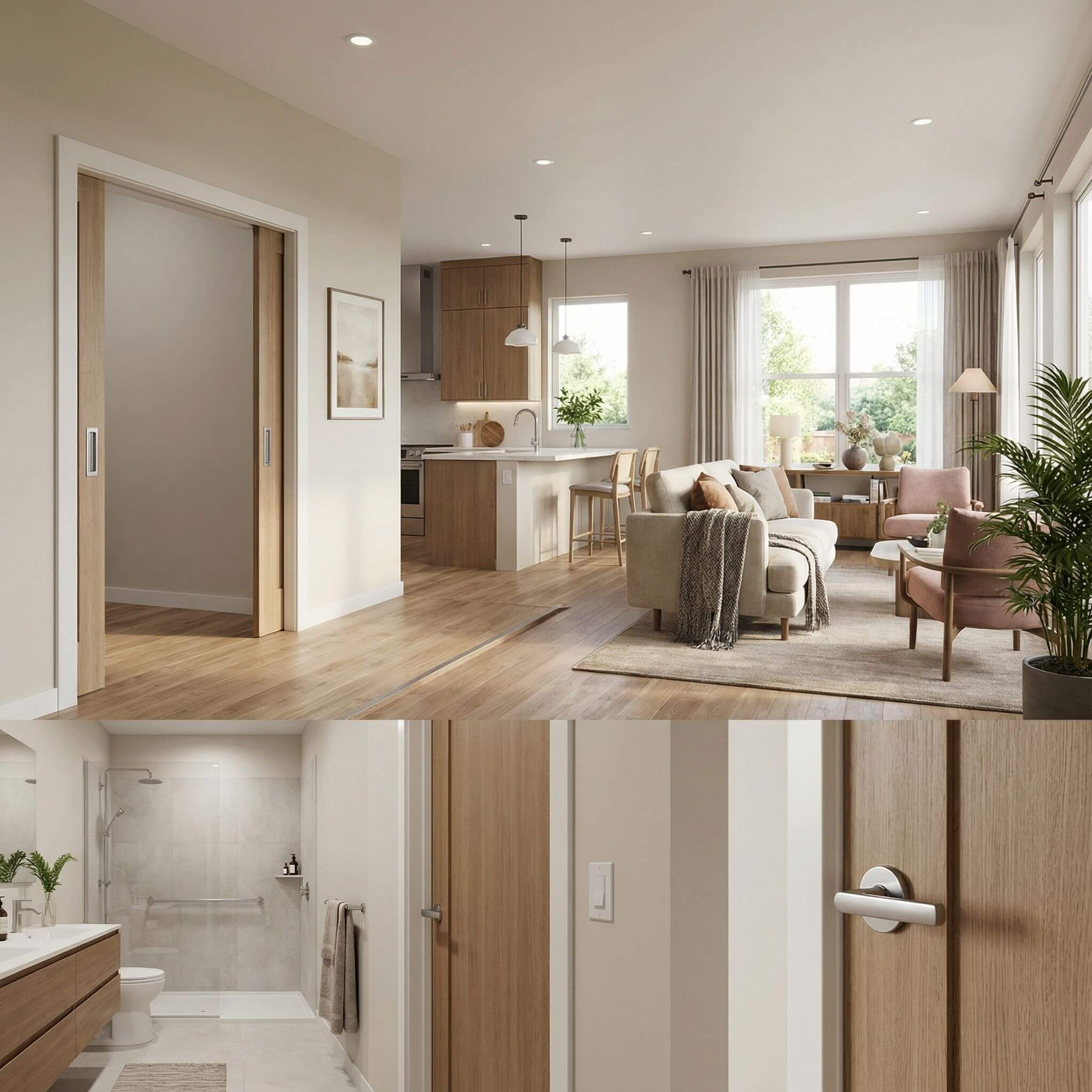
What does a universally designed home look like? It’s not a sterile hospital-like space – on the contrary, the best inclusive homes blend in stylishly and you may hardly notice the special features at first glance. Here are some key design elements and strategies to ensure a home is welcoming and usable for everyone:
Step-Free Entry & Open Layouts:
Provide at least one no-step entrance into the home – a doorway that is flush with the ground or gently ramped, with zero stairs or thresholds to trip over. This might mean grading the front walkway up to the door or using a low-profile threshold. Inside, aim for single-level living if possible (having essential rooms like a bedroom, bathroom, kitchen, and laundry on the main floor) so that everyday living doesn’t require climbing stairs.
If the house has multiple levels, consider stacking closets for a future elevator or at least plan space for a chair lift down the line. Also design wide pathways throughout – hallways and doorways should ideally be at least 36 inches (91 cm) wide to accommodate wheelchairs and walkers.
Generous passageways not only make movement easier for those with mobility aids, but they also give an open, airy feel that everyone appreciates. An open-concept floor plan without tight corners or narrow corridors further improves flow and visibility, making the home feel spacious while being accessible.
Safe, Accessible Bathrooms
Bathrooms are a priority for universal design, since they’re a common site of falls. Plan for a curbless (roll-in) shower with no lip to step over – this allows someone using a wheelchair or walker to enter easily, and it’s convenient for anyone carrying a baby or dealing with an injury.
Include a built-in bench or space for a fold-down seat in the shower so users can sit while washing. It’s wise to reinforce the walls around showers and toilets with extra wood blocking during construction, so you can add grab bars later without tearing out drywall.
Even if you don’t install grab bars immediately, this future-proofs the bathroom (in the meantime, a regular towel bar can occupy the spot, knowing the wall behind it can support weight if grabbed). Use non-slip flooring in bathrooms to reduce fall risk – many anti-slip tiles or textured finishes are available that still look modern.
Other thoughtful features include a comfort-height toilet (a slightly taller toilet that is easier to sit down and stand up from), and lever-handle or touchless faucets that don’t require tight twisting (great for arthritic hands).
Also, ensure excellent lighting in bathrooms – consider nightlights or motion-activated lights for midnight trips, as well as plenty of overall illumination to help those with low vision. A well-designed bathroom can significantly extend a person’s ability to live independently in the home.
User-Friendly Kitchens:
In the kitchen, focus on easy reach and ergonomics. For example, set the microwave at counter height or in a lower cabinet rather than above the range, so no one has to lift hot dishes overhead. Use pull-out shelves or drawers in lower cabinets instead of deep cabinets, so items in the back can be retrieved without kneeling or bending.
Likewise, consider swapping some upper cabinets for open shelving to make frequently used items visible and reachable. Having multiple counter heights is another hallmark of universal design – you might have most counters at standard height (~36 inches), but include a section at a lower level (~30 inches) with open knee space underneath. This allows a wheelchair user to roll under and work, and it’s also handy for anyone who prefers to sit while chopping vegetables or for kids helping bake cookies.
Ensure there’s ample floor space in the kitchen; aim for at least a five-foot turning radius in key areas so a wheelchair can maneuver comfortably. This typically means an open center or L-shaped layout rather than a cramped galley. Good lighting is crucial here as well – under-cabinet lights can brighten countertops, and contrast between counters and floor helps with depth perception.
Finally, choose flooring that is smooth and slip-resistant (continuous flooring with level transitions into adjacent rooms, so there are no bumps or step-ups at doorways). A kitchen designed this way is safer for seniors and more convenient for everyone (after all, who wouldn’t enjoy accessible storage and great lighting?).
Better Lighting & Visibility
Thoughtful lighting design makes a home comfortable and safe for all. As people age, they generally need more light and greater contrast to see clearly. Install plenty of ambient light (e.g. overhead or ceiling lights) as well as task lighting in key areas like reading nooks, kitchen counters, and bathroom mirrors.
Dimmable and layered lighting lets each user adjust to their preference. Maximize natural light with large windows and skylights where possible – daylight boosts mood and visibility (just mitigate any glare with shades or matte finishes). Use contrasting colors or materials to define edges and level changes: for instance, stair treads with a contrasting strip at the edge help everyone see the steps clearly.
Additionally, incorporate night lighting in hallways and bathrooms (motion-activated floor lights or plug-in nightlights) to prevent trips in the dark. All these lighting considerations not only assist those with low vision but create a bright, inviting atmosphere that everyone enjoys.
Easy Controls & Hardware:
Small details like door handles, faucets, and light switches make a big difference in usability. Choose lever-style door handles and faucet handles instead of round knobs – levers are easy to press down or pull, even for children, seniors, or anyone with limited hand strength.
Similarly, opt for rocker switches or big toggle light switches placed at an accessible height (about 42 inches from the floor, lower than the standard) so that they can be reached from a wheelchair or by a child. Outlets should be installed a bit higher off the floor (or even inside accessible cabinet drawers in kitchens) to avoid excessive bending.
Also think about smart-home additions: for example, app-controlled or voice-activated lighting and thermostats can assist users who have trouble with hard-to-reach controls, though always ensure there’s a simple manual way to operate them too. These kinds of universal fixtures make daily life easier for everyone without calling attention to themselves – a visitor might not even realize your stylish faucet is also arthritis-friendly.
Flexibility & Future-Proofing:
A core tenet of universal design is building in flexibility so the home can adapt over time. This could mean designing a ground-floor flex room that can serve as a bedroom if climbing stairs becomes difficult, or simply adding blocking in walls now for features you might need later (like the bathroom grab bar reinforcements mentioned earlier).
Think about low-maintenance materials as well – for instance, choosing durable siding and flooring that won’t require strenuous upkeep, or landscaping with raised planters to reduce bending for gardening. By anticipating future needs, you save yourself (or the next owner) from costly renovations.
The beauty of doing this during initial construction is that it can be virtually invisible: the home doesn’t look like a “special needs” house at all, yet it’s quietly ready to accommodate changing needs. The result is a home that ages gracefully alongside its occupants.
Leveraging Technology in Universal Design Planning
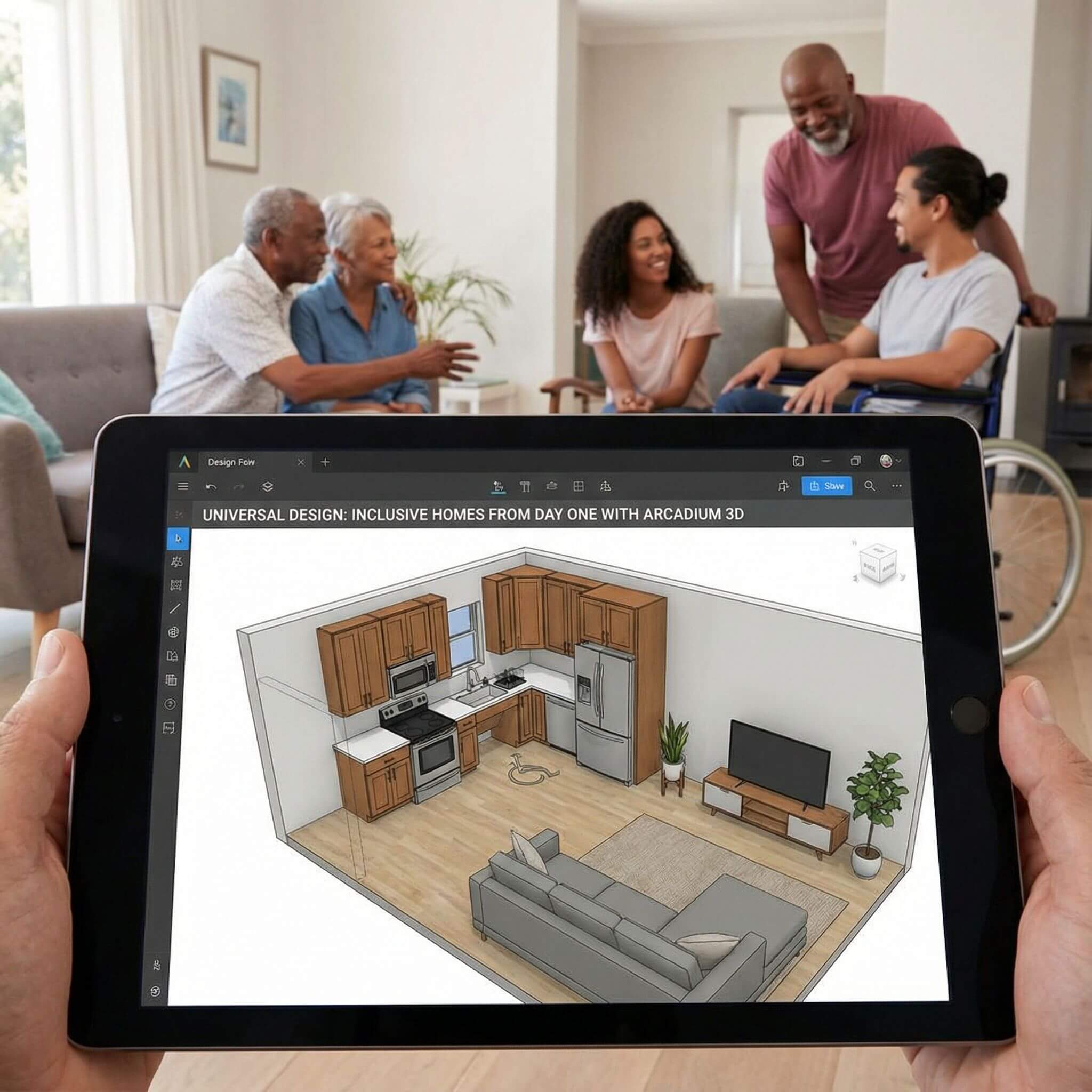
Designing an inclusive home may sound like a complex task, but technology has made it much easier to get it right. Using a digital
home design 3D software like Arcadium
can greatly streamline the planning process. With a user-friendly 3D tool, you can visualize your floor plan and test out universal design ideas before any construction happens.
For example, you can drag walls or adjust dimensions on the fly to ensure doorways are wide enough or a bathroom has space for a wheelchair turnaround. On Arcadium’s platform, builders and designers can create detailed 3D floor plans and even simulate how universal design elements will fit into the space – you can virtually test if a wheelchair can make a smooth turn in the kitchen, or if sightlines and lighting are adequate for someone seated vs. standing. This helps catch potential issues early and prevents costly oversights.
One big advantage of Arcadium 3D is that it’s fast, precise, and easy to use even if you’re not a CAD expert. You don’t need any special installation or prior 3D modeling experience to get started – it runs in your browser, and it’s free to begin designing. As a professional 3D room designer, I find that Arcadium’s parametric components (like adjustable doors, windows, and stairs) are a huge time-saver.
If I need a 36-inch wide door for accessibility, I just select the door object and set its width – the software updates it instantly. Alignment tools and exact measurements let me ensure clearances (for example, verifying there’s at least 5 feet of turning radius in a bathroom) without guesswork. The built-in furniture and fixture library helps to drop in items like chairs, tables, or even grab bars to see how they fit. This means anyone can experiment with layouts that accommodate mobility devices or ergonomic considerations, and immediately see how the space would look and function.
Finally, modern tools can also help you blend style with accessibility. Arcadium 3D, for instance, can render your design with AI to produce lifelike images or different interior styles, so you can make sure your universally designed home is not only functional but also beautiful. This way, you can try out finishes, colors, and decor in your virtual model to confirm that grab bars, ramps, and other adaptations will integrate attractively.
By leveraging such technology, creating an inclusive home becomes an enjoyable, creative process rather than a daunting chore. Whether you’re an architect, a designer, or a homeowner with a dream, these tools empower you to bring universal design concepts to life with confidence.
Check our details article on- Mudrooms, Laundry Rooms & Pantries: The Back-of-House Workhorses
Conclusion
Universal design isn’t just a buzzword – it’s a transformative approach to home building that prioritizes people. When you design a home that is inclusive from the start, you create a space that welcomes all guests, adapts to your family’s changing needs, and stands the test of time. What’s more, you do so without sacrificing style or comfort.
As we’ve seen, many features of an accessible home are simply smart design choices that anyone would love: open, light-filled spaces, safe bathrooms, easy-to-use fixtures, and flexible layouts. With today’s knowledge and tools at our disposal, there’s no reason for new homes to be built with barriers that will need fixing later.
By embracing universal design principles and utilizing innovative tools like Arcadium 3D to plan and visualize, anyone can create a home that is truly for everyone. It’s about designing with foresight and heart – ensuring your home is not just a shelter, but a place where all can live, visit, and thrive comfortably from day one.
Frequently Asked Questions
What is universal design in housing?
A: Universal design means planning a home so people of all ages and abilities can use it easily. Features like step-free entrances, wider doors, good lighting, and easy-to-use handles make everyday spaces (kitchen, bathroom, hallways) comfortable and safe for everyone.
What are some examples of universal design features in a home?
Examples include zero-step entries, wider doors and hallways, open floor plans, lever-style handles, and non-slip flooring. In bathrooms, you might see curbless showers, grab bars or reinforced walls, shower seats, and comfort-height toilets. In kitchens, features include varied counter heights, pull-out shelves, easy-to-reach appliances, and bright, well-placed lighting with accessible switches.
Who benefits from universal home design? Is it only for people with disabilities?
Everyone benefits, not just people with disabilities. Step-free entries help wheelchair users and parents with strollers, lever handles help when your hands are full, and good lighting helps both low-vision users and anyone moving around at night. These features support all ages and make it easier to “age in place” without major changes later.
Does implementing universal design features cost a lot more?
When planned from the start, many universal design features add little to the overall cost and can be cheaper than remodeling later. Simple choices like wider doors, curbless showers, lever handles, and better lighting are often low-cost upgrades and can increase your home’s value. In some areas, grants or incentives may help with accessibility improvements.
Will universal design make my home look like a hospital or affect the style?
No. Modern universal design can be stylish and often looks like a high-end, well-planned home. Curbless “spa” showers, sleek grab bars, wider hallways, and designer fixtures blend in with your décor. The goal is a beautiful, comfortable home that works for everyone without looking institutional.


 Color palette generator
 3D design from AI chat
 Floor plan creator
 Kitchen design tool
 House design software
 Landscape design software
 Bedroom design
 Office floor plan creator
 Trade show booth design
 How to use Arcadium — full guide
 Community Showcase
 3D object library - free
 Articles and blog