To plan a vegetable garden layout, find your sunniest spot, measure your beds, then place each crop at its correct spacing with the tallest plants on the north side. Group compatible companion plants together, then map the bed on paper or screen before you dig.
A good layout decides your harvest before a single seed goes in. Crowded beds, shaded corners, and clashing plant pairings are the quiet reasons most home gardens underperform. Roughly 1 in 3 US households now grow some of their own food, according to the National Gardening Association, so the difference between a thriving bed and a wasted season often comes down to planning.
This guide walks through five practical steps, with spacing numbers and companion pairings you can use today. Arcadium 3D also lets you sketch and test the whole bed on screen before you plant.
What is a vegetable garden layout?
A vegetable garden layout is the planned arrangement of crops within your growing space, set by their sun needs, spacing, and plant relationships. Think of it as a map that shows what goes where, how much fits, and which crops sit beside each other.
A strong layout balances three forces. Each plant needs enough light, enough room, and good neighbors. Get those right and the bed mostly takes care of itself. Miss one and you spend the season fighting pests, disease, or stunted growth.
Layout is not the same as design style. You can run rows, raised beds, or square-foot grids and still apply the same rules underneath. The method changes. The logic of sun, space, and pairing does not.
Step 1: Map your sun before anything else
Find the sunniest part of your yard first, because most vegetables need 6 to 8 hours of direct sun a day. Sun is the one factor you cannot fix later, so it sets where the garden goes.
Walk your space at three points in the day, around 9 a.m., noon, and 3 p.m. Note where shadows fall from the house, fences, and trees. An honest sun count beats a hopeful one, since overestimating light is a common reason layouts fail.
Match crops to the light you actually have. Tomatoes, peppers, cucumbers, and eggplant want full sun and reward it with heavy yields. Leafy crops such as lettuce and spinach tolerate partial shade, which makes them useful for your dimmer corners.
Your local frost dates and hardiness zone tell you when each crop can go out. Look yours up on the USDA Plant Hardiness Zone Map before you finalize timing. Cool-season crops like peas and lettuce go in early, while warm-season crops like tomatoes wait until after the last frost.
Step 2: Get plant spacing right
Space each crop by its mature size, not its seedling size. A small tomato transplant becomes a four-foot bush, and crowding it cuts both airflow and yield. Proper spacing reduces competition for water and nutrients and lowers disease pressure.
Spacing is also a yield decision, not just a tidiness one. Tomatoes planted 18 inches apart trap humid air and speed up blight. The same crop at 36 inches gets the airflow that slows disease. Use the chart below as a starting point, then adjust to your variety.
Root crops like carrots and beets need thinning to size up. Sow them thickly, then thin seedlings to the final spacing once they reach 2 to 3 inches tall. Carrots left unthinned produce a mass of thin, forked roots competing for the same soil.
Step 3: Pair crops with companion planting
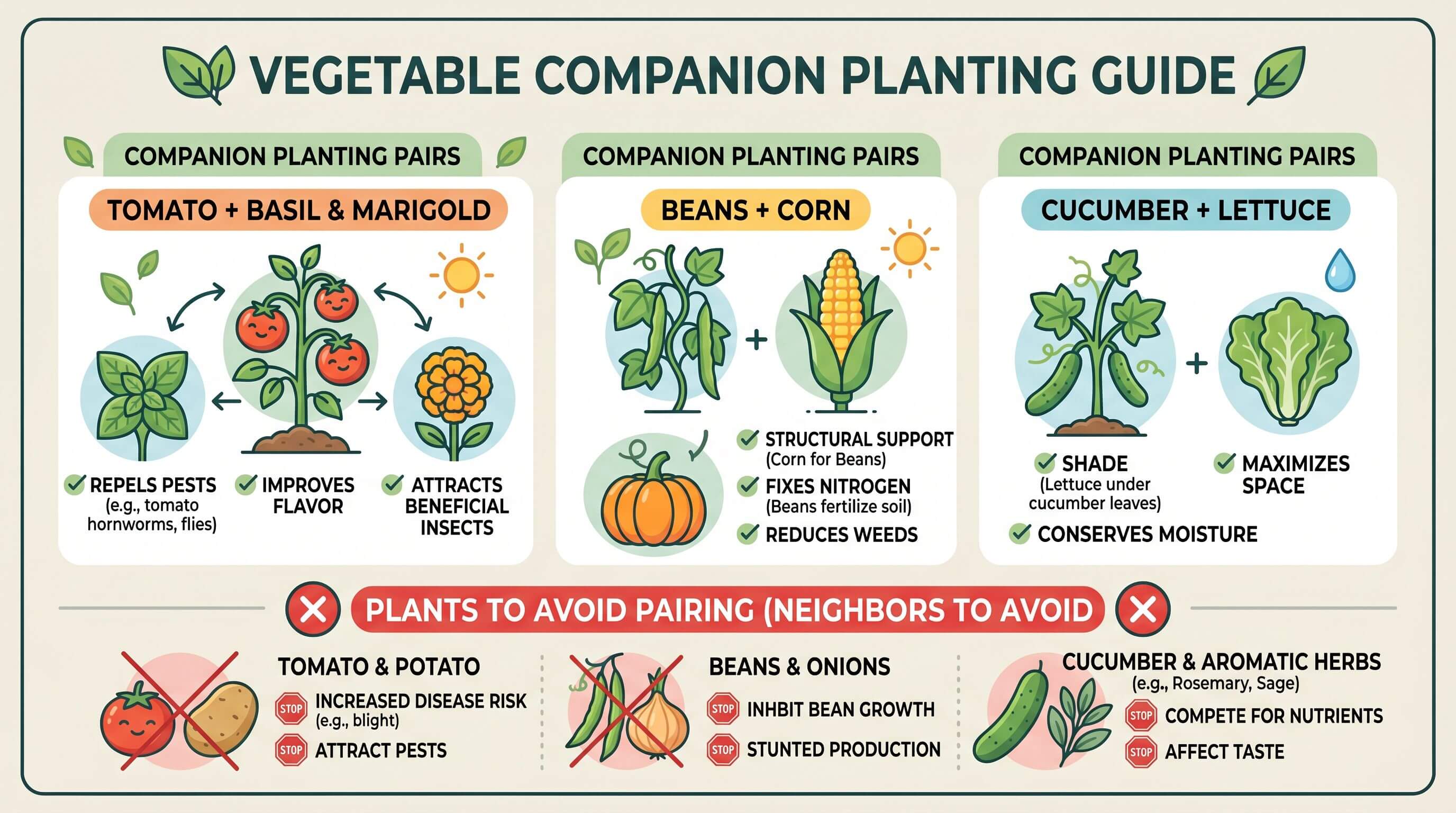
Companion planting means placing crops that help each other and separating ones that compete. Done well, it saves space, improves pollination, and reduces pest pressure across the bed.
The classic example is the Three Sisters. Corn supports climbing beans, beans add nitrogen to the soil, and squash shades out weeds below. You do not need to alternate plant by plant. Grouping friendly crops within a bed or block is enough.
Flowers and herbs earn their square footage, too. Marigolds and nasturtiums pull pests away from vegetables, while basil planted beside tomatoes improves airflow and deters aphids. Use the quick reference below.
Step 4: Choose a layout method
Pick a layout method that fits your space and how much you want to harvest. The three common choices are traditional rows, square-foot grids, and intensive blocks. Each suits a different bed size and goal.
Square-foot gardening packs the most into a small footprint. A 4x4 raised bed using square-foot spacing can match the yield of a 15 to 20 foot stretch of traditional rows. The trade-off is that a few large crops, like zucchini and winter squash, still need more room than one square allows.
Whatever method you choose, put tall crops on the north side of the bed. Corn, trellised tomatoes, and sunflowers belong at the back so they do not shade shorter crops. Place low growers like lettuce and radish on the south side where they get full light.
Step 5: Sketch and test your plan before you dig
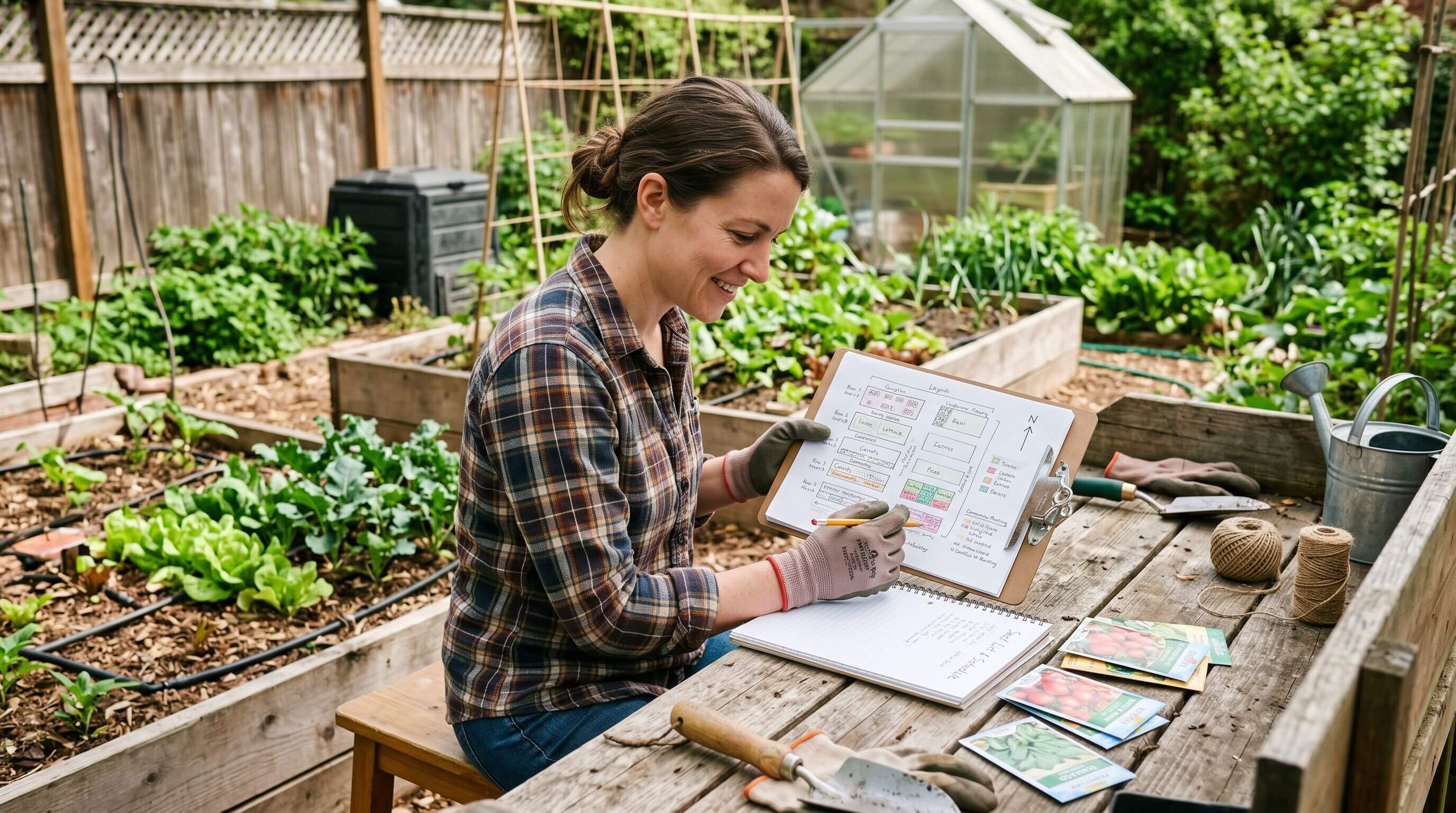
Map the full bed on paper or screen before planting, because catching an error in a drawing costs nothing. A sketch shows crowding, shading, and bad pairings, while they are still easy to move. Skipping this step is where most spacing mistakes start.
Here is a worked example for a single 4x8 raised bed, which gives you 32 one-foot squares. Place 4 indeterminate tomatoes along the north edge at one per square, with basil tucked beside them. Fill the middle with peppers and bush beans, then run a south-facing front row of lettuce, carrots, and radishes for succession harvests every two weeks. That one bed holds dozens of plants and three harvest cycles without crowding.
Testing the plan visually is easier when you can see the space in three dimensions. Arcadium 3D lets you lay out beds, place crops to scale, and preview how tall plants will shade the rest of the garden as they grow. Adjusting a layout on screen takes minutes. Re-digging a bed in July takes a weekend.
Frequently asked questions
How much sun does a vegetable garden need?
Most vegetables need 6 to 8 hours of direct sun per day. Fruiting crops like tomatoes, peppers, and cucumbers want the full amount and produce poorly without it. Leafy greens such as lettuce and spinach get by on 4 to 6 hours, so save your shadier spots for them.
What is the best layout for a small vegetable garden?
Square-foot gardening is usually the best fit for small spaces. You divide a raised bed into one-foot squares and plant a set number of crops per square. A single 4x4 bed can produce as much as 15 to 20 feet of traditional rows, which makes it ideal for patios, courtyards, and tight backyards.
Which vegetables should not be planted together?
Keep beans and peas away from onions and garlic, since the alliums can stunt their growth. Separate tomatoes from brassicas like cabbage and broccoli. Avoid pairing cucumbers with potatoes. Beyond these clashes, most common vegetables coexist fine when spaced correctly.
How far apart should I space my vegetables?
Spacing depends on mature size. Indeterminate tomatoes need 24 to 36 inches between plants, peppers about 18 inches, and carrots only 2 to 3 inches. Always space for the full-grown plant rather than the transplant, because crowding cuts airflow and yield.
Should tall plants go on the north or south side?
Tall plants belong on the north side of the bed. Placed there, crops like corn, sunflowers, and trellised tomatoes will not cast shade over shorter neighbors. Low growers like lettuce and radishes go on the south side where they keep full sun all day.
Plan it before you plant it
A productive vegetable garden starts as a map, not a guess. Sort out sun first, space each crop for its mature size, pair friendly plants, then pick a layout that fits your space. Sketch the whole thing before you break ground so every fix stays free.
Ready to see your beds before you build them? Plan your vegetable garden layout in Arcadium 3D and test spacing, sun, and crop placement in minutes.


 Color palette generator
 3D design from AI chat
 Floor plan creator
 Kitchen design tool
 House design software
 Landscape design software
 Bedroom design
 Office floor plan creator
 Trade show booth design
 How to use Arcadium — full guide
 Community Showcase
 3D object library - free
 Articles and blog