How to Choose Flooring for Every Room, by the Numbers
How to choose flooring for every room with real specs: wet slip ratings, vinyl wear layers, laminate AC classes and grade rules, plus a room-by-room table.
To choose flooring for every room, rank each room by water exposure, foot traffic, grade level and comfort, then pick a material class that survives the worst of those. Before you buy, check the one rating that proves it, such as a vinyl wear layer, a laminate AC class or a tile's wet slip rating.
Every number in this guide comes from a published standard (ANSI A326.3 for tile slip resistance, EN 13329 for laminate, the NWFA installation guidelines for wood) or from 2025 and 2026 data from NAR, Houzz and the CDC.
Five facts to carry into the showroom
A tile for a level floor that gets walked on wet needs a wet DCOF of 0.42 or higher under ANSI A326.3. No tile is slip proof, so treat 0.42 as the minimum.
Solid hardwood belongs on or above grade only. The NWFA counts any level where outside soil sits 3 inches or more above the floor as below grade.
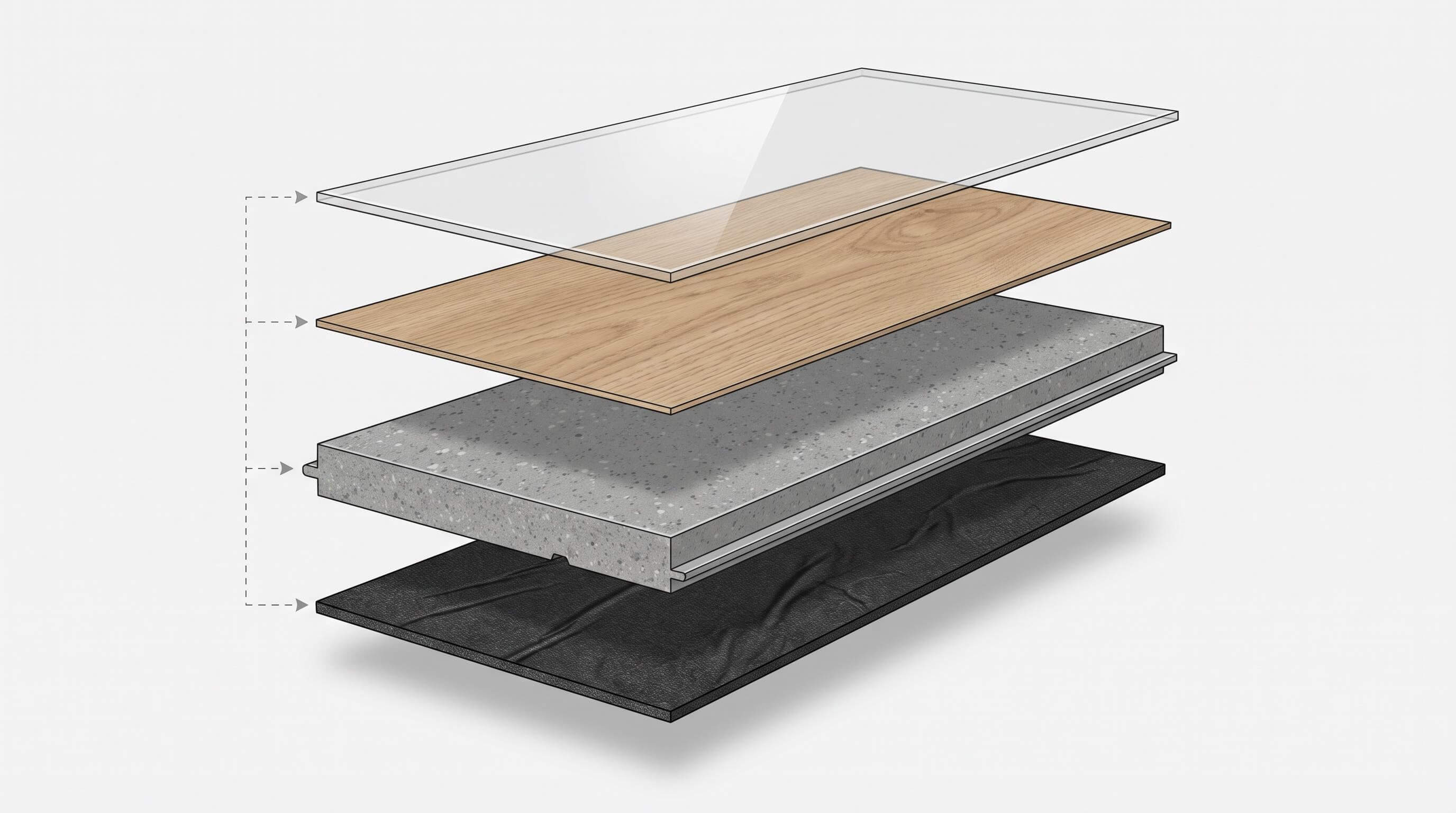
For luxury vinyl, a 12 mil wear layer suits ordinary rooms. Kitchens, entries and homes with dogs should get 20 mil.
Refinishing existing hardwood recovered an estimated 147% of its cost at resale in NAR's 2025 Remodeling Impact Report, the highest of any interior project.
From any single spot in an open-plan home, aim to see no more than 3 floor types.
The four checks that decide any room's floor
Every room's floor comes down to four checks, done in this order, because each one rules out materials before the next one runs.
Water. Sort the room into splashes (kitchen), standing water (bathroom, laundry) or vapor rising from a concrete slab (basement). Standing water and slab vapor call for porcelain tile or a waterproof vinyl core.
Grade level. On grade means at ground level, above grade means any upper story, and below grade means a basement or any level partly under the soil line. Grade decides whether solid wood is even an option.
Traffic and grit. Entries, hallways and kitchens take the most wear, plus dog claws and office chair casters wherever they live.
Feel and sound. Bedrooms and upper floors need warmth underfoot and quiet footfall for the room below.
Two terms come up in step 1. SPC vinyl (stone plastic composite) has a rigid core made from limestone powder and PVC, which resists dents and stays flat over small subfloor dips. WPC vinyl (wood plastic composite) has a foamed core that feels softer and warmer but dents more easily under furniture legs.
For step 4, sound has its own rating. IIC (Impact Insulation Class) measures how well a floor and ceiling assembly blocks footfall noise. The International Building Code sets IIC 50 for floors between separate dwelling units, and many condo boards write a higher minimum into their bylaws, so read those before you order hard flooring for an upstairs flat.
Color, plank width and pattern come last. A floor that fails any of the four checks will look worse in two years than a plainer floor that passes them.
Best flooring for each room at a glance
The table below gives the default pick for each room in a typical home in the US, UK, Canada or Australia, the specific rating to check, and the materials we would rule out.
Room
Main risk
Best fit
Rating to check
Rule out
Kitchen
Spills, dropped pans, long standing
Porcelain tile, SPC vinyl, engineered wood
20 mil wear layer or PEI 4 tile
Carpet, unsealed natural stone
Bathroom
Standing water, wet bare feet
Porcelain tile, sheet vinyl, SPC vinyl
Wet DCOF 0.42 or higher
Solid wood, standard laminate
Laundry room
Hose bursts, appliance weight
Porcelain tile, SPC vinyl
Waterproof rating in writing
Carpet, solid wood
Living and dining
Furniture dents, sun fading
Solid or engineered hardwood, LVP, laminate
Janka 1,290 or harder for wood
High-gloss finishes in sunny rooms
Bedroom
Cold feet, noise to the room below
Carpet, hardwood, WPC vinyl
Pad spec from the carpet maker, IIC for upper floors
The best kitchen flooring is porcelain tile or SPC vinyl with a 20 mil wear layer. Engineered hardwood is the better pick when the kitchen opens onto a wood-floored living area and you want one continuous floor.
Kitchens combine water near the sink and dishwasher with dropped cast iron and hours of standing. Porcelain resists water and scratches, but a dropped pan can chip it and it is hard on your back during long cooking sessions. SPC vinyl is softer underfoot and quieter, and a 20 mil wear layer handles chair legs dragged across it every day.
For glazed tile, read the PEI rating, a 1 to 5 scale from the Porcelain Enamel Institute that measures how well the glaze resists wear. PEI 3 covers most home floors, and PEI 4 is the safer choice for a kitchen or entry that sees grit.
If you are changing the layout at the same time, settle the cabinet footprint first in a kitchen design tool. Floating floors usually stop at the cabinet line, so the cabinet plan sets your square footage.
Best bathroom and laundry room flooring
The best bathroom flooring is porcelain tile with a wet DCOF of 0.42 or higher, with sheet vinyl or SPC vinyl as the lower-cost option. Wood and standard laminate do not belong in a room where water pools on the floor.
DCOF (dynamic coefficient of friction) measures how much grip a surface gives a moving foot. The tile industry standard ANSI A326.3 sets a wet DCOF of 0.42 or greater for level interior floors expected to be walked on when wet, and manufacturers label those tiles "IW" (Interior Wet). Shower floors need more grip than that, which is why designers use 2 inch mosaics there. Every grout line adds texture under a bare foot.
Grip matters most for older adults. The CDC reports that over 14 million adults aged 65 and older, about 1 in 4, report a fall every year, and falls are the leading cause of injury in that age group. A slip rating is a lab number taken on a clean tile. Soap film, bath oil and floor polish all change real-world grip, so a higher rating plus grab bars beats relying on the tile alone.
The bigger risk in a laundry room is a burst washer hose, which can release a lot of water in minutes. Porcelain tile or SPC vinyl with a sealed perimeter works, and a drain pan under the washer costs little and catches slow leaks.
Best living room and dining room flooring
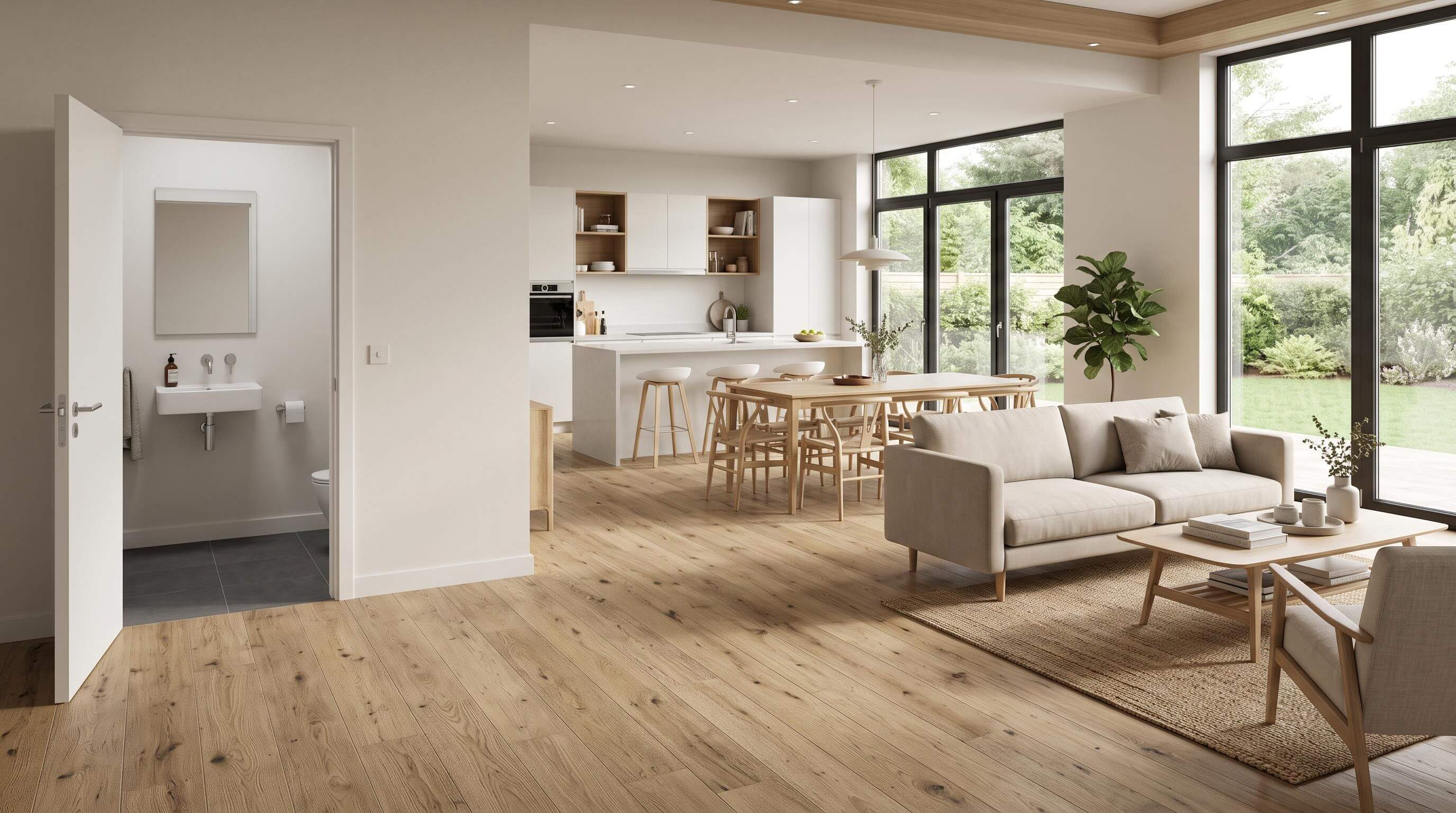
Living and dining rooms suit solid or engineered hardwood, with luxury vinyl plank (LVP) or AC4 laminate for households with large dogs. These rooms are dry and visible, so this is where looks and resale value carry the most weight.
For wood, check the Janka hardness, the force in pounds needed to press a steel ball halfway into the wood. Red oak (1,290) is the benchmark most species are compared against. White oak (1,360), hard maple (1,450) and hickory (1,820) dent less under dropped toys and dining chairs.
Sunlight changes wood color over months. Cherry darkens, and oak under an oil-based finish ambers toward yellow. If a large south- or west-facing window hits the floor, pick a matte finish and plan rugs you will move occasionally, so the floor ages evenly. In rooms over 15 feet long, wider planks of 7 inches or more keep the floor from looking busy.
Best bedroom flooring
Bedrooms are the one room where carpet still earns its place, because it is warm underfoot and it absorbs footfall noise on upper floors. Hardwood or WPC vinyl with a good underlayment are the alternatives if you prefer a hard surface.
With carpet, the pad matters as much as the carpet. Follow the carpet maker's pad specification for thickness and density, because a pad that is too soft lets the backing flex and wear early, and some makers void the warranty when the wrong pad goes down. With hard flooring upstairs, buy the underlayment the floor maker lists, and check its IIC rating if someone lives below.
The tile in a bedroom feels cold at 6 a.m. unless you add electric floor heating. If you want to plan the whole room, our guide to bedroom design shows how furniture placement changes where rugs and hard flooring meet.
Best flooring for entryways, hallways and stairs
Entryways and hallways need the hardest-wearing surface in the house, which means porcelain tile, LVP with a 20 mil wear layer, or AC4 laminate. Grit tracked in on shoes scratches hard floors, and these floors take it first.
The AC rating (abrasion class, tested under the European standard EN 13329) grades laminate on wear, impact and stain resistance. AC3 is the standard residential class and AC4 covers heavy residential and light commercial use. The price gap between them is usually small, so buy AC4 for anywhere people walk straight in from outside. A walk-off mat at least two strides long catches most of the grit before it reaches the floor.
Stairs wear hardest at the front edge of each tread. Hardwood and carpet both work, and most vinyl and laminate ranges sell a matching stair nose profile. Never lay floating planks over a stair edge without that profile, since a loose edge on a stair is a fall risk.
Best basement flooring
The best basement flooring is SPC vinyl or porcelain tile, with engineered hardwood only if the product is rated for below-grade use. Solid hardwood should never go in a basement.
The NWFA installation guidelines state that solid wood is suitable for above-grade and on-grade installation only, and that any level where the surrounding soil sits 3 inches or more above the floor counts as below grade. A concrete slab releases moisture upward all year, and solid boards cup and gap as they absorb it.
Test the slab before you order anything. The two common tests are the calcium chloride test (ASTM F1869), which measures moisture leaving the slab surface over 60 to 72 hours, and the in-situ relative humidity probe (ASTM F2170), which reads moisture inside the slab. Each flooring maker publishes a maximum reading in its warranty terms, and a reading over that limit voids the warranty.
If the basement has ever flooded, choose a floor you can lift and reuse, such as click-lock SPC vinyl, or one that water cannot harm, such as porcelain tile.
Should you have the same flooring throughout the house?
Run one floor through connected living spaces, and switch materials only where a room's conditions demand it, usually at bathrooms, the laundry room and sometimes bedrooms. A continuous floor makes open-plan spaces look larger and removes trip edges.
Designers use a rule of three as a sightline check. Stand anywhere in the main living area and count the floor types you can see. More than 3 makes a home look patched together, even if each floor suits its room.
Transitions are where mixed floors go wrong. Tile set in thinset mortar can sit around half an inch high, while a click vinyl plank may be 5 or 6 mm, so the two meet at different heights. The 2010 ADA Standards, written for public buildings but a useful guide at home, allow a change in level up to 1/4 inch with no treatment, and up to 1/2 inch if it is beveled no steeper than 1 in 2. Place transitions under door slabs, where the eye expects a change.
Plank direction should carry through connected rooms too. Most installers run planks parallel to the longest wall or toward the main window, and solid wood nailed to a joist floor should run across the joists.
What the ratings on the box mean
Each flooring material has one rating that tells you more than the marketing copy. Use this table to read the box or the spec sheet before you buy.
Material
Rating
What it measures
Typical home minimum
Busy home or pets
Luxury vinyl (LVP, LVT)
Wear layer, in mil
Thickness of the clear top layer
12 mil
20 mil
Laminate
AC class (EN 13329)
Abrasion, impact and stain resistance
AC3
AC4
Glazed ceramic or porcelain tile
PEI class
Wear resistance of the glaze, 1 to 5
PEI 3
PEI 4
Hard flooring in wet areas
Wet DCOF (ANSI A326.3)
Grip under a moving foot when wet
0.42 for level wet floors
Ask for the IW category or higher
Solid hardwood
Janka hardness, in lbf
Dent resistance
Red oak, 1,290
White oak 1,360 or harder
Engineered hardwood
Top layer, in mm
How many times it can be sanded
2 mm
3 mm or more if you want to refinish later
One label causes more returns than any other. "Water-resistant" laminate handles a wiped-up spill for a set number of hours, while a waterproof floor survives standing water. Check the warranty wording, since only a waterproof warranty covers a bathroom or laundry room.
Which flooring adds the most home value?
Wood floors add the most resale value of any interior project. In the NAR and NARI 2025 Remodeling Impact Report, refinishing hardwood floors recovered an estimated 147% of its cost at resale and new wood flooring recovered 118%, the top two interior projects.
Homeowners are still spending. The 2026 U.S. Houzz & Home Study found that 54% of homeowners renovated in 2025 at a median spend of $20,000, while purchases of noncarpet flooring dipped to 34% of renovating homeowners from 38% the year before.
Our advice if you plan to sell within five years is simple. If there is hardwood under old carpet, refinish it before replacing anything. Put the money you save into waterproof floors for the wet rooms, where buyers look for damage first.
Test floors in 3D before you buy
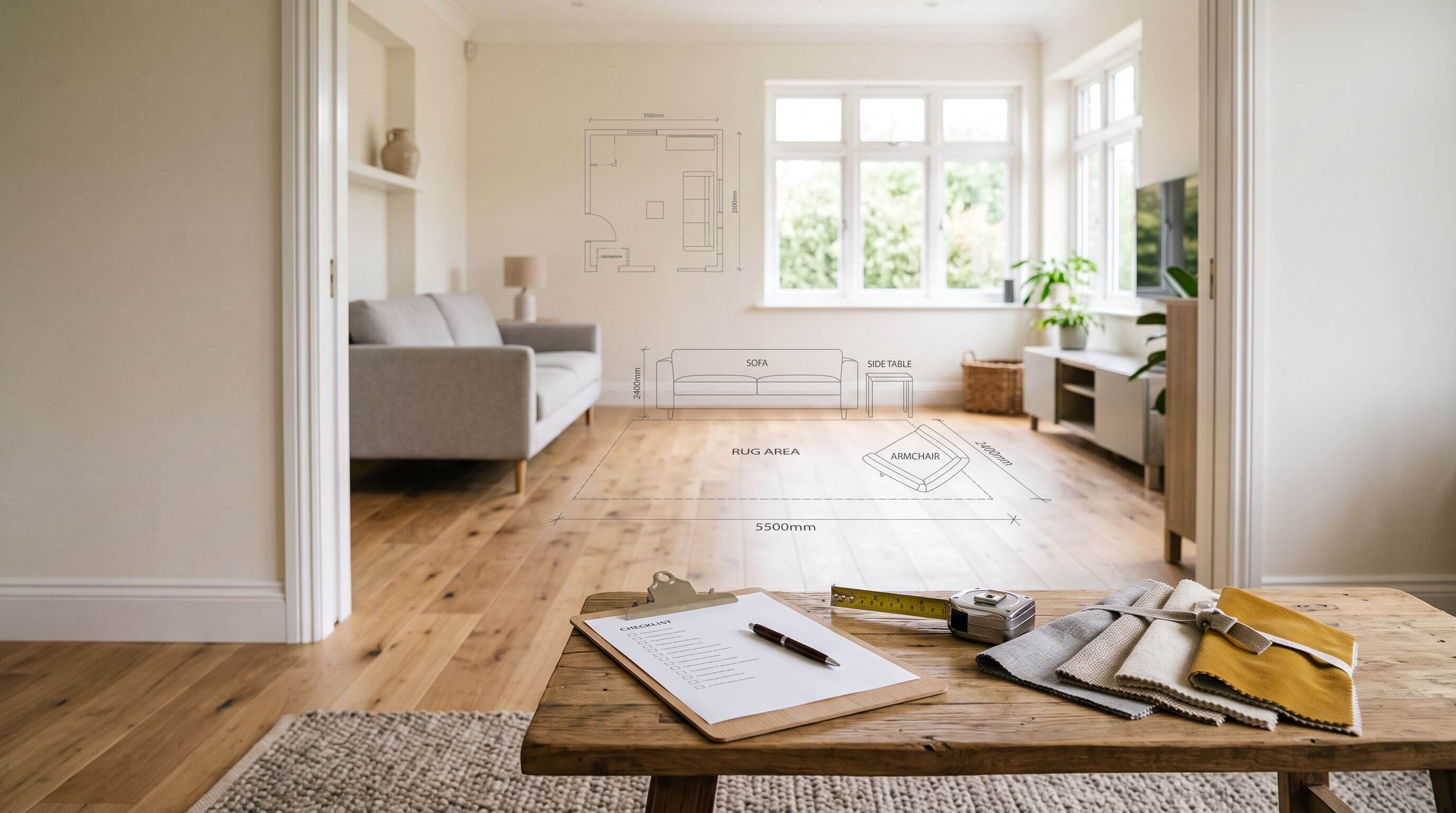
A 4 by 6 inch sample under showroom lighting tells you little about how 520 square feet of that floor will look in your home at night. Testing the full floor in a 3D model shows you color under real light, transitions in your sightlines and plank direction before anything is ordered.
Arcadium 3D is a free browser-based 3D room planner, and you can run this test in about 20 minutes:
Draw the rooms at their real dimensions with our floor plan creator, including door openings, so transitions land where they will be built.
Apply candidate materials to each room. Our 3d room planner lets you test hardwood, tile, carpet and more against your actual walls and furniture.
Switch between day and night lighting. Gray-toned vinyl that reads cool and modern at noon can look flat under warm evening bulbs.
Walk through in first-person view from the front door and count the floor types you can see from each spot.
Share the plan link with your installer so the quote matches the layout.
Should flooring go in before or after kitchen cabinets?
Floating floors such as click vinyl and laminate go in after the cabinets, because they need room to expand and the cabinets' weight would pin them down. Tile and nail-down hardwood can run under cabinets, which makes a future layout change easier. Either way, the floor must run under the dishwasher and range spaces so the appliances can slide out at the finished floor height.
Which direction should plank flooring run?
Most installers run planks parallel to the longest wall, or toward the main window so light runs along the boards and hides the seams. In connected rooms, keep one direction throughout. Solid hardwood nailed to a joist subfloor should run across the joists for strength. A 3D plan lets you compare both directions before the installer starts cutting.
Do light or dark floors make a room look bigger?
Light floors reflect more light and make small, dim rooms look larger. They also hide dust and pet hair better than very dark floors, which show every footprint. Dark floors suit large, bright rooms where you want contrast with pale walls. Mid-tone oak is the safest choice for resale because it suits the widest range of furniture and wall colors.
Can you put flooring over radiant floor heating?
Porcelain and ceramic tile work best over radiant heat because they conduct heat well and do not move with temperature changes. Engineered hardwood and many vinyl products also work, but each maker sets a maximum floor surface temperature, so check it before you buy. Solid hardwood and thick carpet with a heavy pad slow heat transfer and are the weakest choices.
Can you install new flooring over old flooring?
Floating floors can usually go over one layer of existing tile or sheet vinyl if the old floor is solid and flat within the maker's tolerance. Never install over carpet, because the floor will flex and the locking joints will break. Remember that each added layer raises the floor height at doors, thresholds and the dishwasher opening.



 Color palette generator
 3D design from AI chat
 Floor plan creator
 Kitchen design tool
 House design software
 Landscape design software
 Bedroom design
 Office floor plan creator
 Trade show booth design
 How to use Arcadium — full guide
 Community Showcase
 3D object library - free
 Articles and blog